William Shakespeare’s “Othello” painfully unpacks the intricate emotions of love, betrayal, and jealousy. These emotionally charged themes are potent enough to dismantle the life of even the most valiant souls. The narrative arcs around Othello, a Moorish general navigating the treacherous waters of Venetian politics, love, and manipulation. His ardent passion for Desdemona evolves into a nightmarish landscape of doubt, incited by his trusted ensign, Iago. This classic masterpiece continues to enchant audiences while raising echoes of other iconic tales like “Romeo and Juliet” and “The Phantom of the Opera.”
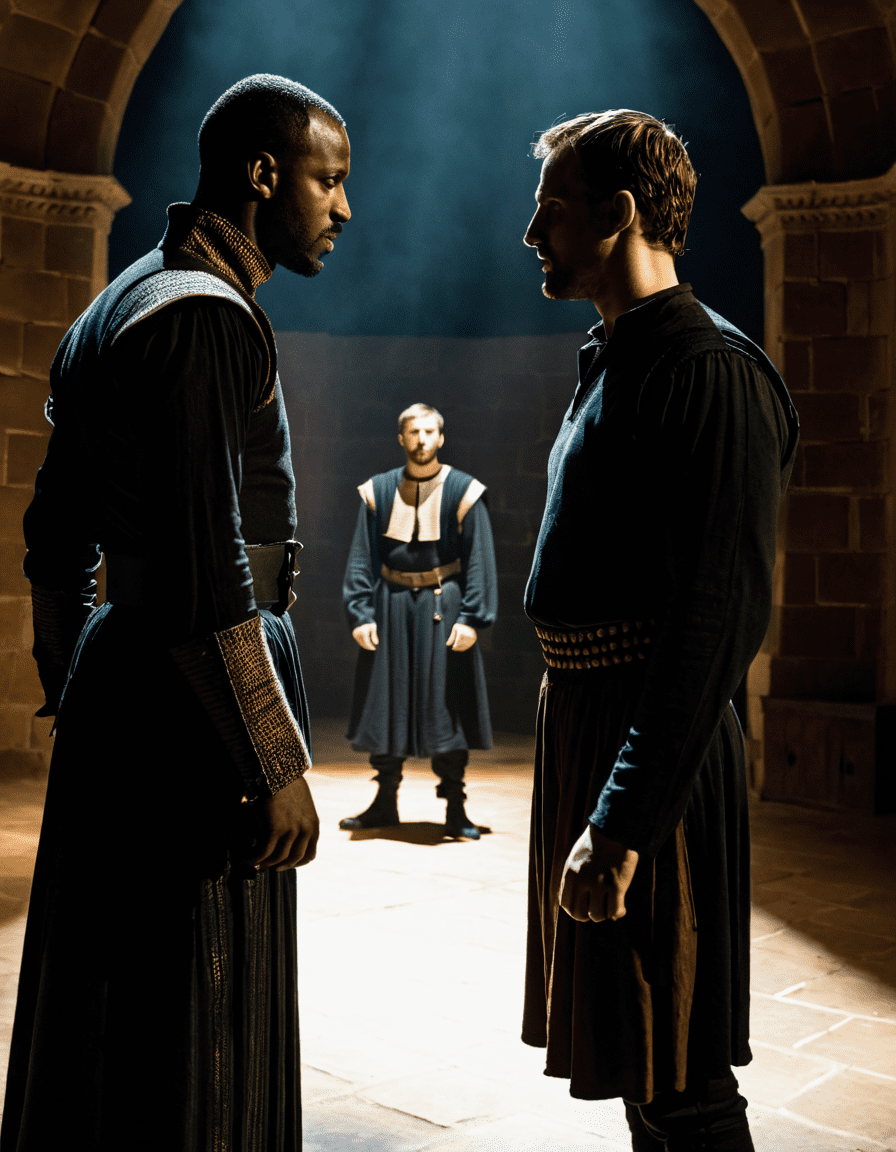
The Quintessential Themes of Othello
“Othello” dives deep into love’s duality, portraying it as both a sanctuary and a weapon, as evidenced by the emotional labyrinth that Othello traverses. Love sparkles at the onset, but soon morphs into destructive jealousy that consumes him. Shakespeare deftly illustrates how unchecked emotions can lead to moral decay, and Othello’s tragic curves serve as a timeless reminder of human fragility.
Furthermore, the layers of betrayal play a pivotal role in shaping Othello’s ultimate demise. Iago’s deceit unravels the seemingly solid threads of trust that hold relationships together. This portrayal of trust breached is compelling; it does more than provoke sympathy for Othello. It challenges us to reflect on the fragile nature of our own relationships.
Jealousy remains the bedrock of Othello’s tragedy. As he succumbs to Iago’s poisonous whispers, he is driven to commit acts he never thought possible. Ultimately, it’s a story of a noble man who loses himself amid the chaos of his emotions. The anxieties that follow are universal, even in modern storytelling, ensuring that Othello remains as poignant as modern hits like Big Sky and Selling Short.
5 Key Parallels Between Othello and Romeo and Juliet
Othello and The Phantom of the Opera: Love and Obsession
Exploring the parallels between Othello and “The Phantom of the Opera” unveils remarkably similar threads of love intertwined with obsession. Both figures are emblematic of how love can devolve into a toxic fixation, resulting in tragic consequences.
The Legacy of Othello in Modern Culture
Othello’s cultural legacy persists through countless adaptations, both filmic and theatrical. These renditions constantly reinterpret its core themes while contextualizing them for contemporary audiences.
A Modern Twist on Timeless Tragedy
In the tumult of Shakespeare’s “Othello,” we glean crucial perspectives into the human psyche. Love, jealousy, and betrayal weave together in a way that’s as relevant now as it was in Shakespeare’s time. The modern lens through which we examine gender dynamics and racial themes in Othello propels us to challenge the nuances of our relationships.
By revising and adapting Othello’s narrative—whether through film like Gumball or in plays—the story finds renewed energy, sparking discussions that inspire audiences to reflect on their own experiences with love and jealousy. Othello remains an essential figure in understanding the complexities of human emotions in a world that’s constantly evolving, reminding us that the threads of love can easily twist into something dark.
Ultimately, Othello’s tragic journey casts a long shadow over the universe of literature and storytelling, encouraging each generation to grapple with the powerful themes of love, betrayal, and jealousy incorporated in our lives. Such discussions not only continue, they transform, ensuring that Othello lives on, even as we navigate the shifting landscapes of today’s society.
Othello: The Tragic Hero of Love, Betrayal, and Jealousy
Othello’s Intriguing Background
Othello, with his captivating allusions to love and treachery, has been a topic of discussion for centuries. Did you know that the character of Othello is often linked to historical figures and mythological heroes? Interestingly, Shakespeare’s portrayal of Othello as a Moor showcases the playwright’s fascination with cultural diversity—something that resonates even today. Often, he is compared to notable figures like Dusty Rhodes, who, despite the odds, became a legend in his own right, much like Othello in the face of jealousy and manipulation.
The Impact of Jealousy
Jealousy is the unforgiving villain taking center stage in Othello’s tragic tale. It comes as no surprise that the motif of jealousy resonates through various forms of art and literature, just like in “The Great Gatsby.” Characters driven by envy can lead to their downfalls—Othello exemplifies this as he succumbs to Iago’s cunning schemes. Speaking of cunning, let’s not forget about the gripping narrative techniques in popular shows like Hightown, where betrayal weaves a compelling storyline, much like in Othello.
A Look at Adaptations
Othello’s impact stretches far beyond the confines of Shakespeare’s play; adaptations can be found everywhere, from contemporary theater to film. For instance, the fresh take in the upcoming Invasion Season 3 showcases how classic narratives can breathe new life in a modern context. This demonstrates how Othello’s themes of love, betrayal, and jealousy remain relevant; audiences can recognize these emotions in various settings, showing just how timeless this tragic hero is.
This nuanced interplay of characters and themes, reminiscent of those explored in the thought-provoking film Inside&Out, invites viewers to reflect on their own lives. Othello’s mistakes serve as a cautionary tale, suggesting that even the mightiest can fall prey to insecurities. Whether drawn from personal experiences or inspired by literary figures, the essence of Othello’s journey continues to strike a chord with many.