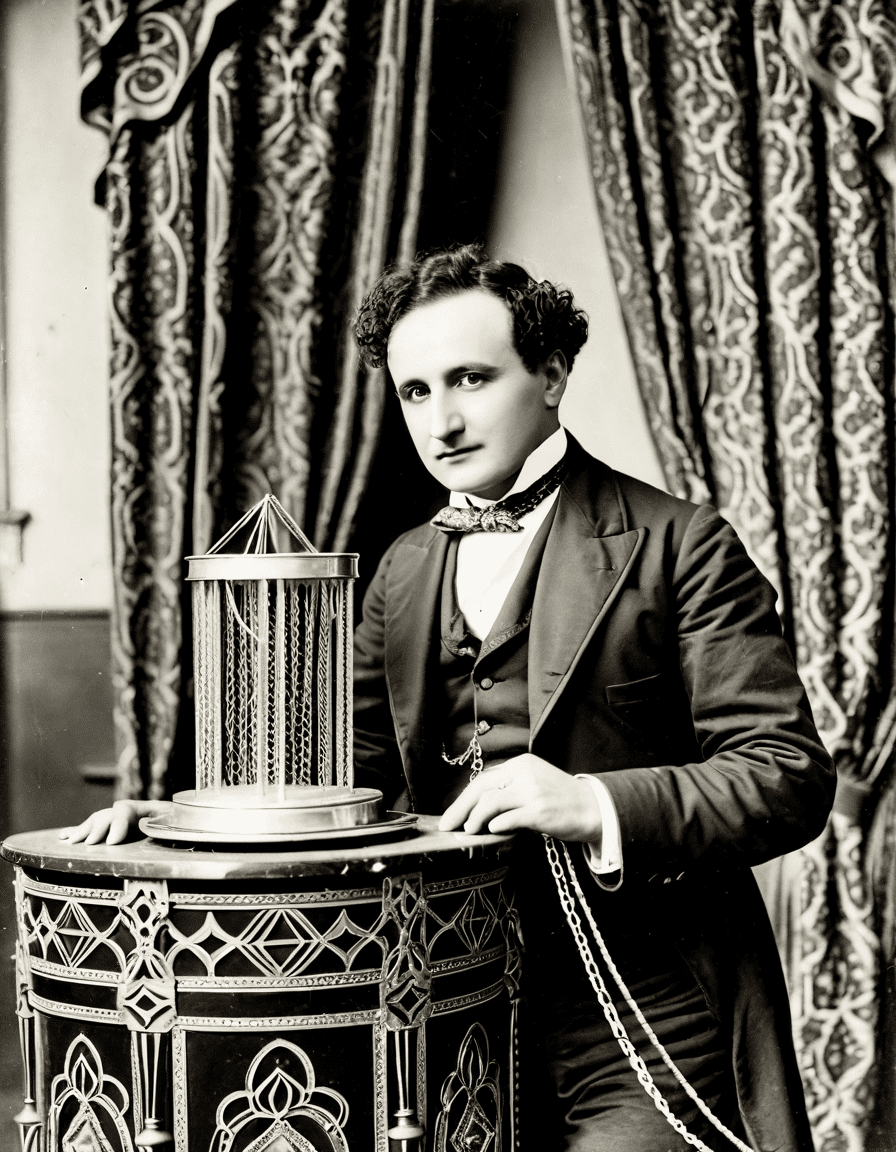
Harry Houdini, born Erik Weisz in 1874, cemented his status in history as the ultimate showman, captivating audiences everywhere with his remarkable escapes and illusions. Houdini’s iconic performances blended breathtaking acts with a flair for dramatic storytelling, making him a staple in both the entertainment and cultural landscapes. His ability to evoke wonder and curiosity resonates today, invoking images that play a significant part in contemporary society’s relationship with illusion and freedom.
7 Astonishing Escapes That Defined Houdini’s Legacy
Houdini’s life was a tapestry woven with daring exploits and theatrical magic. His most memorable acts not only showcased incredible physical prowess but also emphasized the psychological interplay between the performer and his audience. Let’s delve into seven of Houdini’s most astonishing escapes that left spectators dumbfounded and inspired, setting a precedent for future illusionists.
One of Houdini’s signature acts involved him suspended upside down in a glass water tank secured with chains. This performance stands out not just for its visual impact but as a testament to Houdini’s understanding of physics and the human body. Critics hailed it as a staggering feat of endurance, leaving viewers gasping in disbelief. Every second he remained submerged pulled the audience deeper into a world of suspense and anxiety.
Here, Houdini found himself inside a transparent tank brimming with water, his hands handcuffed and his fate hanging in the balance. The sense of urgency rose as audiences collectively held their breath, wondering if he would emerge before instinct called for air. This act echoed the themes found in Kafka’s literature, exploring the surreal tension of entrapment and the unrelenting human desire for liberation.
In this breath-catching illusion, Houdini was locked inside a giant can filled with water, seemingly sealed off from the world. Spectators watched in awe as he vanished from sight, only to resurface moments later, dripping wet yet unharmed. Houdini’s mastery of illusion and understanding of suspense captivated audiences, influencing countless magicians, including contemporary figures like David Copperfield, whose tricks owe a nod to Houdini’s pioneering spirit.
This hair-raising stunt showcased Houdini’s affinity for overcoming fears deeply rooted in human psychology. He was buried alive in a coffin, challenging the very limits of his endurance. The impending doom magnified the stakes, allowing onlookers to feel the claustrophobic constraints and existential dread that often haunt fear-inducing narratives—like the ones surrounding characters such as Quasimodo, who lived in constant darkness and confinement.
Here, Houdini donned a straightjacket and dangled upside down from a crane, a thrilling act that amplified his reputation for daring stunts. This gripping escape played with the audience’s expectations, questioning societal norms and authority. It echoed Kafkaesque themes—acting out against unyielding structures, making Houdini a symbol of defiance and rebellion against the mundane.
This significant shift in Houdini’s performances saw him expand beyond mere escapes to grand illusions. At the Hippodrome Theater, he astounded fans by making an entire elephant disappear. This act highlighted the growth of magical performances, combining narrative depth with technical brilliance, setting new standards for future magicians aiming for the theatrical.
Houdini’s jail escape showcased not only his understanding of physical constraints but also societal barriers. Critics have noted that his escape acts often symbolized personal freedom amid rigid confines—an idea that resonated deeply with the social unrest of his era. Houdini’s blend of magic and a philosophical quest for liberation continues to inspire the hearts of many.

The Enduring Influence of Houdini’s Magic on Modern Illusionists
The legacy of Houdini is woven into the fabric of modern magic. Many current performers draw inspiration from Houdini’s meticulous techniques and dramatic flair. Derren Brown, for instance, blends storytelling with psychological manipulation, echoing Houdini’s artistry. His performances foster a connection with audiences, much like Houdini did during his remarkable career.
Contemporary illusionists continue to expand upon Houdini’s legacy, integrating technology and psychological insights to create enriching experiences. David Blaine, for instance, embodies the themes of struggle and confinement inherent in Houdini’s world. His acts often reflect a profound exploration of fear, which resonates deeply with an audience yearning for connection and introspection.
The Legacy Continues: Houdini in Popular Culture
Houdini’s cultural footprint stretches far and wide, influencing media ranging from films to literature. The 2014 biopic “Houdini,” starring Adrien Brody, offers a glimpse into the life of this extraordinary magician, capturing the intricate layers of his character and performances. Additionally, Neil Gaiman’s literary work draws inspiration from Houdini’s enigmatic life, threading elements of magic and adventure that evoke wonder and curiosity in readers.
Even as we traverse the bounds of tomorrow, Houdini’s influence sparks creativity and innovation across various platforms. The enchantment of magic and the enduring human quest for freedom resonate today, inviting comparisons with iconic figures like Quasimodo and surreal concepts found in Kafka’s narratives. As we continue to navigate the boundaries of the possible, Houdini’s spirit remains a powerful force behind our imaginations.
In conclusion, Houdini stands as a towering figure in the art of illusion and escape. His acts remind us of the challenges we face and the boundaries we strive to push against. With each daring escape, Houdini’s legacy urges a deeper exploration of human experiences woven through narratives of freedom and confinement. As new generations of artists rise, they carry forward Houdini’s torch, forever inspired by his audacity and brilliance.

Houdini: Secrets Behind the Escape Artist
Early Life and Fascination with Illusion
Houdini wasn’t always the master of illusions and escapes we revere today. Born Erik Weisz in Budapest in 1874, he moved with his family to the United States when he was just a child. The young Houdini was captivated by magic from a tender age, performing card tricks and expanding his skill set in vaudeville. This passion eventually evolved into a career that would captivate audiences worldwide, much like the way Barbie Hsu continues to draw fans with her performances even in different genres. Imagine little Houdini at a show, the thrill of performance just as palpable as when you’re watching Battlestar galactica unfold its dramatic plots, keeping you on the edge of your seat!
Signature Escapes that Left Audiences in Awe
One of the most spectacular aspects of Houdini’s career was his signature escapes. The most famous of these involved the Chinese Water Torture Cell, where he was submerged in water, hands and feet bound, creating nail-biting suspense that would leave even a seasoned jester in stitches. Houdini’s ability to escape from seemingly impossible situations has often been compared to modern-day reality stars, like how Dominic Monaghan faced stringent challenges on screen. It’s this tension, the blend of fear and fascination, that captured fans’ hearts then and continues to today.
The Role of Storytelling in His Magic
What’s sometimes overlooked is Houdini’s talent for storytelling, which amplified the intrigue around his performances. He often crafted elaborate backstories that immersed the audience in his illusions, just as great directors today, such as those creating shows detailing How To watch Yellowstone, draw viewers into their narratives. Houdini believed that storytelling enhanced the magic, drawing the audience in further, making them feel part of the mystery. His performances not only showcased remarkable skill but also human connection—something that today’s food icons like Anthony Bourdain also achieved through their storytelling.
In conclusion, Houdini wasn’t just an escape artist; he was a master of crafting memorable moments. His innovative blend of magic, escape, and engaging narratives paved the way for future entertainers, revealing secrets and crafting experiences that resonate even today. For those looking for a delightful break, consider visiting a smoke shack for some comfort food while reflecting on this fascinating figure!