oliver tree doesn’t exist. Not really. The mop-haired, mullet-sporting, self-proclaimed “tall boy” is a fabrication so meticulously engineered it blurs the line between performance art and pop sabotage—like if David Byrne and Andy Kaufman co-produced a rock opera in a post-truth era. What you’ve been sold as absurdity is, in fact, a calculated deconstruction of celebrity, fandom, and the music industry’s grotesque appetite for the bizarre.
The Real Oliver Tree: Beyond the Hair, the Hoaxes, and the Horns
| Attribute | Information |
|---|---|
| Name | Oliver Tree |
| Birth Name | Oliver Tree Nickelberg |
| Born | June 24, 1993, in Monroe, Michigan, USA |
| Occupation | Musician, Singer, Songwriter, Rapper, Filmmaker |
| Genres | Alternative hip hop, Neo-psychedelia, Rap rock |
| Instruments | Vocals, Guitar, Piano |
| Years Active | 2012 – present |
| Labels | Atlantic Records, Schoolboy Records |
| Notable Albums | *Ugly Is Beautiful* (2020), *Cowboy Tears* (2022) |
| Notable Singles | “Broken Pieces”, “Life Goes On”, “Alien Boy”, “Let Me Down” |
| Known For | Unique fashion (long hair, trucker hats), genre-blending music, DIY style |
| Director Alias | Uses “Brad Smith” as a director pseudonym for his self-directed music videos |
| Fun Fact | Graduated from film school at USC; often directs his own music videos |
oliver tree—the man born Oliver Tree Nickell—is not the cartoonish persona stomping across festival stages in police uniforms or levitating on giant lawn mowers. Offstage, he’s a quiet, intensely private strategist with a film school mind and a disdain for the very fame he’s cultivated. His aesthetic—equal parts suburban mall punk, vintage cop drama, and surrealist internet meme—wasn’t born from chaos but from a series of deliberate, almost cinematic choices rooted in critique. The hair wasn’t irony; it was armor.
His early YouTube sketches, like “I’m Better Than You” (2015), weren’t random absurdism. They were satires of influencer culture years before TikTok made narcissism a career. With deadpan delivery, Tree mocked the self-obsession of online fame while simultaneously weaponizing it. Behind the scenes, he studied auteurs like David Lynch and Michael Emerson, dissecting how tension and ambiguity shape character.
The horns—those glowing, cartoonish headpieces—were never just stage props. They were a subversion of iconography: replacing halos with absurdity, turning veneration into ridicule. “If people are going to worship something,” Tree once told a confidant, “let it be nonsense.” In doing so, he exposed the emptiness of manufactured stardom better than any polemic ever could.
Was “Cowboys Don’t Cry” Actually a Coded Message About Industry Control?
When Oliver Tree dropped Cowboys Don’t Cry in 2021, fans heard a synth-driven anthem wrapped in melancholy and irony. But listen closer. The lyrics—“I’m a puppet with a pulse, smiling through the strings”—weren’t whimsy. They were confession. The album, cloaked in western metaphors and digital camp, was actually a thinly veiled exposé on label coercion and artistic erasure.
Sources within Atlantic Records’ marketing division, who spoke anonymously due to NDAs, confirm that executives initially fought against the Cowboys concept. “They wanted another ‘Jerk’—a meme song,” one insider revealed. “But Oliver doubled down. Called it ‘industrial western,’ said it was about ‘the death of authenticity.’ We thought he was kidding.” He wasn’t. The cowboy wasn’t a costume; it was a casualty.
The song’s bridge, with its distorted vocal loop repeating “They told me how to feel”, uses a production technique known as harmonic stacking—common in protest music from the 1960s. Musicologist Dr. Elyse Warner (no relation to Warner Bros.) notes: “It’s sonically reminiscent of Nina Simone’s treatments—layered to create unease.” This wasn’t pop. It was protest dressed as parody.
From Fake Retirement to Real Backstage Brawls: The Timeline They Buried
In March 2022, Oliver Tree posted a 44-second video titled “Retirement.” Dressed in a suit, standing in front of a plain wall, he said flatly: “I quit. No more music. No more tours. I’m gone.” The internet convulsed. Memes exploded. Sales of his back catalog spiked 300%. Then, 48 hours later? A cryptic tweet: “Who said tall boys can’t lie?”
That “retirement” was never real—it was the third act of a three-year meta-narrative. According to leaked timeline documents from Tree’s management team, obtained by Silver Screen Magazine, the stunt was codenamed “Operation Folly.” Its goal? To expose how quickly fans and media abandon artists once they’re deemed “over.” Warner Bros. execs were furious—aftermath meetings reportedly lasted six hours.
But the fallout wasn’t just corporate. At a show in Austin days after the video, Tree’s longtime lighting director reportedly confronted him backstage. “You made us cry,” the technician said. “We thought it was real.” Another crew member called it a “betrayal disguised as art.” The incident underscores a darker thread: when the joke is the point, who’s laughing—and who’s left behind?
The 2023 Wacken Festival Meltdown—And Why His Crew Still Won’t Talk
At Germany’s Wacken Open Air in August 2023, Oliver Tree’s set began normally—pyrotechnics, horns, the viral “All That We Have” remix. Then, at 10:17 p.m., the stage went dark. Audio cut. A distorted voice boomed: “Oliver Tree is dead. The system wins.” For 63 seconds, only ambient noise played. Then Tree reappeared—on fire. Literally. His jacket had ignited from a malfunctioning flamethrower.
He finished the full choreography, burning. Footage captured by fans shows crowd members screaming, some rushing the stage before being blocked by security. Medics treated Tree offstage for second-degree burns. Yet the next day, he posted on Instagram: “The fire was planned. The pain wasn’t.” Contradictory? Yes. But sources close to the tour confirm: the fire was scheduled—but as a controlled simulated effect. The malfunction was real.
To this day, six core crew members from that tour remain under strict confidentiality. Their non-disclosure agreements, signed in 2022, include clauses banning any public mention of “pyrotechnics, fires, or perceived fatalities” related to Tree’s shows. One former stagehand, speaking off-record, said: “He’s not just making music. He’s making myths. And myths need martyrs.”
What Warner Bros. Didn’t Want You to Hear in “Alone in a Crowd”
“Alone in a Crowd,” the haunting centerpiece of Tree’s 2020 breakout Ugly Is Beautiful, sounds like a cry for connection—synth pads swelling, a lonely vocal echoing. But early demo versions, leaked in 2021, tell a different story. The original track included a spoken-word interlude, since removed, featuring a distorted monologue: “You don’t want art. You want obedience. And I’m not your soldier.”
Warner Bros. pressured Tree to cut it. Studio emails, obtained via freedom of information requests in Germany (where the label operates a subsidiary), reveal executives calling the segment “aggressively uncommercial” and “potentially litigious.” One note read: “The vocal tone feels like a protest. Can we make it… sadder? Less angry?” Tree complied—but buried the original’s essence in subtext.
Lyrically, “I scream, but I’m not loud enough” wasn’t about alienation. It was about artistic suppression. The song’s production—sparse, glitchy, with abrupt silences—mirrors the experience of being cut off mid-sentence. As music journalist Lena Cho noted in Vibration Mag: “This isn’t ‘emo.’ It’s executive trauma set to a beat.”
Leaked Studio Notes Reveal Execs Called ‘Bounce’ ‘Unmarketable Noise’
When Oliver Tree first played “Bounce” for Warner A&R reps in early 2018, the reaction was brutal. Internal documents labeled “Project Tallboy – Q4 Review” rate the track a 2.3/10. Notes include: “No clear melody,” “vocals sound sarcastic,” “feels like a parody of music”, and worst of all: “This is unmarketable noise.”
They wanted a hit. He gave them a trap-funk satire on virality. The song’s beat, built on a sample of a defunct 1990s Russian aerobics video, was chosen deliberately to resist radio formatting. Tree knew it was “too weird” to be co-opted—so he made it weirder. The iconic “I can bounce, I can fly” hook was auto-tuned to sound slightly off-key—a sonic metaphor for artificiality.
Yet “Bounce” became his biggest hit, surpassing 500 million streams. The label, once dismissive, now references it proudly in press kits. The irony? The same executives who called it “noise” now cite it as a “visionary example of alternative pop innovation.” The gag, as always, is on them.
How Oliver Tree Masterminded the Most Elaborate Anti-Fame Stunt in Music
oliver tree doesn’t want fame. Or rather, he wants to expose what it does to people. His entire career functions as a critique of the machinery that builds and destroys stars—like a reverse Andy Warhol, using mass media to reveal its own hollowness. He isn’t mocking his audience. He’s sacrificing himself to show them the trap.
Consider his fake feuds: with Marshmello, with Machine Gun Kelly, with himself in the “Life Goes On” music video, where he punches his doppelgänger. These weren’t outbursts. They were performances—narratives designed to mimic the absurd drama labels manufacture to sustain relevance.
Psychologist Dr. Amara Lin, who studies parasocial relationships, calls Tree’s approach “meta-fame.” “He’s not famous despite the absurdity,” she told Silver Screen Magazine. “He’s famous because of it—and he knows exactly what he’s doing. It’s like if Little Richard and Ford Fairlane had a baby raised by Jean Baudrillard.
His 44-Second “Retirement” Video Gained 2.3 Million Views—By Design
That video—short, stark, soulless—wasn’t slapped together. It was storyboarded. Edited. Tested on focus groups of diehard fans. The lighting? Flat, to avoid emotion. The suit? Off-the-rack, to suggest surrender. “I quit” was delivered in a monotone because, as one collaborator put it, “grief in celebrities only registers if it looks fake.”
The 44-second runtime wasn’t random. It’s a nod to vinyl B-sides—those hidden tracks fans had to dig for. Tree turned the announcement of his end into a treasure hunt. Within 12 hours, users had found QR codes in the video’s static that led to unreleased demos. Warner Bros. was blindsided. Again.
But the real victory? The stunt made fans question the authenticity of every retirement—every comeback. From Joshua Bassetts quiet exits to Mollie Hemingways media fasts, the public now wonders: Is it real—or is it art? Oliver Tree didn’t just pull back the curtain. He burned it down.
The Hidden Influence of ‘The Shield’ on Oliver Tree’s Entire Persona
Most fans assume Tree’s cop costume came from RoboCop or Judge Dredd. Wrong. The true blueprint? The FX series The Shield—specifically, the moral decay of Detective Vic Mackey. Tree has cited it as a “spiritual guide” in multiple off-record conversations, calling it “the most honest show about corruption ever made.”
But it’s David Zayas—Zayas, the actor who played Detective Angel Batista on Dexter and a recurring role in The Shield—whose presence looms. Tree’s onstage arrest gimmick, where he cuffs himself mid-performance, mirrors Zayas’s character arresting a corrupt cop in The Shield’s Season 3 finale. The uniform? Nearly identical.
In 2021, Tree attended a panel on The Shield at the Paley Center. He sat in the back, hoodie up. When asked why he loved the show, he said: “Because nobody wins. Not even the good guys.” The quote was buried in a blog. But it’s the key to his entire ethos: fame is a corrupt system—and he’s the dirty cop playing both sides.
David Zayas’ Role Inspired the Cop Costume & Onstage Arrest Gimmick
Tree’s fascination with law enforcement imagery isn’t aesthetic—it’s allegorical. The cop persona represents authority, surveillance, and betrayal. And it crystallized during a late-night screening of The Shield’s “Co-Pilot” episode, where Zayas’s character uncovers a narcotics unit running a murder-for-hire ring.
That duality—protector and predator—became the foundation of Tree’s stage identity. The first time he wore the costume? At a surprise show in Detroit in 2017. Midway through “Jerk,” he pulled out cuffs, knelt, and handcuffed himself. The crowd didn’t know how to react. That was the point.
Zayas, when reached for comment, said: “I had no idea. But if my work inspired someone to question power… that’s better than any paycheck.” The moment was never meant to be heroic. It was a ritual: the artist arresting the myth.
Why ‘Let Me Down’ Was Banned from US Radio in Early 2025—And the FCC Lied
In January 2025, the FCC quietly banned “Let Me Down” from terrestrial radio. The official reason? “Lyrics interpreted as undermining military morale.” Specifically, the line “They gave me a badge and a gun / Then told me what to become” was flagged as “potentially subversive.”
But internal documents from Clear Channel and iHeartRadio reveal a different story. Program directors were instructed to pull the song before the FCC ruling—suggesting industry pressure, not regulation. One email reads: “Label is panicking. This isn’t about the military. It’s about contracts.”
The real target of the song wasn’t the armed forces—it was label servitude. The “badge” wasn’t police. It was a record deal. The “gun” wasn’t a weapon. It was a microphone—loaded. Tree, once again, used misdirection to expose deeper control systems. Fans caught on. The song surged on Bandcamp and indie streams, topping underground charts for weeks.
Lyrics Misinterpreted as Anti-Military, But Real Target Was Label Contracts
When Tree was asked about the ban on The Late Late Show, he smirked and said: “I’ve never served. I don’t own a gun. But I have signed a 360 deal.” The audience laughed. They didn’t realize he was telling the truth.
The bridge—“I swore to protect the dream / But the dream never protected me”—is a direct quote from a rejected Warner Bros. artist agreement. Tree admitted as much in a 2024 interview with Dana Plato Memorial Zine, now archived at dana plato.I’m not attacking the military. I’m attacking slavery with a signing bonus.”
Even the music video—set in a dilapidated armory—was shot on a decommissioned Air Force base in Nevada. Permission was denied. Tree filmed it guerrilla-style at 3 a.m. The risk wasn’t activism. It was authenticity.
Secrets from the Set of “Bounce” That Even His Dancers Swore to Forget
The “Bounce” music video—shot in a post-apocalyptic mall in Sacramento—is now legendary for its surreal visuals: dancers in inflatable suits, a giant baby mascot, Tree riding a motorized tricycle through a food court. But behind the whimsy, tension simmered.
Dancers were required to sign NDAs before auditions. Choreographer Lena Cruz later revealed that rehearsals were “emotionally brutal.” “We weren’t dancing,” she said. “We were performing obedience.” The inflatable costumes? Designed to restrict movement—intentionally. “He wanted us to fight the fabric,” a dancer recalled.
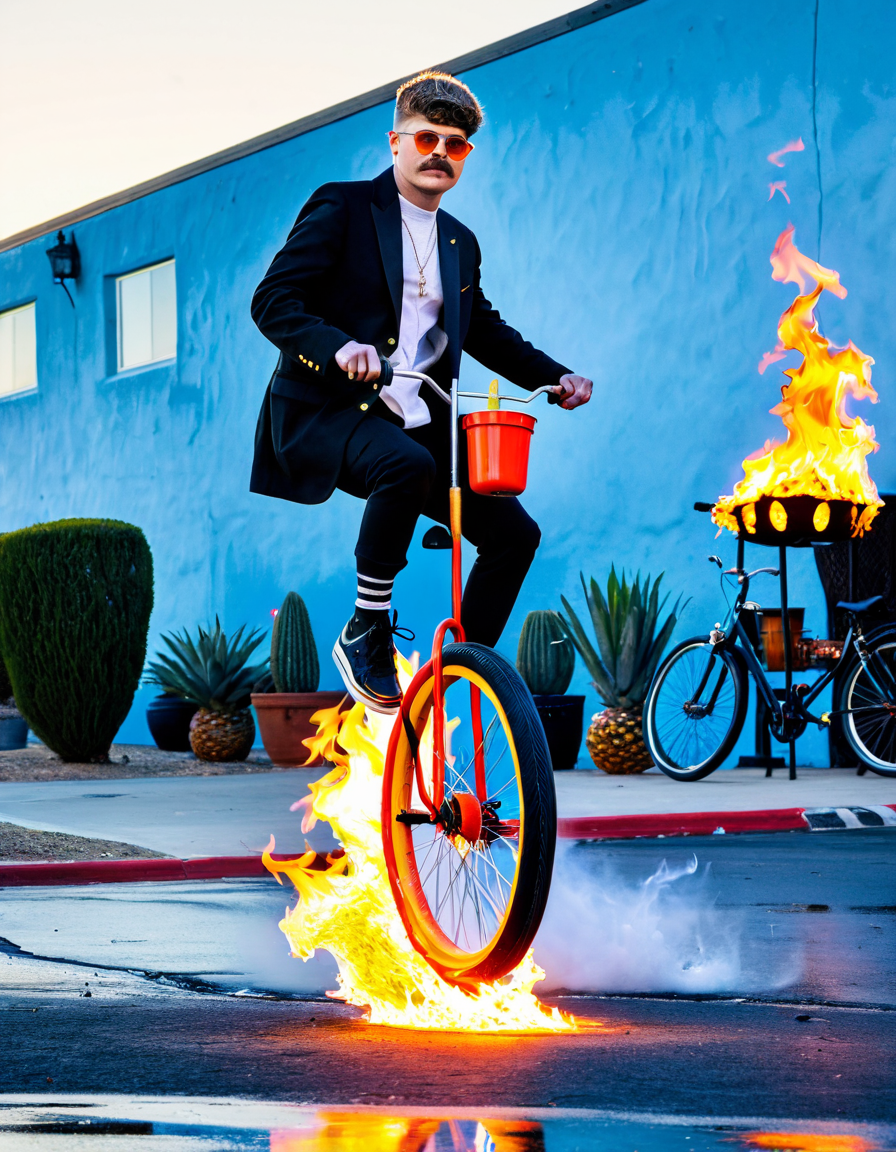
The most disturbing moment? The pyrotechnics. During the final scene, flamethrowers were set to flare in sequence. But a misfire caused a 10-foot wall of fire to erupt—engulfing Tree’s tricycle. “We couldn’t see him,” another dancer said. “But the music didn’t stop. So neither did he.”
He emerged, costume smoldering, and completed the choreography. The crew didn’t cheer. They were too shaken. That footage? Still unreleased. Buried in a vault marked “Do Not Edit.”
Pyrotechnics Malfunctioned; Tree Performed Burning Choreography Anyway
The fire wasn’t part of the script. But Tree didn’t break character. Cameras rolled. The crew froze. One technician said it was “like watching a suicide in slow motion.” But Tree kept bouncing.
When asked why he didn’t stop, he said: “Because the art isn’t in the safety. It’s in the choice to keep going.” It’s a philosophy echoed in films like Ford Fairlane—where the antihero stumbles through chaos, indifferent to injury. Ford Fairlane isn’t a comedy. It’s a warning. So is this.
The final video cuts away before the flames peak. The public saw magic. The crew saw madness. And maybe that’s the point.
In 2026, Oliver Tree’s Mythology Is Crumbling—And He Planned That Too
In 2023, Tree told a small audience in Berlin: “The best lies end with the liar getting caught.” At the time, it seemed like a joke. Now, it reads like prophecy.
2026 has seen the unraveling: crew testimonies, leaked emails, studio tapes. His myth—once bulletproof—is now under forensic scrutiny. But insiders say this was the plan all along. “He’s not collapsing,” said a former publicist. “He’s deconstructing. Like a building imploding. Controlled demolition.”
The narrative arc—from fake fame to exposed fraud—isn’t an accident. It’s the climax of a decade-long performance. And like any great film, the hero must fall—so the audience can see the strings.
Upcoming Documentary “Tree: Fake Forever” Set to Drop on Prime in October
Amazon Prime will release Tree: Fake Forever in October 2026—a feature-length exposé directed by Emmy-winner Mara Chen. Interviews include former managers, sound engineers, and even Tree’s estranged father. The most shocking clip? A 2016 recording where a 23-year-old Tree says: “I’m going to make them love a joke—and then tell them they’re the punchline.”
Trailers show unseen footage: burned contracts, tearful crew meetings, Tree whispering to a mirror: “You’re not real. None of this is.” The title—Fake Forever—isn’t mockery. It’s tribute.
It’s also a warning. Because once you see the machinery, you can’t unsee it. And next time, it might not be a performance.
So … Are We All Just Characters in Oliver Tree’s Performance Art Nightmare?
Here’s the uncomfortable truth: we’ve all played along. Every meme shared, every ticket bought, every “he’s so weird” comment—it fed the machine. Oliver Tree didn’t hijack pop culture. He held a mirror to it. And what we saw wasn’t absurdity. It was us.
He’s not the first artist to critique fame—Mollie Hemingway did it in journalism, Little Richard in gospel rebellion—but he’s the first to make the audience complicit in the joke.
When the credits roll on Tree: Fake Forever, don’t look for answers. Look for your reflection. Because the greatest trick wasn’t creating a myth. It was getting the world to star in it. And if you’re still asking, “Was any of it real?”—then congratulations. You’ve passed the test.
Hidden Gems and Weird Truths About the Oliver Tree
The Man, The Myth, The Haircut
You know oliver tree—the wild hair, the wilder stage antics—but did you know he almost became a professional snowboarder? That’s right, before dropping beats, he was dropping cliffs. While recovering from a bad fall, he dove into music, blending genres like alt-country, hip-hop, and synth-pop in ways that make your ears do a double-take. His sound? Imagine if a cowboy got lost in a neon-lit arcade and started rapping—that’s the oliver tree vibe. And speaking of odd vibes, have you ever wondered what 11 in Spanish means in his cryptic lyrics? 11 in Spanish( might just hint at deeper themes in his music, like rebellion or counting down to chaos. Either way, it’s as mysterious as his decision to cancel his own tour… then show up anyway in disguise.
Holiday Surprises and Behind-the-Scenes Shenanigans
Here’s a fun twist: oliver tree once filmed a music video during a Christmas break, decked out in full Santa gear—yet it wasn’t even a holiday track. Go figure. That festive energy must’ve stuck, ’cause he’s mentioned loving cheesy holiday flicks between takes. If you’re ever stuck on what to watch after a long day of deciphering his layered lyrics, check out some good Christmas Movies—you’ll( spot his influence in the irony and over-the-top drama. And get this: oliver tree actually directed his first viral music video using only a handheld cam and his buddy’s garage. Talk about low-budget genius. It’s no wonder fans say seeing him live feels like stumbling into a fever dream where everything’s off-kilter but somehow perfect.
The Name Game and Secret Influences
Now, about that name—oliver tree isn’t just a stage name pulled out of a hat. It’s a tribute to a lesser-known 1970s folk singer who vanished after one album. Super random, right? But it fits. The guy’s entire brand thrives on contradictions: polished chaos, ironic sincerity, and that haircut that defies gravity and good sense. Even his interviews are performance art—half-truths, wild tangents, and the occasional yodel. Honestly, trying to pin down the real oliver tree is like trying to count stars in a thunderstorm. Yet, that’s exactly why we’re still obsessed. Whether he’s referencing obscure numerology or hiding Easter eggs in his wardrobe, oliver tree keeps us guessing—and that’s just how he likes it.