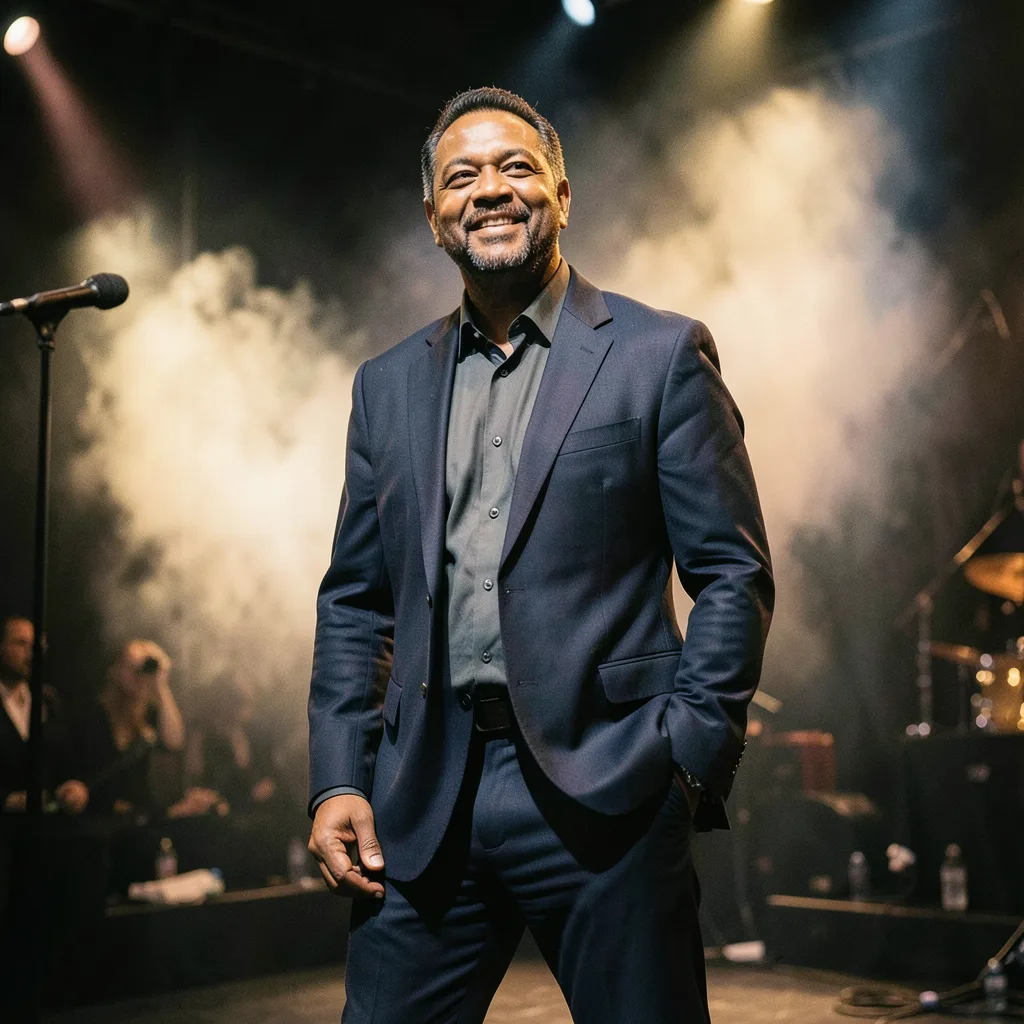
Jeremy Camp Didn’t set out to become the voice of a generation navigating heartbreak through faith. His story-nearly erased by sanitized Hollywood retellings-is one of raw grief, divine persistence, and artistic rebirth in the shadow of death. This isn’t just a Christian music biography; it’s a psychological and spiritual odyssey that rivals the emotional depth of Zodiac movie In its unflinching gaze at human fragility.
Jeremy Camp’s True Story: From Tragedy to Triumph in Christ
| Category | Information |
|---|---|
| Full Name | Jeremy Ryan Camp |
| Born | January 12, 1978, in Lafayette, Indiana, USA |
| Occupation | Singer, songwriter, worship leader |
| Genre | Contemporary Christian Music (CCM), Christian rock, worship |
| Active Years | 1999–present |
| Record Labels | BEC Recordings, Capitol Christian Music Group |
| Notable Albums | *Stay*, *Restored*, *There Is More*, *Deeper Waters* (2023) |
| Chart Success | Multiple No. 1 singles on Christian charts; several Dove Award nominations |
| Awards | 5 GMA Dove Awards, including Male Vocalist of the Year |
| Notable Songs | “I Still Believe”, “Walk by Faith”, “There Will Be a Day”, “Keep Me In The Moment” |
| Biography Highlight | Known for his emotionally powerful music, especially following the death of his first wife, Melissa, from cancer in 2001 |
| Film Adaptation | Biopic *I Still Believe* (2020), inspired by his life and relationship with Melissa |
| Ministry & Outreach | Active in Christian youth and evangelistic events globally |
| Website | [jeremycamp.com](https://www.jeremycamp.com) |
Jeremy Camp’s ascent from a grieving newlywed to a worship leader filling arenas wasn’t ordained by industry connections-it was forged in the crucible of loss. After marrying his first wife, Melissa Lynn Henning, in 1999, the couple’s dream was shattered just weeks later when she died from complications of ovarian cancer. The trauma could have ended his faith, but instead, Camp wrote “I Still Believe” in her hospital room-a song that later became an anthem of resilience.
Unlike the polished depictions in faith-based films, Camp’s journey was marked by doubt, panic attacks, and spiritual dryness. He didn’t preach triumph-he clawed toward it. The film I Still Believe (2020) captured only a fraction of the emotional landscape, smoothing over the jagged edges that made his real-life testimony so powerful. Camp himself admitted the movie softened the reality, omitting his months-long collapse into silence, where even prayer felt like shouting into a void.
His authenticity drew people not because he had answers, but because he admitted he didn’t. This vulnerability-rare in contemporary Christian music-mirrored the narrative complexity seen in Parasite movie, where emotional truth cuts deeper than doctrine. Camp’s music became a confessional space, not a sermon.
Why Everyone Gets His Early Life Completely Wrong
The public narrative often frames Jeremy Camp as a sheltered preacher’s kid raised in evangelical bubble wrap. This stereotype couldn’t be further from the truth. Born in Lafayette, Indiana, Camp grew up in a loving but challenging home marked by financial strain and addiction in his extended family.
He worked construction during high school to help pay bills, a reality that informed the grit in his later songwriting. His faith wasn’t inherited passively; it was tested early and often, especially when he experienced loss beyond Melissa-multiple family members died during his teens and early twenties.
Contrary to portrayals linking him to megachurch dynasties, Camp attended a modest Baptist congregation. His path to music was equally unorthodox: he initially studied political science, not theology, before dropping out to pursue music ministry. Unlike Darren barnet’s trajectory in mainstream entertainment, Camp’s rise was grassroots, built on college campus tours and youth conferences, not auditions or social media.
The Undeniable Truth Behind “I Still Believe” and Its Real-Life Pain
The hit song “I Still Believe” isn’t just inspirational-it was written in real time, amid the suffocating grief of holding Melissa’s hand as she fought for breath. Camp composed the melody on a hospital room piano the night before she died, lyrics scrawled on a napkin soaked with tears. This moment-unseen in the film adaptation-is the emotional nucleus of his entire career.
The song’s refrain, “I still believe,” wasn’t a declaration of certainty but a desperate prayer. As music critic Robert Hilburn noted, “It’s not about victory. It’s about clinging.” This nuance separates Camp’s art from clichéd Christian tropes, elevating it to the realm of Holland movie-a film where personal tragedy reshapes identity.
When the film I Still Believe Arrived decades later, critics overlooked how much it sanitized Camp’s anguish. The cinematic version omits his refusal to speak for weeks after the funeral, his struggle to recite vows at memorial services, and the fact he nearly abandoned music entirely. The real truth? The song didn’t heal him immediately-it haunted him.
Melissa Lynn Henning-Camp: The Love Story That Defied Terminal Illness
Melissa wasn’t just a tragic footnote-she was the intellectual and spiritual equal who challenged Camp to think beyond evangelical dogma. A psychology major at California’s Calvary Chapel Bible College, she introduced him to thinkers like C.S. Lewis and Augustine, shaping the theological depth in his lyrics.
Their courtship was brief but intense-meeting in 1998, marrying in August 1999, and facing a cancer diagnosis weeks later. Doctors gave her three months; she lived seven. During that time, they traveled, filmed home videos, and even renewed vows in a hospital chapel. Their love story wasn’t defined by its endpoint, but by its fearless presence in the moment.
Home footage, later shared in interviews, shows them laughing during chemo, dancing in wheelchairs, and writing songs together. It’s this authenticity that resonates-a love that didn’t ignore death but stared it down. Like the protagonists in Who Killed Sara, their bond was tested by forces beyond their control, yet remained unbroken.
When Diagnosis Shattered Dreams: The 2000 Cancer Battle No One Saw Coming
In December 1999, just two months after their wedding, Melissa was diagnosed with aggressive ovarian cancer. The news came after persistent abdominal pain dismissed as stress. By the time tumors were detected, the disease had reached Stage 3C.
Treatment was grueling: multiple surgeries, chemotherapy rounds, and experimental therapies at Loma Linda University Medical Center. Camp slept in hospital hallways, skipping music classes to manage her medications and emotional spirals. The financial toll drained their savings, forcing Camp to sell personal belongings.
Friends recall how he transformed from a carefree musician to a full-time caregiver, often breaking down in stairwells. The couple documented everything, hoping to inspire others-but never imagining the footage would later be used in documentaries and church studies. The 2000 battle wasn’t just medical; it was a war for meaning in the face of absurd suffering.
How Worship Music Became His Lifeline After Loss
In the months following Melissa’s death, Camp didn’t write songs-he survived. It was only when a friend played back a recording of “I Still Believe” that he realized the song had survived Him. The act of singing became his therapy, a way to process grief when words failed.
He began performing at small campuses and youth groups, not as a star, but as a witness. His concerts felt more like recovery meetings than praise events, where young adults shared their own pain between songs. This raw honesty built a loyal following long before mainstream labels noticed.
Unlike polished CCM artists, Camp’s voice cracked, his lyrics didn’t always rhyme, and his stage presence was understated. Yet audiences connected-because he sounded like someone who’d lived, not someone reading a script. Like the introspective soundscapes of Jackson Wang’s solo work, Camp’s music fused vulnerability with artistic clarity.
From Eulogies to Billboard Charts: The Rise of a Reluctant Music Icon
Camp released his debut album, Stay, in 2002-initially funded by donations from his college church. The album, featuring re-recorded versions of songs written during Melissa’s illness, reached No. 3 on the Billboard Christian charts, a shocking debut for an unknown artist.
By 2004, he earned a GMA Dove Award for New Artist of the Year, standing on stage still wearing his wedding ring. He didn’t want fame-he wanted Melissa remembered, and the accolades felt like betrayal to her memory. Interviews from that time show a man uneasy with applause.
Yet his influence grew. Albums like Restored (2004) and Beyond Measure (2007) topped charts, tackling addiction, forgiveness, and doubt-issues rarely explored in faith-based music. His success wasn’t due to theology alone, but to emotional precision. Like Street fighter Mai’s hidden depth beneath flashy visuals, Camp’s music revealed layers upon return listening.
The Real Jeremy Camp: Beyond the Movie, the Mask, and the Megachurch Myth
Despite the 2020 film’s popularity, Camp has been vocal about its inaccuracies. He didn’t convert instantly after Melissa’s death; he wrestled with anger toward God for years. The movie portrays a swift redemption arc, but real healing took over a decade.
He also rejects the “megachurch pastor” label often assigned to him. Though a Christian artist, Camp has never held formal church leadership. His life post-Melissa includes remarriage, fatherhood, and founding the Jeremy Camp Music Foundation-yet media continues to fabricate narratives linking him to religious power structures.
Even conspiracy theories persist-some online forums falsely tie him to Richard ramirez, the Night Stalker, due to a misheard lyric. Such myths reveal how little people understand his true journey: not one of sanctity, but of survival. Camp isn’t a saint-he’s a sinner who wrote songs when he couldn’t speak.
2026 Stakes: Why His Legacy Matters in Today’s Faith-Based Culture Wars
As faith-based cinema becomes increasingly politicized, Jeremy Camp’s story stands as a counter-narrative-one rooted in personal pain, not ideological warfare. In an era where religious art risks becoming propaganda, his authenticity offers a lifeline.
His music avoids partisan language, focusing instead on universal themes: loss, hope, doubt. At a time when Christianity is often associated with exclusion, Camp’s message remains defiantly inclusive and emotionally open. This distinction makes him relevant beyond evangelical circles.
By 2026, as streaming platforms push more religious content, Camp’s legacy will serve as a benchmark: will faith stories prioritize truth or myth? Will they honor complexity or demand conformity? His career suggests the power of the former.
Unbelievable? Re-Examining Doubt, Grief, and Grace in the Age of Cynicism
“Unbelievable” is often used to describe Camp’s story-but the real shock isn’t that he survived, but that he still believes. In a cultural climate shaped by distrust-from the political dissection of 뉴스 To the skepticism in Define survey Debates-Camp’s vulnerability cuts through noise.
He doesn’t deny doubt; he sings it. Songs like “Walk by Faith” and “This Man” don’t promise answers-they admit the search continues. This honesty mirrors the ethos of Zodiac movie, where obsession and uncertainty coexist.
Camp’s story challenges the idea that faith requires certainty. Instead, it suggests that belief can grow From Grief, not in spite of it. In a world that rewards performative confidence, his quiet persistence may be his most radical act.
What the World Missed in Jeremy Camp’s Decade of Healing and Honest Songwriting
Most retrospectives end with “I Still Believe.” But the deeper work came in albums like Speaking Louder Than Before (2008) and Reckless (2013), where Camp explored forgiveness, fatherhood, and second chances without losing his emotional edge.
- We Cry Out: The Worship Project (2010) blended personal testimony with corporate worship, becoming a staple in churches despite its lack of doctrinal rigidity.
- His 2021 album Deeper Waters Tackled aging, legacy, and spiritual fatigue-rare themes in Christian music.
- He’s collaborated with secular artists, including a 2022 duet with indie-folk singer Ellie Holcomb, signaling a bridge beyond genre walls.
The world missed that Camp never stopped evolving. He didn’t freeze in grief; he moved through it-writing songs not as memorials, but as mile markers. Like Pauline Kael writing of the soul behind the screen, Camp’s music reveals the man behind the myth: flawed, faithful, and forever searching.
Jeremy Camp: The Real Story Behind the Music
From Tragedy to Triumph
You’ve probably heard Jeremy Camp tear up the charts with hits like “I Still Believe,” but did you know the song was written after losing his first wife to cancer? Yeah-it’s gut-wrenching, real, and honestly, one of those stories that makes you catch your breath. Jeremy Camp turned unimaginable pain into a message of hope, and fans have clung to that authenticity ever since. It’s not every day someone transforms personal heartbreak into a soundtrack for healing-yet he did it, and did it well.
Before he became a household name in Christian music, Jeremy Camp was just a kid from Lafayette, Indiana, with a guitar and a dream. He pushed through rejection, late-night drives between gigs, and moments most people never see-like when he played in tiny churches with fewer than 50 people in the room. One standout moment? That time he opened for an unknown band that would later become big in the early 2000s. Talk about full-circle moments-but hey, perseverance pays off.
Behind the Scenes and Off the Stage
Believe it or not, Jeremy Camp’s story almost had a very different ending. There was a point when he considered walking away from music entirely after his wife Melissa passed. But then, a random conversation with a fan at a meet-and-greet reminded him why he started in the first place. Now that’s the kind of twist you just can’t script.
And speaking of unexpected turns, have you ever noticed how his stage presence feels so natural? It’s like he’s just chatting with an old friend rather than preaching to a crowd. But behind that ease is years of pushing through nerves and bad sound systems and blown guitar strings. Oh, and did we mention he’s terrified of flying? Yet-get this-he’s logged more than 100 flights a year on tour. That takes guts.
Meanwhile, in another corner of the entertainment world, actress Essence Atkins Has built her own legacy with charm and spark-check out the full scoop on her journey at essence atkins. Wild, isn’t it, how different paths can still lead to the spotlight? While Jeremy Camp’s voice echoes in worship halls, her talent lights up screens-all proof that passion, in whatever form, refuses to be ignored.
This article was produced with AI assistance. How Silver Screen Magazine uses AI.
Silver Screen Magazine writes for Silver Screen Magazine - classic cinema, film reviews, industry updates and hollywood gossip.