
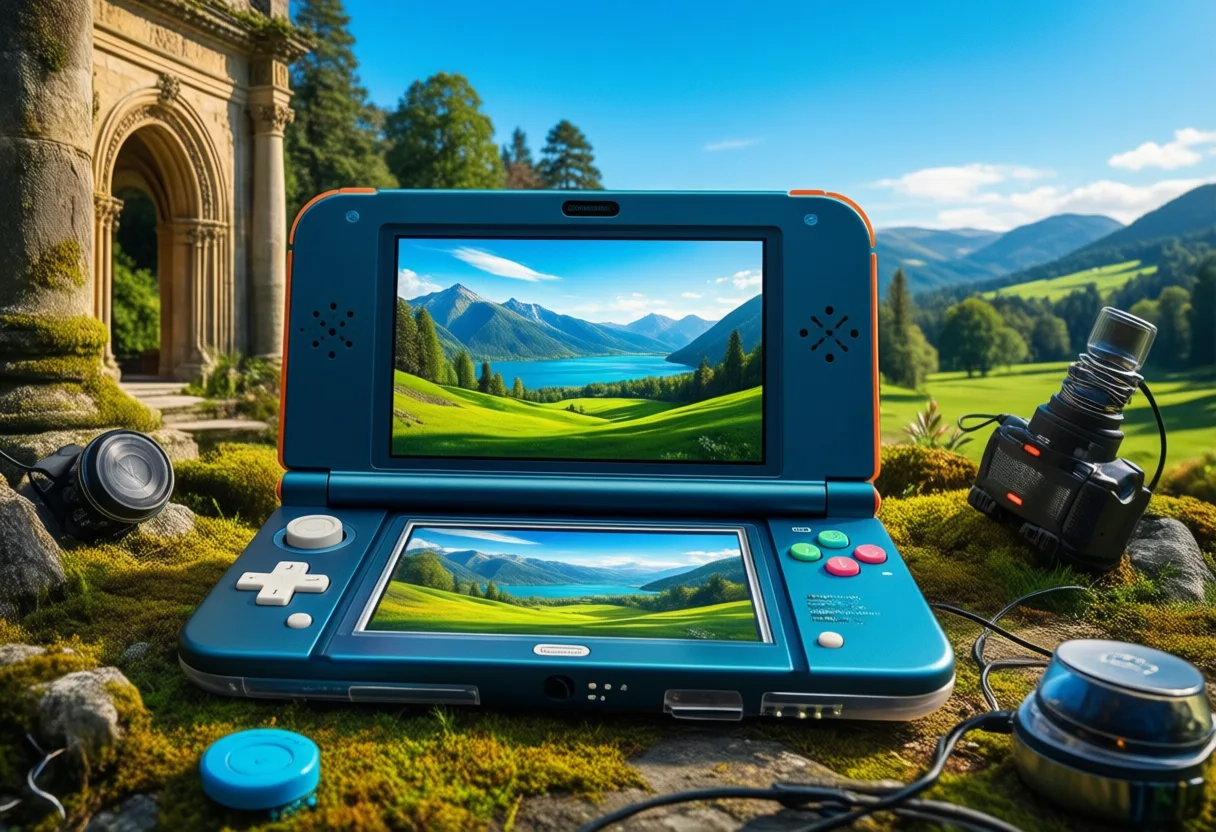
In the quiet alchemy of light and perception, where images leap from the flat page of reality into the third dimension, cinema has always sought to dissolve the barrier between viewer and vision. The Nintendo 3DS, in its modest plastic frame, whispers of that same ambition-not with the thunder of a blockbuster premiere, but with the steady pulse of innovation tucked inside a handheld device. It does not replace the silver screen, nor mimic its grandeur, but instead carves its own intimate theater in the palm of the hand, where depth unfolds without glasses and stories unfold across twin planes of possibility.
A Theater in the Palm: The Dual-Screen Design
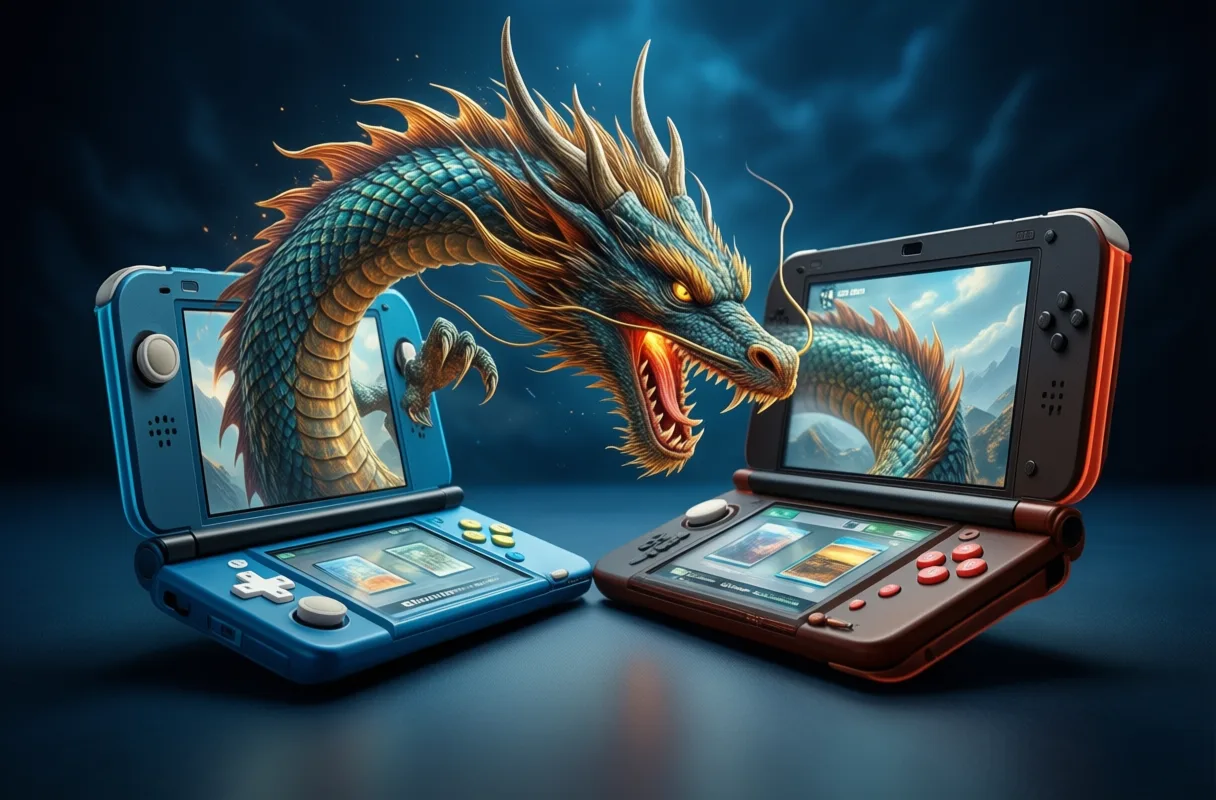
The duality of the Nintendo 3DS is not merely technical-it is narrative. Like A director cutting between close-up and wide shot, the device orchestrates a dialogue between its two screens, each serving a distinct cinematic purpose. The Bottom touch screen Becomes a stage for interaction, a tactile canvas where fingers guide characters, trace maps, or sketch ideas in real time. It recalls the early days of silent film, where gesture carried meaning, and the audience leaned in, eager to interpret.
Above it, the Top screen Unfolds the primary action, a self-contained frame where worlds bloom in color and motion. This division echoes the split consciousness of filmmaking itself-the behind-the-scenes labor on one side, the polished illusion on the other. Players don’t just watch; they inhabit both roles, simultaneously audience and auteur.
- The lower screen often displays inventories, menus, or supplementary views-like a film’s script laid bare beside the final cut.
- The upper screen immerses with gameplay, much like a projector casting dreams onto a darkened wall.
- Together, they form a dialectic of control and spectacle, not unlike the relationship between a director and their vision.
There is poetry in this design. It does not shout of technological prowess but invites contemplation, rewarding those who notice how form shapes experience. In an age of convergence, where screens multiply and blur, the 3DS insists on distinction-on purpose.

Depth Without Distance: The Autostereoscopic 3D Experience
Then there is the 3D-Autostereoscopic, they call it, a mouthful of a word for a quiet miracle. No glasses, no filters, no darkened lenses dimming the light. Just depth, rising from the screen like fog from a moonlit lake, giving weight to spaces that should be flat. It is not the 3D of flashing explosions in IMAX, designed to startle, but a subtler enchantment-one that makes a character’s glance feel closer, a landscape feel vaster, a moment feel Real.
This effect is achieved through a parallax barrier, a layer that directs different images to each eye, tricking the brain into seeing dimension. It is an old illusion, rooted in Victorian-era stereoscopes, now miniaturized and refined. Yet in its execution, it feels startlingly modern-a whisper of the future spoken in the language of the past.
- The 3D slider allows users to adjust depth, from full immersion to flat, giving control back to the viewer.
- In games like The Legend of Zelda: Ocarina of Time 3D, dungeons gain new spatial logic, their corridors and traps revealed in layered clarity.
- Even in quieter moments-watching a character turn, or rain fall across a cityscape-the effect lingers, a gentle reminder of presence.
It is not flawless. The angle must be just right; tilt the device too far, and the illusion shimmers, breaks. But in that fragility lies a kind of honesty. Like a film projected on a slightly misaligned reel, it reminds us that magic is not perfection-it is the suspension of disbelief, carefully maintained.
Beyond the Gimmick: A New Language of Play
Too often, new technology is mistaken for spectacle. The 3DS, in its best moments, understands that True innovation is narrative. The dual screens and 3D are not novelties but tools-brushstrokes in a broader palette. They allow developers to compose experiences that could not exist elsewhere, much like how the close-up changed acting or how sound reshaped dialogue.
Consider a scene where a character on the top screen speaks, while the bottom reveals their hidden thoughts in scribbled notes. Or a puzzle that requires viewing an object from both screens simultaneously, as if peering through two lenses of a single mind. These are not just mechanics-they are storytelling devices, as deliberate as a camera pan or a fade to black.
- The device fosters intimacy, drawing players into a private cinema, unshared and immediate.
- Its portability echoes the rise of early film projectors, once bulky, now carried in a coat pocket.
- And in its limitations-small screen, modest processing power-lies a kind of purity, a focus on idea over scale.
Like the best films, the Nintendo 3DS does not overwhelm. It invites. It suggests. It lets the imagination fill the spaces between pixels, between frames, between dimensions. In doing so, it honors the oldest truth of cinema: that the most powerful illusions are not seen with the eyes, but felt in the dark, where wonder begins.
| Feature | Function |
|---|---|
| Autostereoscopic 3D | Creates 3D effect without glasses |
| 3D Slider | Adjusts or turns off 3D depth |
| Top Screen | Displays main gameplay in 3D |
| Bottom Touch Screen | Used for controls, maps, and input |
| Gyroscope & Accelerometer | Enables motion-based gameplay |
| Cameras | Two outer, one inner for 3D photos |
| StreetPass | Exchanges data with nearby 3DS units |
A Closer Look at the 3DS Experience
More Than Meets the Eye
The Nintendo 3DS made waves by letting players see 3D effects without special glasses, thanks to its autostereoscopic top screen. This clever trick uses a sliding bar on the right side of the device, allowing users to adjust the depth effect or turn it off completely. If you're not into the 3D look, no problem-just slide it down and enjoy standard 2D gameplay.
Twin Screens, Double the Fun
Its dual-screen setup wasn't just for show. The bottom touch screen opened up new ways to interact with games, from drawing in Art Academy To solving puzzles in The Legend of Zelda: Ocarina of Time 3D. The top screen handles the main action in 3D, while the bottom gives developers extra space for maps, inventories, or controls-making gameplay more immersive and intuitive.
Built-In Features That Surprised Players
The 3DS came with a gyroscope and accelerometer, so tilting the system could steer a kart in Mario Kart 7 Or aim a bow in Zelda. It also featured two outer cameras and one inner camera, letting users snap 3D photos or play face-mapping games. And with StreetPass, the system could exchange data with other nearby 3DS units automatically, unlocking surprises in games like Animal Crossing-even when the device was in sleep mode. Explore more stories, videos, and creators on Loaded.
Frequently Asked Questions
Does the Nintendo 3DS require glasses for its 3D effect?
No, the Nintendo 3DS uses autostereoscopic 3D technology that creates a 3D effect without the need for special glasses.
How does the dual-screen design enhance gameplay on the 3DS?
The top screen displays main gameplay in 3D, while the bottom touch screen provides interactive controls, maps, inventories, or supplementary views during play.
Can the 3D effect on the Nintendo 3DS be turned off?
Yes, the 3D slider on the right side of the device allows users to adjust the depth or turn the 3D effect off completely for 2D gameplay.
What unique features does the 3DS offer for player interaction?
The 3DS includes a gyroscope and accelerometer for motion control, built-in cameras for 3D photos, and StreetPass for automatic data exchange with nearby devices.
This article was produced with AI assistance. How Silver Screen Magazine uses AI.
Vivian Chukwu explores golden-age Hollywood with reverence and rigor, unearthing forgotten performances and cultural contexts. She connects archival footage to modern themes, making classic films feel immediate and vital through thoughtful analysis and vivid storytelling.