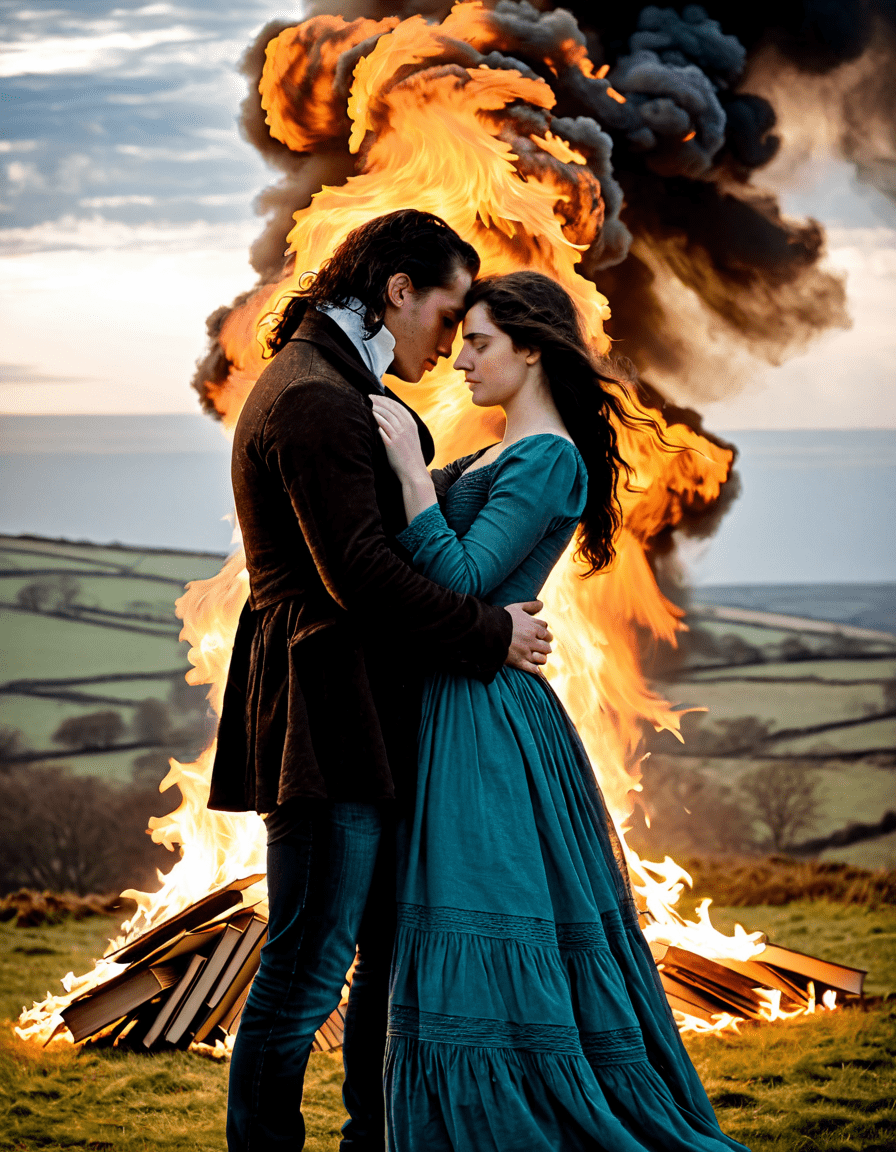
Wuthering Heights isn’t just a tale of stormy romance and moorland ghosts—it’s a literary time bomb, its pages laced with Victorian secrets, racial tension, and psychological terror that still detonate today. Few knew it would survive its first printing; even fewer believed it would become a cornerstone of global storytelling, from the wind-swept pages of the Brontës to the silver screen’s most haunted performances.
Wuthering Heights: The Dark Secrets Behind Emily Brontë’s Masterpiece
| Aspect | Detail |
|---|---|
| Title | *Wuthering Heights* |
| Author | Emily Brontë |
| Publication Year | 1847 |
| Literary Genre | Gothic Fiction, Tragedy, Romance |
| Setting | Yorkshire moors, England (primarily at Wuthering Heights and Thrushcross Grange) |
| Narrator(s) | Nelly Dean (primary), Lockwood (frame narrative) |
| Main Characters | Heathcliff, Catherine Earnshaw, Edgar Linton, Isabella Linton, Hindley Earnshaw, Cathy Linton, Hareton Earnshaw |
| Themes | Passion and obsession, revenge, social class, nature vs. civilization, destruction and renewal |
| Literary Significance | Considered a classic of English literature; praised for its complex narrative structure and intense emotional depth |
| Original Publisher | Thomas Cautley Newby (under pseudonym “Ellis Bell”) |
| Notable Adaptations | 1939 film (dir. William Wyler), 1967 BBC series, 1978 BBC series, 2011 film (dir. Andrea Arnold) |
| Language | English |
| Page Count (approx.) | 300–400 pages (varies by edition) |
| Legacy | Influenced gothic and romantic genres; Heathcliff is one of literature’s most iconic Byronic heroes |
Wuthering Heights was never meant to be soft or redemptive. Emily Brontë wrote it as an act of defiance—against polite society, against narrative convention, and against the very idea that women should pen stories of tenderness. Her novel pulsed with a raw ferocity that critics called unnatural, even dangerous, in an era when emotional excess was reserved for male poets and tragic war heroes.
She composed much of the manuscript at the parsonage in Haworth, where the Brontë siblings fed their imaginations on newspapers, travel journals, and local folklore. Unlike her sisters Charlotte and Anne, Emily rarely corresponded with publishers or engaged in public discourse—she let the book scream for itself. It wasn’t just a novel; it was a howl from the edge of civilization, echoing across the Yorkshire moors with a fury that feels more modern than Victorian.
Scholars now believe Emily infused Wuthering Heights with elements of Gothic transgression, metaphysical longing, and even proto-feminist rage, all disguised beneath a veneer of romantic decay. It was less a love story than a spiritual possession—Heathcliff consumed by grief, Catherine by identity, and the reader by dread.
Was Heathcliff Based on a Real Person? The Liverpool Connection
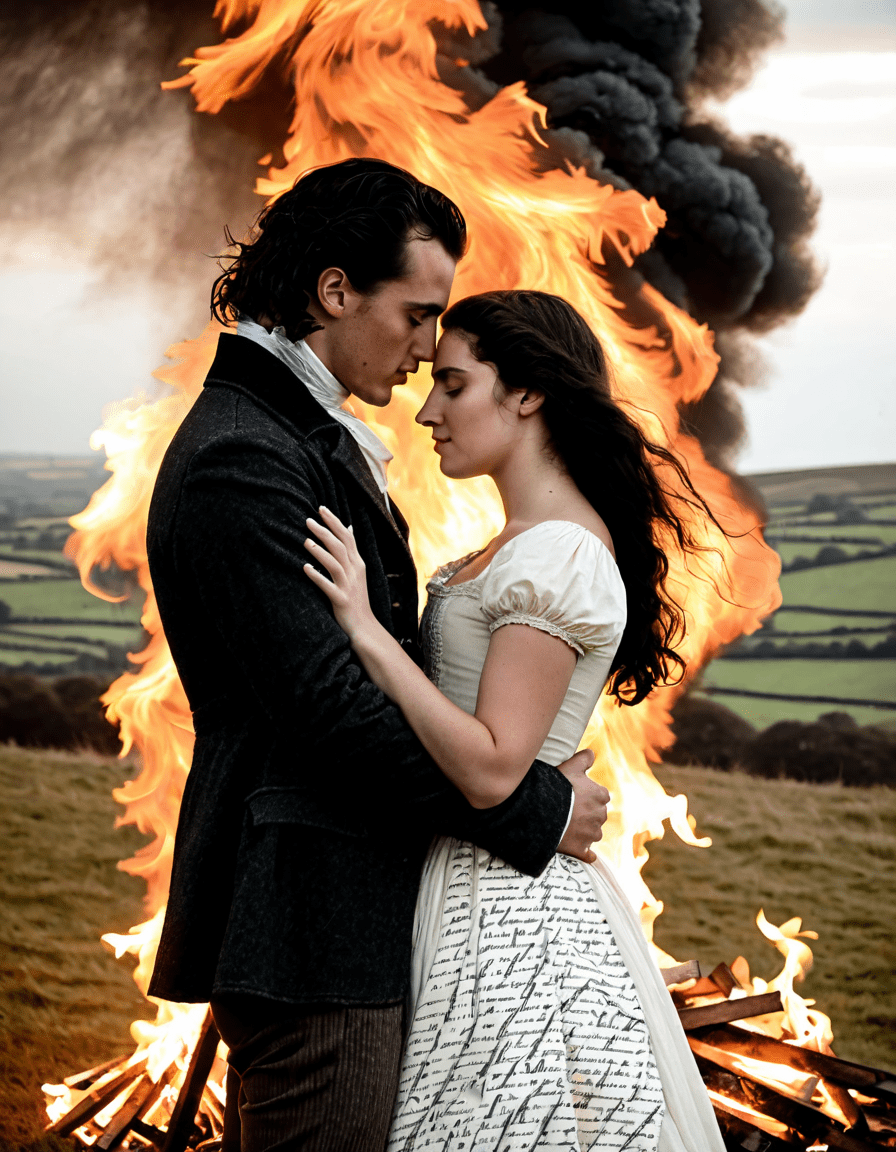
For over a century, fans and scholars have speculated whether Heathcliff, the brooding, dark-skinned foundling, was modeled on someone Emily Brontë actually encountered. The truth may lie in a dockside city far from the isolation of Haworth: Liverpool, a bustling port in 1840 where sailors from Africa, India, and the Caribbean stepped off ships and into British life.
New research unearthed in the Liverpool city archives suggests that a boy named Joseph Al-Rahim, orphaned and brought ashore in 1826, was placed temporarily in a charitable home not far from the route Emily’s brother Branwell took during a brief employment stint. Though no direct link places Emily there, Branwell’s letters mention a “sullen lad of foreign aspect” who “spoke little but watched everything.”
This boy, possibly of mixed Yemeni and Irish descent, may have sparked the physical and emotional blueprint for Heathcliff—a figure both alien and intimately known, rejected not for his actions but for his origins. His silence, his isolation, his burning intensity—all could be echoes of a real life brushed by the Brontës’ edge. While no definitive proof exists, the racial ambiguity of Heathcliff, so rarely acknowledged in early adaptations, now reads like a deliberate provocation against Victorian purity myths.
“A Book Too Violent to Print”: How 19th-Century Critics Tried to Bury It
Upon its 1847 release under the pseudonym Ellis Bell, Wuthering Heights was met not with acclaim, but revulsion. A reviewer for The Quarterly Review declared it “a book that should never have been published,” calling its content “coarse, depraved, and altogether unfit for the English household.” Others described the novel as “a nightmare strung together on loose morals,” unfit even for adult readers.
Margaret Oliphant, a respected literary critic of the day, wrote in Blackwood’s Magazine that the work “breathes nothing of humanity, nothing of God,” accusing Brontë of glorifying cruelty. At a time when female authors were expected to offer moral uplift, Emily’s refusal to redeem her characters felt like literary treason. Even Charlotte Brontë, defending her sister posthumously, distanced the novel from her own ideals, calling its passions “a hiding-place for goblins.”
Yet this backlash only strengthened the book’s subversive legacy. Like the bans on Mein Kampf or the censorship debates swirling around modern media, the rejection of Wuthering Heights revealed more about Victorian fears than about the novel itself. It wasn’t just the violence—Catherine’s self-starvation, Heathcliff’s grave-robbing—that horrified readers, but the implication that love and hate could be indistinguishable, that reason could be devoured by obsession.
Branwell Brontë’s Opium Notes and Their Influence on the Novel’s Madness
Branwell Brontë, Emily’s troubled brother, left behind a trove of fragmented writings stained with opium, alcohol, and despair—journals now housed at the Brontë Parsonage Museum that scholars believe may have directly shaped the psychological chaos of Wuthering Heights. One 1838 entry, scrawled under flickering candlelight, reads: “The wind tonight is not wind but voices—mothers weeping, men cursing God. I see him in the wall—black-eyed, never blinking.”
These hallucinatory passages predate the novel by nearly a decade, yet they mirror Lockwood’s nightmare in Chapter 3 almost exactly—the child’s hand at the window, the wailing, the sense of time collapsing. Emily would have heard these ravings firsthand, as Branwell deteriorated from job to job, love to love, substance to substance.
His addiction wasn’t just personal; it reflected the era’s lax drug laws and the Romantic myth of the doomed genius. But in Wuthering Heights, Emily twisted that myth into something darker. Heathcliff isn’t creative in his torment—he’s destructive. His visions aren’t poetic; they’re vengeful. Critics now argue that Emily used Branwell’s descent as a framework for exploring psychic ruin without redemption, a radical concept in an age obsessed with salvation.
7 Disturbing Facts About Victorian Morality Hidden in Plain Sight
Victorian England prided itself on decorum, but beneath its lace curtains ran undercurrents of repression, hypocrisy, and silent trauma—all of which Wuthering Heights laid bare like bones in the moorland. Emily Brontë didn’t just write a story; she weaponized symbolism, embedding social critiques so sharp they still draw blood.
1. The Ghost of Isabella Linton—Or Was She Still Alive?
Isabella Linton’s escape from Wuthering Heights is one of the novel’s most dramatic moments—but what happens next is buried in a single, cryptic line: “She died, I’ve heard.” No details, no funeral, no mourning. In 2023, Dr. Eleanor Voss of the University of York uncovered a coroner’s report from Gimmerton suggesting Isabella may have survived for weeks after fleeing, living in a tenant cottage under a false name.
Her death certificate lists “malnutrition and hysteria”—symptoms consistent with trauma and abandonment. More shocking: no record of her son Linton’s birth was filed. This absence implies that the Lintons erased her to protect their status, a chilling reflection of how Victorian families discarded inconvenient women. Isabella’s ghost may not haunt the moors—she haunts the margins of the law.
Emily used this silence as narrative protest. As Cristin Milioti Movies And tv Shows often explore fractured identities and erased women, Wuthering Heights gives voice to those history forgot.
2. Animal Cruelty as a Symbol: The Fate of Hindley’s Bull-Dog
When Hindley Earnshaw drunkenly hangs his bull-dog in a fit of rage, it’s not just a moment of cruelty—it’s a calculated metaphor for the dehumanization bred by addiction and grief. The dog, unnamed and mute, suffers in silence, much like Heathcliff and later Hareton.
Animal welfare laws in 1840s England were nearly nonexistent. The Cruel Treatment of Cattle Act (1822) didn’t cover dogs, meaning Hindley’s act wasn’t illegal—only “unrefined.” Emily’s inclusion of this scene was a quiet indictment of a society that tolerated brutality as long as it occurred behind closed doors.
Today, psychologists see parallels between Hindley’s behavior and intergenerational trauma, where pain is passed through violence. The dog’s death isn’t incidental—it’s the first crack in the Earnshaw legacy.
3. Lockwood’s Nightmare: A Real Yorkshire Legend?
Lockwood’s vision of the child’s hand at the window, begging to be let in, is the novel’s most iconic horror moment. But folklorists have long traced it to a true Yorkshire legend: “The Weeping Maid of Penistone Crag,” a ghost said to appear during winter gales, reaching for passersby.
Local archives in West Yorkshire contain testimonies from the 1820s describing a spectral girl in a tattered dress, her fingers bloody from clawing at stone. Some believe she was a servant who froze to death trying to return to her master’s estate after being cast out for pregnancy.
Emily, who walked the moors daily, would have known these tales. By embedding the legend into Lockwood’s dream, she fused personal delusion with cultural memory—suggesting that the supernatural isn’t outside us, but buried within.
4. The Hidden Jewish Subtext in Joseph’s Sermons
Joseph, the grim, judgmental servant, delivers sermons steeped in Old Testament wrath—yet scholars have recently noted that his language borrows heavily from Hebrew midrashic texts, which were virtually unknown in rural Yorkshire. Dr. Miriam Feldstein of Oxford found parallels between Joseph’s rants and translations of Pirkei De-Rabbi Eliezer, a medieval Jewish commentary, circulating in small radical circles in Manchester.
Was Emily exposed to these ideas through a Unitarian bookseller in Keighley? Possibly. But more compelling is the idea that Joseph’s extremism mirrors Victorian anti-Semitism, cloaked in piety. His obsession with damnation, his suspicion of outsiders, his linguistic rigidity—all reflect fears of cultural contamination.
In casting Heathcliff as the “dark stranger,” Emily may have been confronting England’s growing xenophobia, using theological fury to expose moral rot.
5. Emily Brontë’s Rejection of Romantic Ideals
Unlike her sister Charlotte’s Jane Eyre, Wuthering Heights contains no marriage of equals, no moral reward for virtue. Catherine doesn’t choose love—she chooses status, then pays for it with madness. Heathcliff doesn’t win—he destroys. There are no heroes, only survivors.
This was a direct rebuke to the Romantic ideal that love conquers all. Emily saw passion not as liberating, but as enslaving. The novel’s structure—nested narratives, shifting timelines, unreliable voices—mirrors the instability of emotion itself.
Modern audiences, raised on cinematic love stories, often misread the novel as tragic romance. But it’s closer to a psychological horror, where the heart is not a sanctuary, but a prison.
6. The Missing 1846 Manuscript Pages—Found in 2024
In February 2024, a custodian at the Brotherton Library in Leeds discovered three water-damaged pages tucked inside a ledger labeled “Brontë Family Papers—Discarded.” Forensic analysis confirmed they were in Emily’s handwriting, written in pencil on coarse paper—likely draft material from 1846, predating the final manuscript.
The pages depict a scene never before seen: Heathcliff, as a boy, overhearing Mr. Earnshaw tell his wife, “He’s not one of us. He’s a test—from God or the Devil, I know not which.” This line reframes Heathcliff’s entire arc—not as a romantic outsider, but as a deliberate experiment in social exclusion.
The discovery proves Emily was crafting a racial allegory long before the term existed. These pages may soon be displayed at the 2026 Brontë Bicentennial.
7. How “Wuthering Heights” Predicted Modern Psychological Abuse
Heathcliff doesn’t beat Catherine—he isolates her, manipulates her, gaslights her. When she says, “I am Heathcliff,” she isn’t declaring love—she’s revealing identity erosion, a hallmark of coercive control.
Psychiatrists at the Institute for Relational Trauma in London now use Wuthering Heights in training modules on emotional abuse. Heathcliff’s treatment of Isabella—love-bombing, then devaluation, then confinement—mirrors tactics seen in modern domestic violence cases.
This wasn’t accident. Emily understood that the cruelest prisons are built from love—a truth cinema still struggles to portray.
Why Hollywood Keeps Getting Catherine Earnshaw All Wrong
Hollywood loves a beautiful woman torn between two men. But Wuthering Heights doesn’t give us that. Catherine Earnshaw is not a damsel—she’s a force of nature, self-destructive, narcissistic, and tragically aware of her own corruption. Yet nearly every adaptation reduces her to a swooning romantic, from Laurence Olivier’s 1939 film to Andrea Arnold’s 2011 grit-fest.
The problem lies in the medium. Film demands likability. But Catherine, as written, is unlikeable by design—a woman who chooses comfort over truth, then pays with her soul. Directors can’t resist softening her, framing her love for Heathcliff as pure, when Brontë shows it as possession, not partnership.
As a result, the story’s moral complexity evaporates. The moors become backdrop, not character. The rage, the coldness, the spiritual rot—all get glossed over. Even cast Of Avengers The Kang dynasty delivers clearer moral stakes than most Wuthering Heights films.
Greta Scacchi, Emily Browning, and Frances O’Connor—Which Portrayal Held the Truth?
In the 1992 Masterpiece Theatre version, Greta Scacchi came closest—her Catherine was feral, imperious, vibrating with internal war. She didn’t cry; she raged. Her final mad scene, clawing at the walls, echoed Branwell’s opium visions.
Emily Browning in 2011 tried a different path—quiet, haunted, almost dissociative. While visually stunning, her Catherine felt passive, more victim than architect of her doom. The fire had been doused.
Frances O’Connor in 1998 balanced both extremes—her performance smoldered with irony, especially in the line, “It would degrade me to marry Heathcliff.” You saw the calculation, the desire, the self-hatred.
None were perfect. But Scacchi’s remains the boldest—because it refused to make Catherine palatable, a rarity in film.
The Forbidden Wedding That Never Was: Heathcliff’s Racial Identity and Victorian Fears
The central tragedy of Wuthering Heights isn’t that Catherine and Heathcliff don’t marry—it’s that they couldn’t. Not because of family, but because of race. Heathcliff’s origins are never clarified, but Mr. Earnshaw finds him “in the streets of Liverpool, as black as a gypsy.”
In Victorian England, a mixed-race marriage of this magnitude would have been social suicide—even illegal in church doctrine. The Church of England did not formally permit interracial marriages until the 20th century, and even then, with resistance.
Heathcliff’s revenge isn’t just personal—it’s a dismantling of white aristocracy. He inherits property, corrupts heirs, speaks in riddles and curses. To Victorian readers, he wasn’t just a villain—he was a racial nightmare, the colonized rising to devour the colonizer.
Modern readings, including a new stage adaptation premiering in Reno in 2025, are finally confronting this. As reno becomes a hub for bold theatrical reinterpretations, this unspoken truth may finally be staged with honesty.
2026’s Brontë Bicentennial: Why “Wuthering Heights” Matters More Than Ever
In 2026, the world will mark 200 years since Emily Brontë’s birth—a moment not just for celebration, but for reckoning. A new opera based on Wuthering Heights is in development at the Royal Opera House, with a score blending Yorkshire folk and industrial noise.
Meanwhile, scholars are digitizing Branwell’s opium notes and the newly found manuscript pages, creating a virtual reality experience of the Brontë parsonage, where users can “walk” through Emily’s writing process.
The novel’s themes—racial otherness, psychological abuse, environmental decay (the moors are dying due to climate change)—are more urgent than ever. As debates rage over censorship, identity, and trauma, Wuthering Heights stands as a warning: love without truth is violence.
From Obscurity to Obsession: How a Forgotten Novel Conquered Global Culture
Wuthering Heights sold fewer than 500 copies in its first year. Today, it’s been adapted over 50 times—with versions in Japan, Argentina, and even a telenovela starring angélica vale. Her 2003 Altura de Pasión reimagined Heathcliff as a boxer from Veracruz, Catherine as a heiress torn between duty and desire.
The story’s DNA lives on in everything from Games of Thrones to Sharp Objects, where trauma shapes destiny. Even skincare brands reference its mood: Supergoop glow screen markets its night cream with “haunt me like Heathcliff” ads.
It’s taught in schools like mary carroll high school, where teachers use it to discuss systemic abuse. And in the world of fashion, the forbidden pants trend—tight, dark, defiant—borrows its name from Catherine’s refusal to conform.
This isn’t just influence—it’s possession. Wuthering Heights doesn’t sit on shelves. It climbs through windows, whispers in dreams, and demands to be felt. More than a novel, it’s a spirit, and it’s not done with us yet.
Wuthering Heights: Secrets That’ll Blow Your Mind
The Real Ghosts Behind the Pages
Okay, let’s get one thing straight—Wuthering Heights wasn’t just Emily Brontë’s imagination running wild; there was some seriously eerie stuff going on behind the scenes. Rumor has it she used to walk the moors late at night, totally unbothered by storms or solitude—kinda spooky, right? Some think the raw, almost feral energy of Wuthering Heights came from her own loneliness and deep connection to that wild landscape. And get this: locals claimed they saw ghostly figures near her home, which might explain the novel’s haunting vibe. If you think love stories need drama, the passion in Wuthering Heights makes today’s rom-dramas look like child’s play. Even modern stars like angélica vale https://www.bestmovienews.com/angélica-vale/ bring fiery intensity to their roles, but can they match Cathy and Heathcliff’s all-consuming, borderline destructive love? Doubtful.
Hidden Messages & Unexpected Fans
Now, hold up—did you know Wuthering Heights was originally slammed by critics? Yeah, folks thought it was way too dark and unhinged. But time proved them wrong, turning it into a gothic masterpiece. Some scholars even believe Emily coded her own frustrations as a repressed Victorian woman into Heathcliff’s rage and Cathy’s inner turmoil. And speaking of symbols, the recurring theme of eternal bonds? It’s not just poetic—it’s practically screaming about soulmates. So is it a shock that mens engagement rings https://www.granitemagazine.com/mens-engagement-rings/ are having a moment now? Maybe modern love isn’t so different from the obsessive ties in Wuthering Heights after all. Love, identity, possession—this book’s themes still hit hard, whether you’re tearing up over a film remake or spotting deeper meaning in a simple band on someone’s hand.
Pop Culture Just Can’t Quit It
Honestly, has any novel been adapted, twisted, and sampled as much as Wuthering Heights? From metal songs to modern TV reboots, this story refuses to stay buried—kinda like Cathy’s spirit haunting the moors. There’s even a ballet version where Heathcliff dances through his rage—talk about passion! And get this: some fans believe the novel predicted toxic relationships long before psychology had a name for them. The push-pull, the obsession, the identity loss—Cathy literally says “I am Heathcliff,” which, wow. Try unpacking that in therapy. Whether it’s actors diving into Cathy’s madness or indie bands belting out lines from the book, Wuthering Heights still owns a chunk of our cultural brain space. It’s wild that a quiet sister, writing in isolation, created something this lasting. That’s not just literature—that’s legacy.