Lee Harvey Oswald has solidified his place in history as one of the most infamous figures to ever walk the American landscape. His tragic role in the assassination of President John F. Kennedy on November 22, 1963, ignited shockwaves still felt today. From conspiracy theories swirling around his motives to the political turmoil of his time, Oswald’s life and actions offer a lens into the messy interplay between personal discontent and societal strife. This article explores seven key aspects of Oswald’s life, inviting you to delve deep into the psyche of a man whose decisions altered the United States forever.
1. Early Life and Military Service: The Roots of a Radical
Born on October 18, 1939, in New Orleans, Louisiana, Lee Harvey Oswald experienced a childhood filled with upheaval. His father passed away before he was born, and his family often struggled, moving from place to place. This constant shifting likely fueled a sense of alienation, making him feel disconnected from society. Despite these turmoil-laden beginnings, he enlisted in the U.S. Marines in 1956, soon developing a keen interest in firearms and the Soviet Union. This led to a unique, albeit troubling fascination with radical ideologies that would shape his views for years to come.
Oswald’s military career, while brief, was significant. He became known for his sharpshooting skills, which would tragically foreshadow his future. During this time, he developed an admiration for communism, eventually viewing it as a viable alternative to American capitalism. You can’t help but wonder how a mix of disappointment and militaristic training could drive a man down such a dark path. It’s a disturbing yet compelling part of his story.
2. Defection to the Soviet Union: A Leap into Extremism
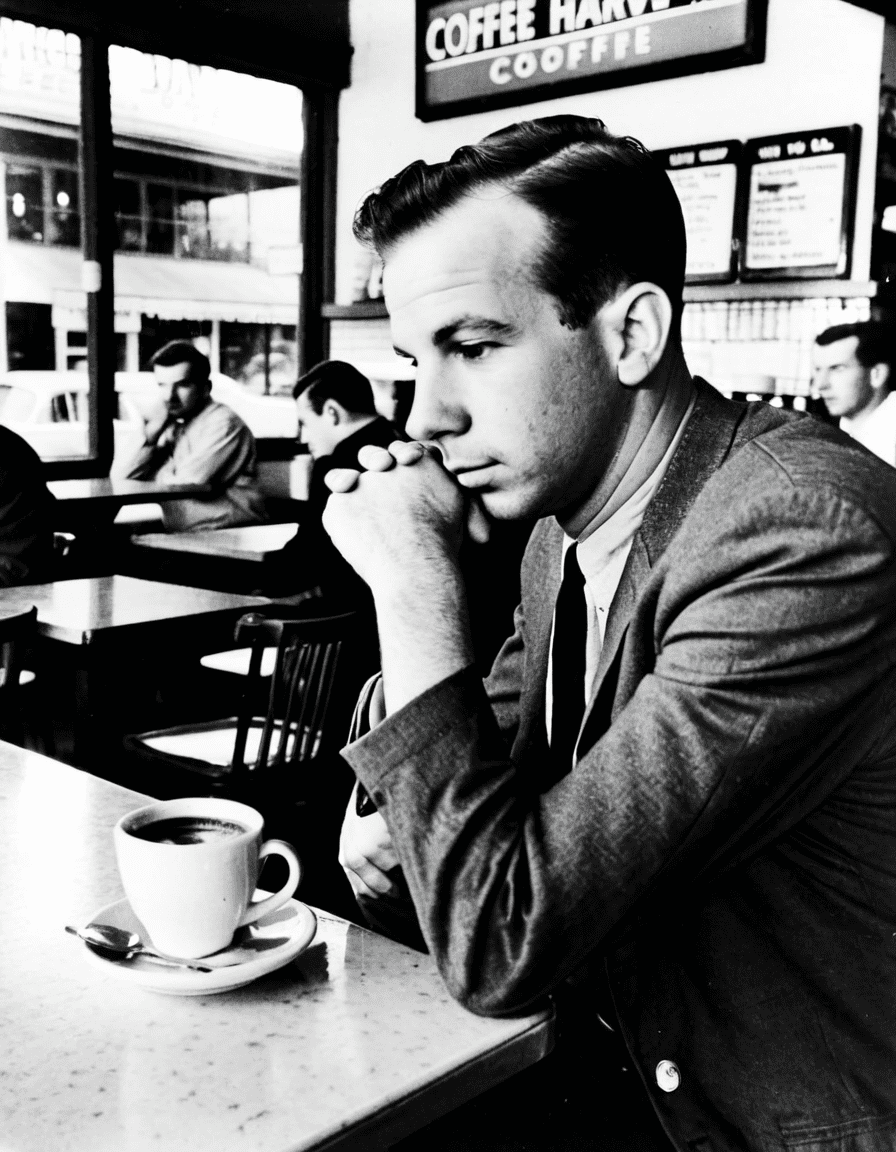
In a shocking twist during the Cold War era, Lee Harvey Oswald defected to the Soviet Union in October 1959. This bold move is still puzzling for many historians and sociologists. He settled in Minsk, where he worked in a factory and married a Russian woman named Marina. His time in the USSR exposed him to radical political ideologies that strayed far from the ideals he had learned as a child.
Oswald returned to America in June 1962, carrying a complex identity shaped by his experiences abroad. His conviction that communism held the answers to society’s problems distanced him from mainstream American thought. The alienation he felt only grew upon his return to the U.S., leading him to search for a way to express his burgeoning dissatisfaction. It’s a surreal contemplation: a man torn between two worlds, neither of which fully embraced him.
3. The Environment of Political Turmoil: Seeds of Assassination
The early 1960s in America felt like a bubbling pot of political tension. With the Cold War intensifying, and the civil rights movement gaining momentum, Oswald existed in a world swirling with discord. His actions leading to the assassination of JFK weren’t merely fueled by personal rage; they reflected larger societal frustrations. His life mirrored the conflicts burning in the backdrop, which makes one reconsider the part he played in this historical drama.
This political climate undeniably contributed to how Oswald perceived his role in this spiraling chaos. The unstable environment was like a blanket covering his growing dissatisfaction with American policies, specifically regarding foreign relations and civil rights. By acting out in such a drastic manner, he wasn’t just killing a president; he was passing judgment on an entire system that he felt unrecognized by and disconnected from. The plot thickens, doesn’t it?
4. The Infamous Presidential Assassination: A Chaotic Day in History
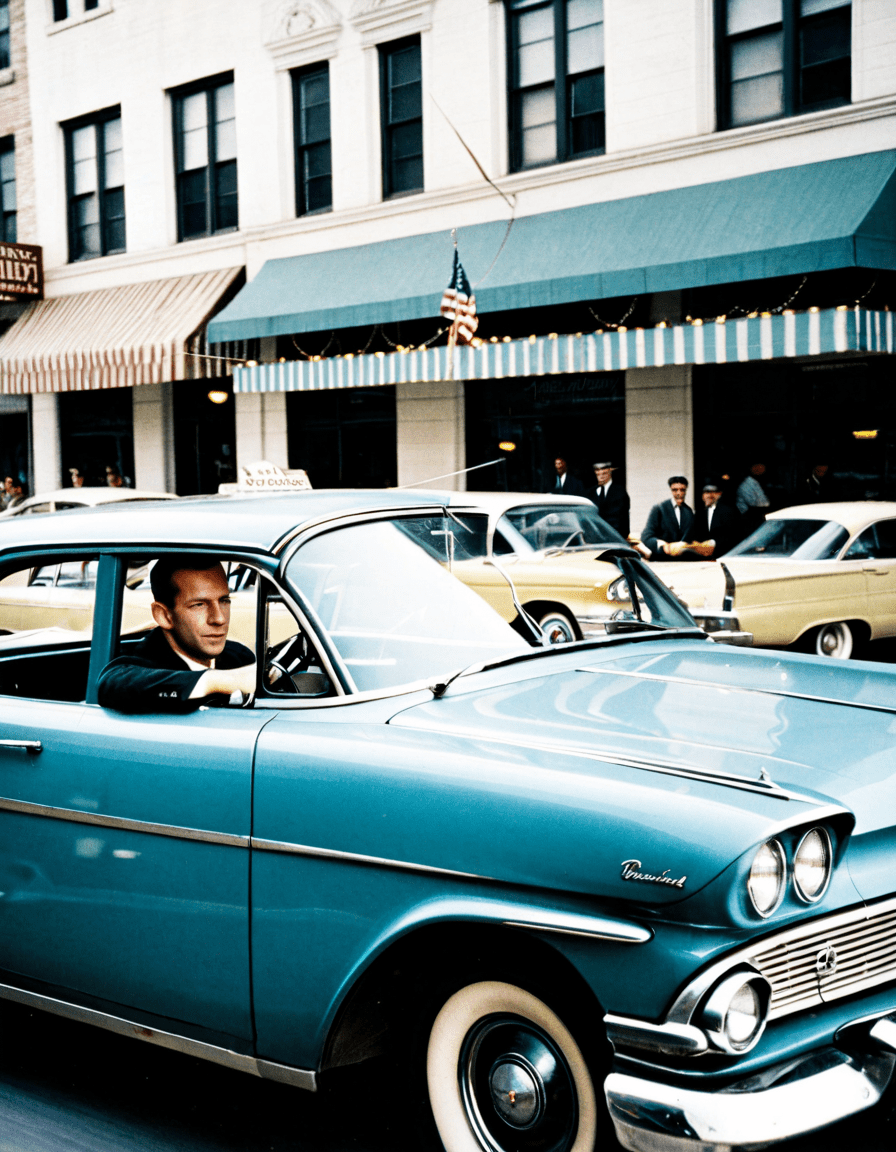
On that fateful day in Dallas, Lee Harvey Oswald became an unwitting actor in one of history’s most watched tragedies. Firing shots from his perch on the sixth floor of the Texas School Book Depository, Oswald’s actions sent shockwaves through a nation already teetering on a precipice. The images of a fragile president collapsing under gunfire became indelibly etched into the collective American psyche.
The assassination itself was chaotic, leading to an almost instantaneous media frenzy. News outlets raced to cover the event, and the nation’s shock quickly morphed into a thirst for understanding. Speculation about Oswald’s motives began almost immediately, sparking conspiracy theories that continue today. These pivotal moments in Dallas didn’t just alter political history; they set a precedent for how we perceive tragedy and leadership in times of uncertainty.
5. The Capture and Subsequent Death: A Brief Interlude of Justice
Oswald’s capture later that day marked a twist most dared not predict. After shooting Dallas police officer J.D. Tippit, he faced the scrutiny of a nation eager for closure. However, just two days into his custody, his life was cut short when nightclub owner Jack Ruby took it upon himself to silence the man who had taken a president’s life. This moment escalated public intrigue and frustration because Oswald would never face trial, leaving countless questions unresolved.
As Oswald’s legacy began to solidify, the circumstances of his death fueled further conspiratorial discussions. Why was Ruby able to slip past security and execute such a brazen act? The mystery deepened as the nation grappled with Oswald’s unresolved fate. It’s fair to say that the drama surrounding his assassination did nothing but intensify from this point onward.
6. The Warren Commission Report: Assessing the Evidence
In an attempt to unravel the ramifications of JFK’s assassination, the Warren Commission was established to investigate the circumstances surrounding Oswald’s actions. Their ultimate conclusion—that Oswald acted alone—has been met with skepticism from various quarters. Critics have pointed to inconsistencies, claiming that significant evidence was overlooked or manipulated by those in power.
This gap between the report’s conclusions and public belief has given rise to a myriad of conspiracy theories, complicating Oswald’s legacy. The very notion that he acted without support or motivation from larger organizations seems too far-fetched for many to accept. The Warren Commission represents yet another layer in the intricate story of Lee Harvey Oswald, questioning the validity of our political systems and their ability to protect truth.
7. The Legacy of Lee Harvey Oswald: A Life Forever Marked by Infamy
Lee Harvey Oswald’s legacy is forever intertwined with notions of betrayal and political violence. His personal story resonates with the inherent conflicts in society—issues of identity, disenfranchisement, and ideological extremes remain relevant today. Scholars continue to dissect his psychological profile, examining how factors from his chaotic childhood shaped this tragic figure whose actions would reverberate for generations.
Oswald’s life serves as a cautionary tale about the fragility of political life in a divided society. His choices reflect not only personal grievances but also the broader conflicts simmering beneath the surface of American life. As we continue to explore the layers of Oswald’s narrative, it becomes imperative to engage in discussions about the societal conditions that precipitate acts of extreme violence. Recognizing the complex architecture of his motives helps us craft a more nuanced understanding of our history.
Final Considerations: Understanding Our History Through Oswald’s Actions
Lee Harvey Oswald’s journey offers chilling insights into the intersections of personal anguish and political violence. His actions compel us to confront the delicate balance between national leadership and the discontent simmering in within society. Understanding Oswald’s narrative serves as a catalyst for broader discussions concerning the legacy of violence and the continuous presence of political discord. His life and actions remain essential for any analysis of America’s complex history, enriching our understanding of the tales we tell and the legacies we inherit.
In this exploration, we bear witness to the idea that while individuals can indeed shape history, their stories are entwined with the fabric of society, offering reflections that allow us to delve deeper into the ongoing conversation about justice, power, and meaning in our world.
Lee Harvey Oswald: Fun Trivia and Interesting Facts
A Life Less Ordinary
Lee Harvey Oswald, the infamous assassin behind JFK’s assassination, led a life that was as chaotic as it was tragic. Born in 1939 in New Orleans, he moved to Dallas later in life, where the course of history took a dramatic turn. Interestingly, Oswald had a fascination for languages and became fluent in Russian after defecting to the Soviet Union in 1959. Talk about a plot twist worthy of Attack on Titan Series 2! His life was filled with drama and complexity, reminiscent of some serious blues music. In fact, it’s almost like a classic noir film, with twists and unexpected turns, bringing to mind characters you would see in productions like Donnie Brasco.
Turning Points and Theories
After his return from Russia, Oswald settled in Dallas, where he engaged with various political groups. He even tried to start a pro-Castro organization! His ties to such groups have led to numerous conspiracy theories about the assassination—some would say it’s a saga that’s as engaging as clash and royale. While Oswald claimed innocence, even going so far as to declare he was just a “patsy,” his claims didn’t change public opinion. You could say that like Levi Fiehler in many ventures, people have different interpretations of what happened, with his actions remaining a subject of heated debate.
The Aftermath
The events following JFK’s assassination led to Oswald’s swift arrest, but he was shot just two days later by nightclub owner Jack Ruby, which really added fuel to the fire of speculation. Some consider this twist a tragic final act, like a misplaced character in And Just Like That Season 3. The tragic narrative took another turn on September 1, 2001, when Oswald’s life and death were examined again amidst the laying of the groundwork for modern conspiracy theories, with the implications still present in many discussions today. Interestingly, conversations around topics such as myaspirus often touch on how these events impacted American society, questioning what it all means now.
In the end, Lee Harvey Oswald remains a figure cloaked in mystery, one whose actions shaped a nation and continue to captivate minds. Whether through songs or films, his story is woven into the cultural fabric, much like the cultural influence of pata seca—a reminder of how narratives can evolve and linger through time.