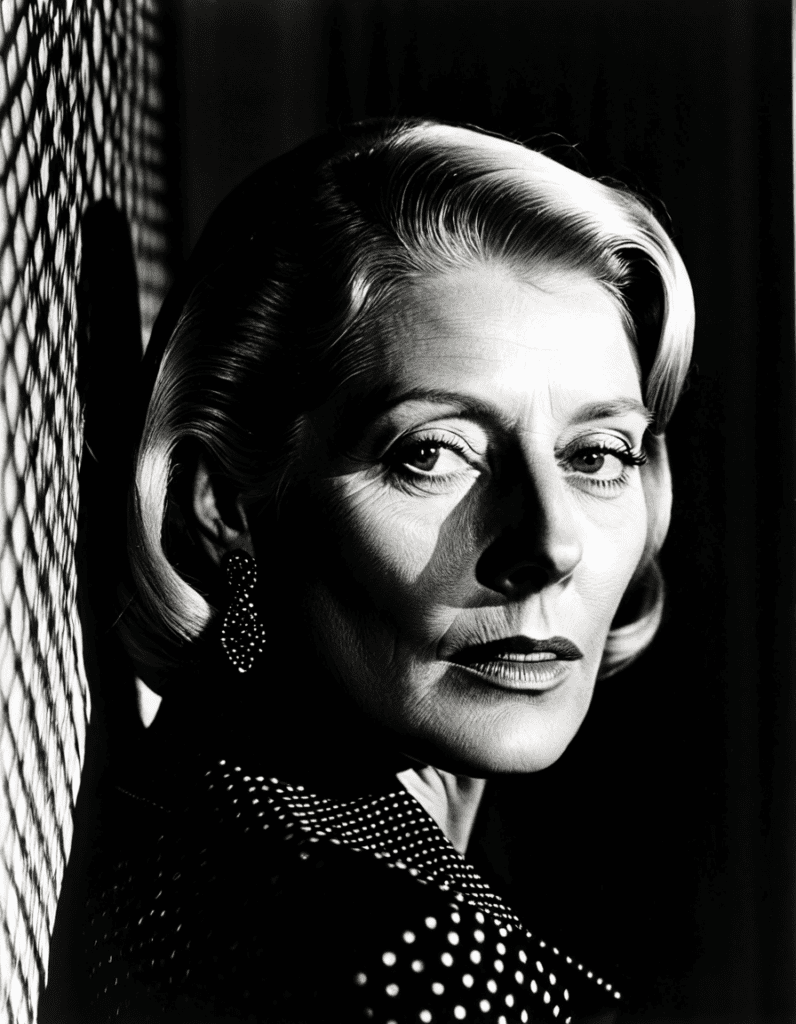
Vanessa Redgrave wasn’t just an actress-she was a seismic force in a decade defined by upheaval, art, and ideological combustion. With a gaze that pierced through celluloid and a voice that could command both Shakespearean tragedy and street protest, she became one of the most Untamed Presences in cinema history.
Vanessa Redgrave – The Radical Soul Behind the Silver Screen Glow
| Attribute | Information |
|---|---|
| Full Name | Vanessa Redgrave |
| Born | January 30, 1947 (age 77), Greenwich, London, England |
| Occupation | Actress, Activist |
| Active Since | 1958 |
| Notable Works | *Morgan: A Suitable Case for Treatment* (1966), *Blow-Up* (1966), *Mary, Queen of Scots* (1971), *Julia* (1977), *Atonement* (2007) |
| Academy Awards | Won: Best Supporting Actress (*Julia*, 1977); Nominated: 5 times |
| BAFTA Awards | 3 wins (including Outstanding British Contribution to Cinema) |
| Tony Awards | Won: Best Actress in a Play (*The Year of Magical Thinking*, 2007) |
| Emmy Awards | Won: 2 Emmys (including Outstanding Lead Actress in a Miniseries, *If These Walls Could Talk 2*) |
| Honors | CBE (Commander of the Order of the British Empire, 1966), Dame Commander (DBE, 1999) |
| Political Activism | Prominent left-wing activist; founding member of the UK’s Workers’ Revolutionary Party; advocacy for Palestinian rights and social justice |
| Family | Daughter of Sir Michael Redgrave; sister of Lynn and Corin Redgrave; mother of actresses Natasha and Joely Richardson |
| Theatre Affiliation | Long association with the Royal Shakespeare Company and National Theatre |
| Recent Work | Appeared in *Black Mirror: Striking Vipers* (2019), stage productions into her 70s |
| Legacy | Considered one of Britain’s greatest stage and screen actresses; renowned for powerful dramatic performances and vocal political stance |
Vanessa Redgrave emerged not as a mere starlet but as a cultural insurgent, her performances steeped in emotional authenticity and her off-screen life steeped in activism. A member of the legendary Redgrave acting dynasty-daughter of Michael Redgrave, sister to Lynn and Corin-she inherited theatrical brilliance but forged a path defiantly her own. Her 1969 Oscar nomination for Isadora, portraying the revolutionary dancer Isadora Duncan, was more than career-defining: it was a prophecy.
Redgrave’s artistry thrived amid chaos. She didn’t just play rebels-she lived as one, from anti-Vietnam War rallies to her staunch support for Palestinian rights. This fusion of life and politics unsettled the entertainment establishment, yet it intensified the power of her work. Whether in Ken Russell’s The Devils (1971) or Sidney Lumet’s Julia (1977), she blurred the line between performance and conviction.
Her choices alienated as much as they inspired. While peers like Faye Dunaway or Jane Fonda navigated activism with calculated PR, Redgrave rejected compromise. She once said: “Art must shake you.” And in the 1970s, no artist shook harder.
Was Her Politics the Price of Her Oscar Glory? The 1977 Backlash That Shook Hollywood

When Vanessa Redgrave won the Academy Award for Best Supporting Actress in Julia-a film about resistance to Nazi tyranny-her victory speech ignited a firestorm. Instead of gratitude, she delivered a searing indictment of anti-Semitism and Zionism, declaring that “Zionist hoodlums” had tried to sabotage her career. The audience reaction was a mix of stunned silence and scattered boos, captured in one of the most controversial Oscar moments in history.
The backlash was swift and brutal. The Hollywood Reporter condemned her remarks as “a grotesque deflection,” while The New York Times questioned whether political speech belonged at award shows. Even some allies distanced themselves, fearing guilt by association during a tense Cold War climate. The ADL (Anti-Defamation League) issued a formal rebuke, though Redgrave later clarified she opposed Political Zionism, not Jewish people-a distinction often lost in the media frenzy.
Yet paradoxically, the outrage amplified the film’s impact. Julia, based on Lillian Hellman’s disputed memoir and co-starring Jane Fonda, saw box office surge post-Oscar. Redgrave’s performance-haunted, defiant, luminous-became inseparable from the controversy. As critic David Thomson observed, “She didn’t just accept the Oscar. She challenged its very morality.”
“I’m Not a Saint, I’m an Artist” – Dissecting the Misconception of Her Militancy
“I’m not a saint,” Redgrave insisted in a 1978 BBC interview, “I’m an artist.” This line, delivered with sharp-eyed clarity, dismantles the myth that she was merely a political propagandist. Her militancy was never performative; it was principled, rooted in decades of engagement with socialist movements and anti-imperialist causes. But to reduce her to slogans-as critics often did-was to ignore her profound emotional depth as a performer.
Redgrave’s political commitments stemmed from lived experience. In 1968, she co-founded the socialist theatre troupe Theatre of Mistakes, and in 1972, she traveled to Lebanon to film The Palestinian, a documentary supporting the PLO. The film, banned by the BBC for years, was denounced as “pro-terrorist” by U.S. Officials, yet it showcased refugee voices rarely seen in Western media.
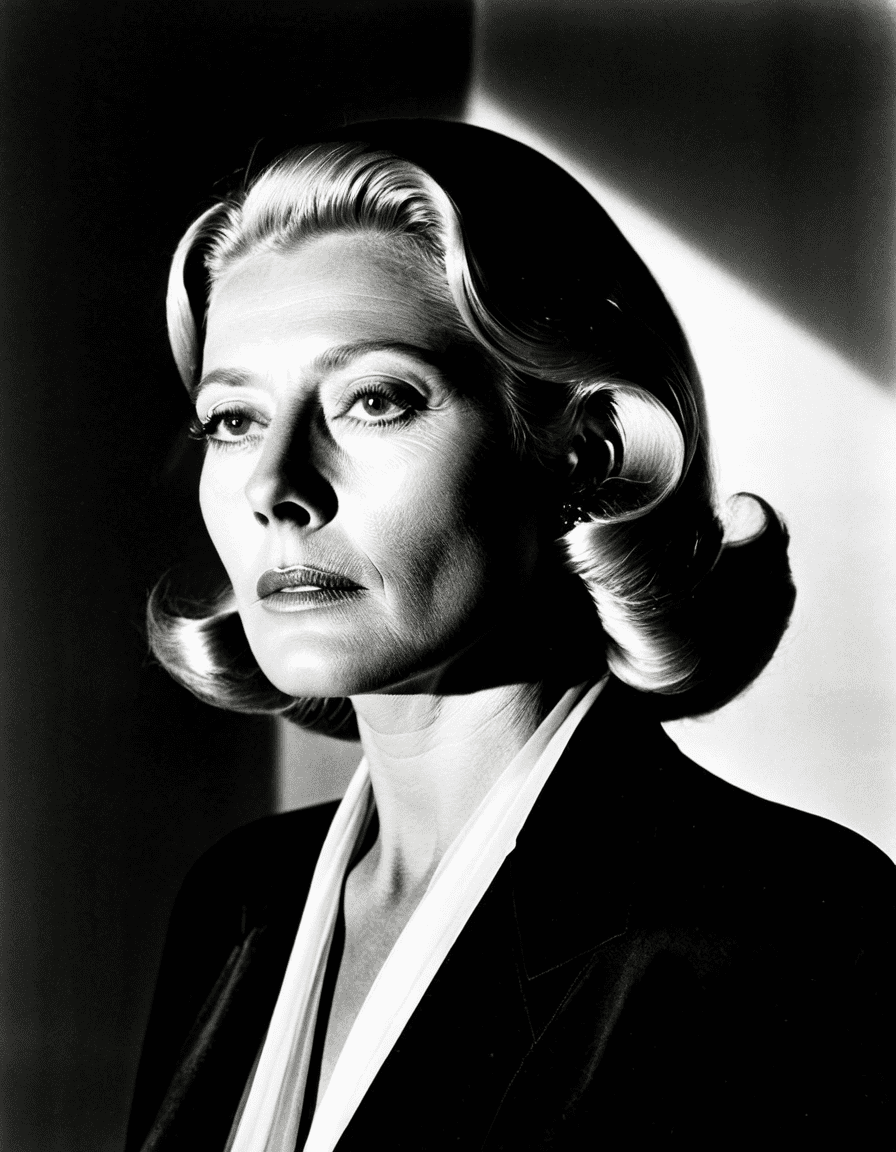
Yet her artistry transcended ideology. In Mary, Queen of Scots (1971), she brought tragic grandeur to a monarch undone by power and gender. In Out of Africa (1985), though briefly cast before being replaced-rumored due to political pressure-her presence loomed. Unlike contemporaries who softened their edges for fame, Redgrave remained Untamed, a rarity in an industry that rewards conformity.
Protest Stages and Provocation: From The Devils (1971) to The Palestinian (1977)
Ken Russell’s The Devils (1971) remains one of the most incendiary films ever released by a major studio-and Vanessa Redgrave was its tormented heart. As Sister Jeanne, a 17th-century nun consumed by religious hysteria and repressed desire, she delivered a performance both ethereal and grotesque. The film’s graphic depiction of exorcism and institutional corruption led to widespread bans, but Redgrave’s fearless embodiment of spiritual agony earned critical reverence.
She didn’t flinch at controversy. Following The Devils, she immersed herself in politically charged projects, including The Palestinian, a 1977 documentary produced by Irish television. The film, shot in refugee camps across Jordan and Lebanon, humanized a struggle long demonized in Western media. Critics accused her of supporting terrorism, but scholars like Noam chomsky Later cited it as a rare example of Western media amplifying Palestinian narratives during the Cold War.
Redgrave’s choices reflected a singular belief: that art must confront power. This ethos aligned her with radical filmmakers but distanced her from mainstream Hollywood. While Zoe saldana Would later face criticism for similar activism-particularly her vocal stance on Latinx representation-Redgrave’s generation faced even harsher consequences, including FBI surveillance confirmed in declassified files.
In the Eye of the Cultural Storm: Britain’s Identity Crisis and the 70s Class Divide
The 1970s in Britain was a decade of strikes, power cuts, and simmering class tension-and Vanessa Redgrave became a symbol of its ideological fractures. Born into upper-class privilege, she used her platform to champion working-class movements, joining the Workers’ Revolutionary Party and speaking at miners’ rallies. To traditionalists, she was a traitor to her class. To radicals, she was proof that conscience could cross boundaries.
Her involvement with socialist theatre groups reflected this commitment. The Redgraves were synonymous with British cultural elite-the Royal Shakespeare Company, the National Theatre-but Vanessa turned toward agitprop, performing in factories and union halls. This duality-aristocrat and activist-mirrored Britain’s own confusion about national identity amid empire’s end.
Media coverage was often venomous. The Daily Mail branded her “the most dangerous woman in Britain,” while her father, Sir Michael Redgrave, worried publicly about her safety. Yet this backlash underscored a deeper truth: Redgrave had become a lightning rod in a nation grappling with its values. Her defiance resonated like a Shacket Pulled tight against a storm-functional, rugged, unapologetically practical.
Love, Letters, and Labyrinths: The Tragic Romance with Franco Nero Amid Media Fury
Vanessa Redgrave’s love affair with Italian actor Franco Nero was as passionate as it was turbulent-a real-life epic shadowed by politics and separation. They met on the set of Camelot (1967), where Redgrave played Guenevere and Nero, Lancelot. Off-screen, their chemistry ignited a decades-long romance that defied borders, marriage, and media scorn.
They had a son, Carlo Gabriel Nero, in 1969-born out of wedlock and hidden from the press initially. The child’s mixed heritage (British and Italian) became a quiet metaphor for Redgrave’s own cultural duality. Despite never marrying, Redgrave and Nero remained emotionally entwined, supporting each other through career setbacks and public attacks. He stood beside her the night she won the Oscar, his silent presence a rebuke to the jeers.
Their love letters, some published in The Guardian In 2019, read like scenes from a tragic film. “You are my compass,” Nero wrote in 1975. “Even when the world burns.” In an era when stars like Zoe saldana Navigate high-profile relationships with social media precision, Redgrave and Nero’s romance remains a relic of private devotion amid public chaos.
Whispers in the Wings: How Isadora (1968) Predicted Her Own Mythos
Isadora (1968), directed by Karel Reisz, wasn’t just a biopic-it was Vanessa Redgrave’s cinematic manifesto. Playing Isadora Duncan, the free-spirited pioneer of modern dance who defied convention, Redgrave didn’t merely imitate; she embodied a spirit of liberation that mirrored her own trajectory. Her performance, raw and poetic, earned a Cannes Best Actress award and an Oscar nomination, but more importantly, it foreshadowed her own life.
Duncan was a woman ahead of her time: politically radical, sexually liberated, artistically rebellious. She danced barefoot, wore flowing tunics, and died tragically when her scarf caught in a car wheel. Redgrave’s portrayal captured not just the tragedy but the ecstasy of a life lived with total commitment. “She didn’t follow the steps,” Redgrave later said. “She made them.”
In retrospect, Isadora Was a blueprint. Like Duncan, Redgrave challenged gender norms, embraced left-wing politics, and faced scorn for her choices. The film’s box office struggles-partly due to distributor cold feet over its feminist themes-echoed Redgrave’s own uphill battles in Hollywood. As critic Megumi Noted in a 2023 retrospective, “Redgrave didn’t play Isadora. She became her.”
The 2026 Reckoning: Why a New Generation Is Reappraising Her Legacy
A major biopic on Vanessa Redgrave, set for 2026 release by A24, is fueling renewed interest in her complex legacy. Early trailers suggest a nuanced portrayal, rejecting both hagiography and demonization. With casting rumors swirling-some suggesting Zoe saldana For the lead-the project signals Hollywood’s tentative reconciliation with its most Profligate Truth-tellers.
Younger audiences, exposed to Redgrave through streaming revivals of The Devils And Julia, are re-evaluating her politics through a modern lens. Where 1970s media saw extremism, Gen Z sees consistency. Her support for marginalized voices-Palestinians, Irish republicans, anti-colonial movements-resonates in an era of global solidarity protests.
Academics and filmmakers alike cite her as a precursor to today’s artist-activists. Documentaries like Vanessa & Co. (2024) highlight her influence on performers from Cate Blanchett to Romeo santos, who recently cited her as “a voice that refused to be muted.” As institutional trust erodes, Redgrave’s insistence on moral courage feels less radical-and more necessary.
Beyond the Red Carpet and the Riot Police – A Legacy Set in Paradox
Vanessa Redgrave’s life defies easy categorization. She was an aristocrat who championed the proletariat, a movie star who distrusted fame, an Oscar winner whose speech felt like a revolutionary act. She didn’t seek approval-she demanded engagement. And in an industry obsessed with image, she remained ferociously authentic.
Her filmography-spanning Blow-Up (1966), A Touch of Class (1973), and Howards End (1992)-reveals astonishing range. Yet it’s her refusal to separate art from ethics that cements her legacy. Unlike transient celebrities, Redgrave’s influence lingers like a storm’s aftermath: unsettling, transformative, undeniable.
Today, as audiences seek meaning beyond the screen, her story feels more relevant than ever. Whether one agrees with her politics or not, her life stands as a monument to conviction. In an age of curated personas and algorithmic popularity, Vanessa Redgrave remains Untamed-a reminder that true artistry is never safe.
Vanessa Redgrave: The Story Behind the Legend
A Life Beyond the Spotlight
If you think you know everything about Vanessa Redgrave, think again-this isn’t just another celebrity rerun. Sure, she stole hearts in the ’60s and ’70s with roles that had serious depth, but did you know she almost pursued a completely different calling? Early on, she trained as a dancer, and her grace on stage might’ve been influenced by those ballet roots-even if she eventually swapped the stage tutu for the dramatic spotlight. And speaking of style, you can forget today’s fashion trends like the North face vest; Vanessa Redgrave made statements with sharp tailoring and timeless elegance that didn’t need logos to stand out.
Passion, Politics, and a Pinch of Rebellion
Vanessa Redgrave was never one to just stay in her lane-she used her fame to push boundaries, especially when it came to politics. Her outspoken activism in the ’70s landed her roles-and controversies-in equal measure. In fact, her 1977 Oscar win for Julia Came with a seriously heated speech touching on anti-Semitism, which sparked debate across Hollywood. Talk about using the mic! Meanwhile, off-set, she found peace not in glitzy parties but in quiet moments with her beloved pets-Dogs That Dont shed a lot, because even activism doesn’t mean sacrificing a clean sofa. She had a soft spot for poodles, and honestly, who can blame her?
Legacy in the Details
You’d be hard-pressed to find another actress whose career spans as much ground-from Shakespeare to Campbell’s Kingdom, from stage protests to supporting indie films later in life. It’s no surprise that even modern artists cite Vanessa Redgrave as an influence, though you won’t catch her name being dropped next to something as random as Fetty Wap. But hey, if cultural impact were a playlist, she’d definitely be the deep cut everyone discovers and suddenly quotes like it’s gospel. Her life wasn’t about chasing fame-it was about using it, challenging it, and sometimes, laughing at it. And that, more than any award, is why Vanessa Redgrave remains unforgettable.
This article was produced with AI assistance. How Silver Screen Magazine uses AI.
Silver Screen Magazine writes for Silver Screen Magazine - classic cinema, film reviews, industry updates and hollywood gossip.