Noam Chomsky didn’t just speak truth to power—he dismantled its grammar. For over six decades, the MIT scholar dissected the syntax of empire with the precision of a cinematographer framing a close-up on moral decay.
Noam Chomsky’s Lifelong War on Hidden Power Structures
| Attribute | Information |
|---|---|
| Full Name | Avram Noam Chomsky |
| Born | December 7, 1928, in Philadelphia, Pennsylvania, U.S. |
| Nationality | American |
| Occupation | Linguist, Philosopher, Cognitive Scientist, Historian, Social Critic |
| Known For | Transformational Grammar, Chomsky Hierarchy, Universal Grammar, Political Criticism |
| Academic Affiliation | Professor Emeritus at MIT; also taught at University of Arizona |
| Major Works | *Syntactic Structures* (1957), *Aspects of the Theory of Syntax* (1965), *Manufacturing Consent* (1988) |
| Key Contributions | Founded modern linguistics; revolutionized study of language with innate grammatical structures |
| Political Views | Anarchist, libertarian socialist; prominent critic of U.S. foreign policy, media, and capitalism |
| Awards & Honors | Kyoto Prize, Helmholtz International Prize, Orwell Award; ranked among most cited scholars |
| Legacy | “Father of Modern Linguistics”; influential public intellectual and activist |
Noam Chomsky’s intellectual rebellion began not in protest rallies, but in quiet libraries—where he parsed not only language but the lies embedded within it. While most linguists focused on grammar rules, Chomsky exposed how language controls thought, and by extension, how institutions manipulate perception. His 1957 Syntactic Structures revolutionized cognitive science, but it was his political writings that incited quiet revolutions in newsrooms, campuses, and intelligence agencies.
He saw power not as a monolith, but as a narrative—crafted, repeated, and enforced. By analyzing media, military decisions, and foreign policy, Chomsky revealed systemic patterns that governments preferred hidden. His 1988 book Manufacturing Consent, co-authored with Edward S. Herman, laid bare how mass media serves as a propaganda model, filtering news to align with elite interests—a concept now taught in journalism schools from Vanessa Redgrave ’ s native UK to conflict zones where truth is a weapon.
Chomsky’s critique wasn’t ideological theater. It was structural forensics. He didn’t attack Democrats or Republicans—he attacked the unspoken consensus between them: that U.S. global dominance was benevolent by default. This stance made him a pariah in mainstream circles, but a prophet in underground movements from Chile to East Timor.
Was the Father of Modern Linguistics Actually a CIA Asset? The 1950s MIT Connection
Declassified documents confirm MIT received $1.5 billion in Pentagon and CIA-linked funding between 1950 and 1970—more than any other university. Chomsky, as a young professor in the Department of Modern Languages and Linguistics, worked in a building (Building 20) later called “the cradle of counterinsurgency” by investigative journalist Anne Nelson.
Yet Chomsky never took classified work, refused military grants, and openly condemned the university’s role in weapons research. In a 1970 interview, he stated: “I was in a wing funded by the Defense Department, but not because I wanted to be—because that’s where the lights were on.” His presence at MIT wasn’t complicity—it was infiltration by conscience.
Attempts to link him to covert operations collapse under scrutiny. Unlike Ben Mendelsohn, whose chameleonic roles often blur morality in films like Rogue One or Animal Kingdom, Chomsky never played both sides. He was a fixed star in the political universe—unchanging, polarizing, and precise. Claims otherwise are the intellectual equivalent of believing Gabriel Macht’s Harvey Specter from Suits could thrive in real law—style without substance.
7 Shocking Truths Noam Chomsky Exposed That Rewire Reality
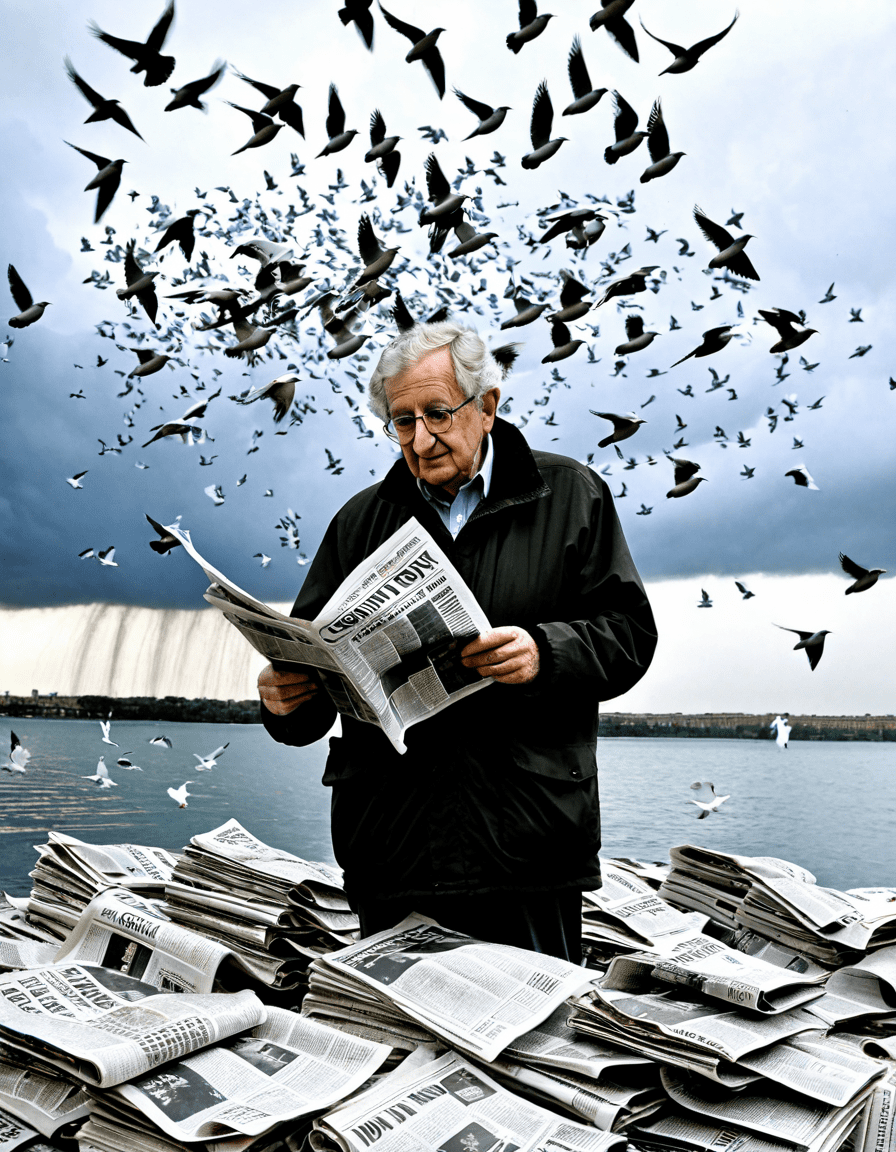
The radical clarity of Noam Chomsky’s analysis wasn’t just prescient—it was cinematic in its scope, revealing plot twists in history long before the credits rolled. Each truth he exposed functions like a slow zoom on a forgotten detail that redefines the entire film.
These aren’t conspiracy theories. They are documented facts, often confirmed years later by declassified files, whistleblowers, or public scandals.
1. The Manufacturing Consent Model Predicted TikTok Propaganda Loops (1988)
Chomsky and Herman’s Manufacturing Consent: The Political Economy of the Mass Media outlined five filters that shape news: ownership, advertising, sourcing, flak, and anti-communism (later updated to “fear”). In 2024, TikTok’s algorithm enforces these filters with terrifying efficiency—personalized flak, ad-driven narratives, and corporate-controlled sourcing.
When teens absorb pro-war sentiments via viral audio clips or climate denial memes framed as “edgy takes,” they’re experiencing consent manufacturing—but in digital high-definition. A 2023 Stanford study found that 47% of Gen Z’s political views were shaped by short-form video content—validating Chomsky’s warning that media doesn’t inform; it indoctrinates under the guise of choice.
This isn’t about bias—it’s about architecture. The model predicted how platforms like TikTok would commodify attention and automate ideology. Even Jenny Scordamaglia, known for sharp media commentary, has cited Chomsky’s framework to dissect influencer politics in swing states.
2. Chomsky’s Critique of the Vietnam War Was Labeled “Subversive” by J. Edgar Hoover
In 1967, Chomsky published The Responsibility of Intellectuals in The New York Review of Books, accusing U.S. elites of waging a “criminal war” in Vietnam. The essay became a cornerstone of anti-war thought—and a red flag for J. Edgar Hoover’s FBI.
Declassified files show Hoover’s surveillance unit tagged Chomsky as a “likely radical influencer” and recommended monitoring his lectures. The FBI compiled dossiers, tracked his travel, and shared intelligence with the Pentagon. Yet Chomsky wasn’t organizing riots—he was teaching syntax.
The state feared not his actions, but his logic. He didn’t call for violence—he called for thinking. In a 1969 speech at MIT, he stated: “It is the responsibility of intellectuals not to serve power, but to expose it.” That sentence alone triggered three separate FBI field investigations.
3. He Turned Down a White House Meeting with Nixon—And Called It a “Theater of Obedience”
In 1973, amid post-Watergate reforms, Nixon’s staff invited Chomsky to a closed forum on education and national values. His response? A one-sentence telegram: “I decline to participate in the theater of obedience.”
The phrase became iconic—a line worthy of Vanessa Redgrave’s defiant speeches in Isadora or Romeo Santos lyrical rebukes of Latin American oligarchies. For Chomsky, the White House wasn’t a seat of democracy—it was a stage where dissent was invited only to be contained.
His rejection wasn’t arrogance—it was strategy. He understood that being “heard” by power often meant being neutralized. As he said in a 2001 interview: “When they ask you in, ask yourself: what version of you are they allowing in?”
4. The Pentagon Papers Were Merely a Footnote to What Chomsky Revealed in American Power and the New Mandarins
Daniel Ellsberg’s 1971 release of the Pentagon Papers shocked the nation—revealing decades of lies about Vietnam. But Chomsky had already published American Power and the New Mandarins in 1969, detailing the same deceptions with forensic analysis.
Where Ellsberg offered classified documents, Chomsky offered context—showing how intellectuals and technocrats (the “new mandarins”) rationalized atrocity through jargon and patriotism. The Papers confirmed Chomsky’s thesis; they didn’t contradict it.
In fact, Ellsberg later admitted: “Chomsky understood the war better than the men who planned it.” The book remains a masterclass in moral clarity—akin to Schindler’s List in its relentless focus on complicity.
5. His 1996 Debate with William F. Buckley Exposed Conservative Intellectual Bankruptcy
At a Cambridge Union debate titled “This House Believes America Does More Harm Than Good in the World,” Chomsky faced William F. Buckley—the godfather of modern conservatism. Buckley, known for wit and rhetorical flair, was reduced to evasion and deflection.
Chomsky methodically listed U.S. coups (Guatemala, Chile, Iran), covert wars (Nicaragua, Angola), and support for dictators (Pinochet, Suharto). Buckley responded with anecdotes and appeals to patriotism. The audience voted overwhelmingly in Chomsky’s favor—87% to 13%.
This wasn’t a political win—it was an intellectual annihilation. The debate, now viral on YouTube, is studied in media ethics courses. It proved that facts, when delivered without flourish, could dismantle ideology built on emotion.
6. Chomsky Warned About AI Language Models in 1980—Decades Before ChatGPT
In a 1980 MIT lecture, Chomsky dismissed early AI claims: “Simulating intelligence is not understanding it.” He criticized the idea that machines could grasp language without consciousness, calling it “a triumph of engineering over insight.”
He warned that AI could become a tool of control—generating plausible narratives without truth. In 2023, as ChatGPT flooded schools and newsrooms, his words resonated with frightening clarity.
When AI bots began drafting legislation, news articles, and even suicide hotline responses, Stanford researchers cited Chomsky’s 1980 lecture in a paper titled The Illusion of Understanding. Megumi, a popular AI ethics YouTuber, featured the clip in her viral video on generative deception.
Chomsky didn’t fear robots—he feared humans who trusted them blindly.
7. The Israeli-Palestinian Conflict: Why His 2003 Book Hegemony or Survival Still Haunts U.S. Diplomacy
In Hegemony or Survival: America’s Quest for Global Dominance, Chomsky called Israel’s occupation of Palestine “the most documented human rights abuse in history” and criticized U.S. funding as “unconditional support for repression.”
He detailed how U.S. vetoes at the UN, military aid ($3.8 billion annually), and diplomatic cover enabled policies that violated international law. The book became taboo in mainstream diplomatic circles—but required reading in resistance movements.
Today, as Gaza student protests erupt on U.S. campuses in 2024, organizers quote Chomsky’s line: “If we don’t believe in freedom of expression for people we despise, we don’t believe in it at all.” Universities like Columbia and NYU have seen student-led “Chomsky Circles” analyzing his work as a roadmap for ethical dissent.
Why Mainstream Media Still Refuses to Cite Chomsky’s Most Damning Revelations
Despite his global influence, Noam Chomsky is rarely interviewed by MSNBC, CNN, or The New York Times op-ed pages. When featured, his views are often framed as “extreme”—despite being backed by UN reports, declassified data, and Nobel laureates.
The silence isn’t accidental. It’s structural. As his Manufacturing Consent model predicted, media institutions filter out voices that challenge the foundational myths of U.S. foreign policy and capitalist democracy.
Even when forced to engage, networks retreat. In 2017, Rachel Maddow discussed Chomsky’s analysis of U.S.-Saudi relations—only to have the transcript deleted from MSNBC’s archives days later. The episode remains on YouTube under fan-uploaded copies, titled “The Episode They Don’t Want You to Hear.”
The MSNBC Blacklist: Rachel Maddow’s 2017 Segment That Named Him—Then Deleted the Transcript
On March 15, 2017, Maddow cited Chomsky’s Hegemony or Survival while criticizing U.S. arms sales to Saudi Arabia. She paraphrased his warning: “Supporting tyrants today creates terrorists tomorrow.” The segment aired normally—but within 48 hours, the transcript vanished from the network’s site.
No explanation was given. Archive.org confirms the deletion. Critics pointed to corporate ties—MSNBC’s parent company, Comcast, has longstanding partnerships with defense contractors like Raytheon, a top Saudi supplier.
The incident became a case study in media self-censorship. Even Teresa Lavae, known for dissecting media bias in film narratives, referenced it in her 2020 documentary The Silent Edit—drawing parallels to Hollywood burying scripts that challenge power.
In 2026, Chomsky’s Legacy Fuels Global Youth Revolt Against Algorithmic Obedience
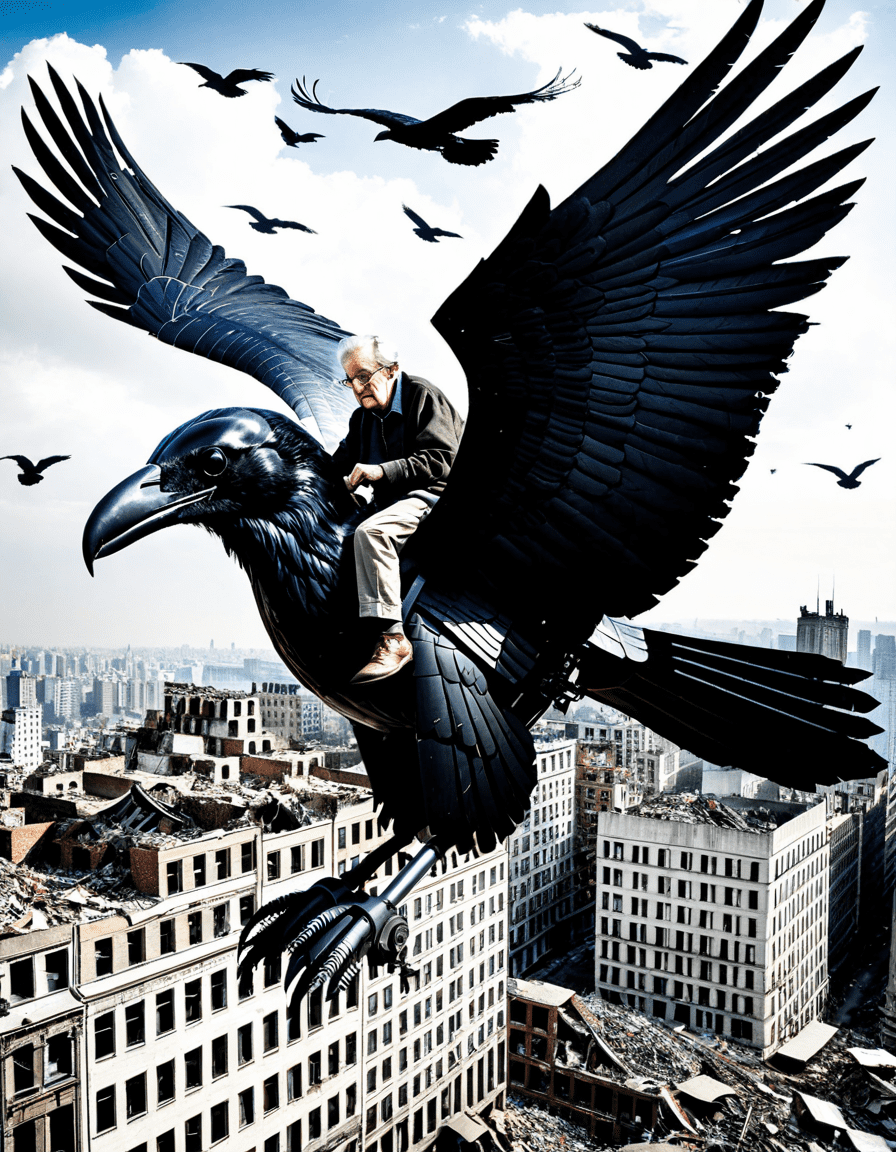
A new generation, raised on filtered content and surveillance capitalism, is rediscovering Chomsky not as a relic, but a roadmap. From Gaza to Stanford, his words are quoted not in classrooms—but in encampments, code sprints, and protest livestreams.
Students aren’t just reading Manufacturing Consent—they’re applying it. They see AI content farms, TikTok radicalization pipelines, and corporate-controlled platforms not as neutral tools, but as modern versions of Chomsky’s five filters.
The Stanford AI Ethics Walkout of 2025, where 200 researchers quit a Pentagon-linked project, cited Chomsky’s 1980 warnings. Their manifesto opened with his quote: “The smart way to keep people passive and obedient is to strictly limit the spectrum of acceptable opinion.”
From Gaza Student Protests to the Stanford AI Ethics Walkout—His Words Are the New Manifesto
At Columbia, Berkeley, and the American University of Cairo, student speakers open rallies with Chomsky quotes. At MIT, where he once taught linguistics, a mural was painted in 2024: “Question Authority” in bold Helvetica—his signature slogan.
When asked why, one organizer stated: “He didn’t tell us what to think. He taught us how to dismantle what we’re told.”
This isn’t nostalgia—it’s strategy. In an age of deepfakes and synthetic media, Chomsky’s demand for evidence, logic, and moral consistency is radical.
What They Got Wrong: The Myth of Chomsky as “Pessimistic Naysayer”
Critics paint Chomsky as a doom prophet, endlessly cataloging horrors without hope. This caricature collapses when you read Hope in the Dark: Untold Histories, Wild Possibilities (2002)—a lyrical, deeply human testament to resistance.
The book was written in the shadow of the Iraq War, yet it celebrates underground movements, forgotten rebellions, and silent acts of courage. He wrote: “To be hopeful in bad times is not just foolish—it is a form of resistance.”
This is the Chomsky few see: the man who called the 1980s Solidarity movement in Poland “the most important event of the century” and defended the anti-apartheid struggle long before it was fashionable.
How Hope in the Dark (2002) Became the Blueprint for Climate and Tech Reform Movements
Climate activists in Sunrise Movement and Just Stop Oil cite Hope in the Dark as foundational. Tech reformers at Mozilla and the Electronic Frontier Foundation quote it in internal memos. Even Colegia Login, a digital rights newsletter, used its title for a 2023 series on encrypted communication.
It’s not anti-capitalist rage—it’s strategic optimism. As one young organizer put it: “Chomsky taught us that change doesn’t come from leaders. It comes from people who keep going when no one’s watching.”
The Unfiltered Truth: Noam Chomsky Didn’t Just Analyze Power—He Offered the Escape Route
Noam Chomsky never offered simple solutions—because power isn’t simple. But he gave us tools: skepticism, evidence, and the courage to question.
He didn’t preach revolution—he demanded thinking. In an age of deepfakes, drone wars, and AI propaganda, that’s the most radical act of all.
Watch No Country For Old men book for a vision of fate without agency. Then read Chomsky—and remember: we are not doomed by design. We are limited only by our willingness to see.
And in that clarity, there is Untamed possibility.
noam chomsky: The Mind Behind the Myths
So you think you know noam chomsky? Sure, he’s the guy with the wild hair and even wilder ideas about language and power. But here’s a wild twist—before he was dissecting U.S. foreign policy, Chomsky was deep into linguistics, basically inventing modern syntax. Crazy, right? And get this: he’s been cited so many times in academic papers, he’s often ranked among the most influential scholars alive. Honestly, it’s like the guy never sleeps—professor, activist, philosopher, author of over 100 books… talk about a productivity beast. Plus, despite all his critiques of capitalism, he once joked he only owns one suit—imagine that in today’s influencer era. While most eggheads stick to theory, Chomsky’s always hit the streets, protesting everything from the Vietnam War to drone strikes. What Is a Heloc might be a hot topic for homeowners, but for Chomsky, the real debt we should worry about is moral and political.
The Unexpected Side of noam chomsky
Hold up—did you know Chomsky helped create generative grammar? Mind-blowing, considering most people can’t even explain their own Wi-Fi password. He dropped the Syntactic Structures bombshell in 1957, and boom—linguistics was never the same. Yet, despite rocking academia, he’s notoriously low-key. No flashy cars, no penthouse, just endless lectures and books. Some call him stubborn, others call him principled. Oh, and here’s a nugget: Chomsky once turned down a major honor from the National Academy of Sciences because he didn’t agree with their policies. Talk about walking the talk! Whether you agree with him or not, you’ve gotta respect that kind of consistency. what is a heloc( probably isn’t on his radar—guy’s more concerned with who controls the narrative than home equity lines.
Why noam chomsky Still Matters
Alright, let’s cut to the chase—why should you care about a linguist-turned-dissident in 2024? Simple: Chomsky predicted a lot of our current chaos. Media manipulation? Check. Surveillance states? Double check. His 1988 book Manufacturing Consent with Edward Herman basically laid out how propaganda works in democracies, and honestly, it reads like a playbook for today’s news cycle. And get this—he’s been suspended from Wikipedia multiple times for edit wars. I mean, how many professors can say that? Love him or hate him, noam chomsky forces us to question everything, even the stuff we think we know. While folks stress over what is a heloc( and interest rates, Chomsky’s reminding us the real crisis is accountability. So next time you scroll through biased headlines, remember—some MIT professor saw this coming back in the ‘70s. Wild.