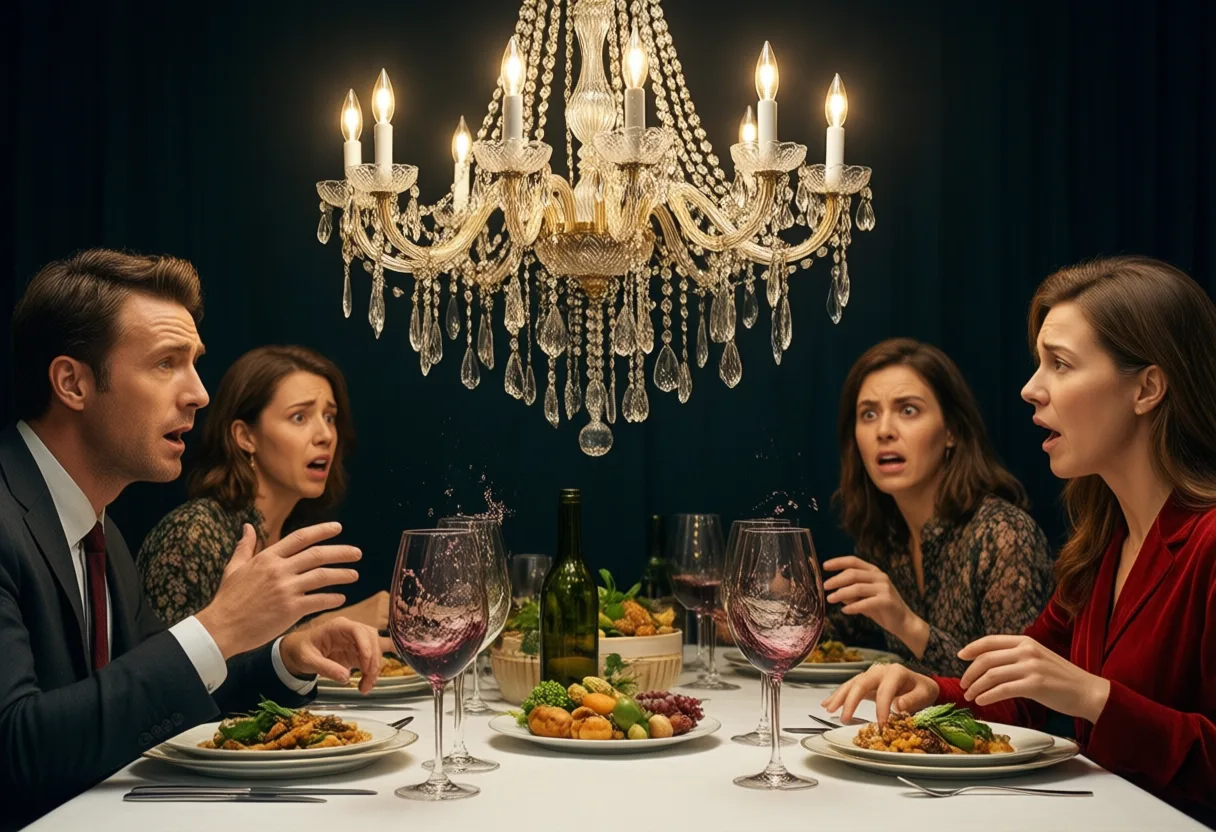

Agatha Christie’s stories have spent decades captivating audiences not just through the turn of a novel’s page, but in the flicker of film projectors and the glow of television screens. Her intricate puzzles, layered Characters, and masterful control of suspense translate with remarkable fidelity across mediums. These adaptations endure because they tap into something timeless: the human fascination with secrets, lies, and the moment truth finally cracks open.
Why Do Agatha Christie’s Mysteries Endure on Screen?
Few authors have shaped the Mystery genre As indelibly as Agatha Christie. Her novels offer more than clever plots-they provide architecture. Each story is a meticulously constructed trap, where every clue is placed with purpose and every character harbors potential guilt. This structural precision makes her work uniquely suited for cinematic translation, where visual storytelling can amplify tension and misdirection.
Film and television thrive on revelation, and Christie’s narratives are built around delayed disclosures. The audience is invited not just to watch, but to participate-sifting alibis, questioning motives, and second-guessing red herrings. The satisfaction lies not only in solving the crime, but in being outwitted by a storyteller who plays fair. Even when viewers think they’ve guessed the culprit, the final twist often lands with chilling clarity.
Moreover, Christie’s stories transcend their era. Though many are set in the interwar years or mid-20th century, their themes-greed, betrayal, justice, and the fragility of reputation-are universal. On screen, these elements gain new life through production design, costume, and performance, allowing modern audiences to step into a World That feels both distant and familiar. The enduring appeal isn’t nostalgia alone, but the Timeless thrill of the unknown unfolding in real time.
The Allure of the Classic Whodunit Format
The whodunit remains one of cinema’s most resilient genres, and Agatha Christie is its undisputed architect. At its core, the format follows a simple blueprint: a crime occurs, suspects multiply, clues emerge, and the detective-often eccentric, always observant-reveals the truth in a climactic exposition. Yet within this framework, Christie engineered endless variation, ensuring no two resolutions feel alike.
What sets her apart is her mastery of misdirection. She doesn’t merely hide the killer; she embeds them in plain sight, protected by social norms, emotional assumptions, or narrative sleight of hand. In film, this technique gains power through editing, framing, and performance. A lingering glance, a misplaced object, a line delivered with ambiguous inflection-all become potential signposts or distractions.
This balance between fairness and surprise is crucial. Unlike mysteries that rely on coincidence or withheld information, Christie’s best works allow attentive viewers a fighting chance. The rules are there, even if they’re easy to overlook. When the resolution arrives, it feels earned rather than imposed. The genre’s appeal lies in this intellectual dance-one that invites rewatching, deeper analysis, and renewed admiration for the craft.

How Setting Becomes a Character in Christie Adaptations
In Agatha Christie’s world, place is never incidental. Whether it’s a snowbound manor, a swaying train carriage, or a sun-drenched Mediterranean island, the setting functions as an active participant in the drama. On screen, directors leverage location to heighten isolation, constrain movement, and deepen psychological unease.
Consider Murder on the Nile, where the vastness of the river contrasts with the claustrophobia of the steamer. Characters cannot escape each other-or their pasts. The water glimmers under harsh sunlight, yet beneath its surface lurks danger. Cinematography often frames the boat as a floating prison, cut off from help, amplifying the sense of inevitability. The environment becomes a silent conspirator, sealing fates before the first body is discovered.
Similarly, Country estates In adaptations like Evil Under the Sun Or The Mirror Crack’d Serve dual purposes. Their opulence suggests safety and privilege, but their sprawling layouts and hidden corridors enable secrecy and violence. Gardens, drawing rooms, and terraces are not just backdrops-they are stages where performances of innocence unfold. The camera lingers on empty hallways or half-open doors, suggesting unseen watchers and unspoken threats.
Even urban settings are rendered with deliberate texture. In Death on the Nile (1978), Cairo’s bustling streets give way to the serene but ominous waters of the Nile, marking a transition from public chaos to private reckoning. The journey itself becomes symbolic-a descent into a closed world where old grievances resurface. These locations aren’t just filmed; they’re curated to reflect the moral ambiguity at the heart of each story.
From Page to Screen: Faithful Translations of Twisted Plots
Translating Christie’s novels to film requires a delicate balance. Purists demand fidelity to plot and character, while filmmakers seek cinematic dynamism. The most successful adaptations honor the source material while embracing the tools of visual storytelling-pacing, composition, score-to enhance, not distort, the original intent.
One challenge lies in condensing dense narratives without losing critical clues. Christie’s prose often relies on internal monologue or subtle dialogue cues that don’t translate directly to screen. Skilled adaptations compensate through visual symbolism-a recurring motif, a character’s habitual gesture, or strategic use of lighting. These choices preserve the integrity of the mystery while making it accessible to viewers unfamiliar with the book.
Another key consideration is tone. Christie’s work spans dark psychological thrillers and lighter, almost comedic capers. Misjudging this balance can undermine the entire enterprise. For instance, And Then There Were None Demands grim seriousness, while Evil Under the Sun Thrives on a veneer of glamour masking cruelty. The best films recognize these distinctions and calibrate their style accordingly.
Notable examples include: - The Witness for the Prosecution (1957), which retains the courtroom’s theatricality while deepening the emotional stakes. - Death on the Nile (1978), which expands the exotic backdrop without diluting the personal betrayals at its core. - And Then There Were None (1945), which streamlines the novel’s structure while preserving its oppressive atmosphere.
Each adaptation proves that faithfulness isn’t about replication-it’s about understanding the soul of the story and finding the right medium to express it.
A Closer Look at the Most Celebrated Film Interpretations
Over the decades, certain Christie adaptations have risen above the rest, becoming benchmarks for how literary mystery can succeed on screen. These films combine strong direction, memorable performances, and a deep respect for narrative mechanics. They are not merely entertainment; they are studies in suspense.
What unites them is their ability to sustain tension across runtime. Unlike modern thrillers that rely on rapid cuts and loud scores, these classics build dread through stillness, silence, and implication. The camera observes, waits, listens-just as a detective would. Every scene serves the puzzle, every performance calibrated to conceal or reveal at precisely the right moment.
Among the most lauded are those that feature ensemble casts, where each actor brings nuance to a potentially archetypal role. The strength of these films lies not in star power alone, but in chemistry, hierarchy, and the subtle hierarchies of suspicion. As the net tightens, alliances shift, and facades crack-on screen, this evolution is palpable.
These interpretations continue to influence filmmakers today. Directors like Rian Johnson (Knives Out) cite Christie as a primary inspiration, acknowledging the debt owed to her structural rigor and thematic depth. The legacy lives not in imitation, but in evolution-a testament to stories that remain fertile ground for reinvention.

Murder on the Nile and the Power of Isolated Suspense
Murder on the Nile, based on Christie’s 1944 play Hidden Horizon, exemplifies how isolation can intensify suspense. Set aboard a cruise ship traveling the Nile, the story traps its characters in a confined space far from help. The river itself becomes a metaphor-flowing forward, unstoppable, much like the momentum of the investigation.
The victim, a wealthy heiress, is surrounded by people dependent on her goodwill-her new husband, his ex-lover, family retainers, and old friends. Each has motive, each has secrets. On screen, the adaptation leverages the ship’s layout to create pockets of intimacy and confrontation. Staterooms, dining salons, and sun decks become stages for veiled threats and sudden revelations.
What makes the film compelling is its focus on emotional entanglement. Unlike puzzles driven purely by logic, this story hinges on love, jealousy, and desperation. The murderer isn’t a cipher but someone deeply wounded, acting from a place of anguish. The tragedy isn’t just the death, but the chain of broken relationships that led to it.
Filmmakers emphasize the duality of the setting-the beauty of the Egyptian landscape against the ugliness of human deceit. Wide shots capture ancient temples and golden horizons, while close-ups reveal trembling hands and darting eyes. The contrast reminds viewers that elegance and violence often coexist, especially among those who wear civility like armor.
The Witness for the Prosecution and the Art of the Legal Twist
Few Christie adaptations match the dramatic intensity of The Witness for the Prosecution. Originally a short story expanded into a stage play, its 1957 film version-directed by Billy Wilder-stands as a masterclass in courtroom suspense. The story revolves around Leonard Vole, accused of murdering a wealthy widow, and the defense attorney who believes in his innocence-until a devastating testimony emerges.
The brilliance lies in its layered deceptions. What appears to be a straightforward trial gradually reveals itself as a carefully orchestrated performance. Alibis are manufactured, identities assumed, loyalties feigned. The film uses legal procedure not just as a backdrop, but as a mechanism for surprise. Each witness stand appearance peels back another layer, leading to a climax few see coming.
Wilder enhances the theatrical roots with cinematic flair-sharp dialogue, expressive lighting, and performances that walk the line between realism and melodrama. Marlene Dietrich’s role, in particular, showcases controlled intensity, turning a supporting character into the linchpin of the entire scheme. Her presence shifts the film from legal procedural to psychological thriller.
The ending remains one of the most shocking in classic cinema, not because it defies logic, but because it fulfills every planted clue with ruthless precision. It’s a reminder that in Christie’s world, truth is often stranger-and more cruel-than fiction.
Death on the Nile (1978) and the Grandeur of Ensemble Casts
The 1978 adaptation of Death on the Nile Stands as a landmark in Christie cinema, notable not only for its faithful rendering of the novel but for its extraordinary cast. Featuring Peter Ustinov as Hercule Poirot, alongside stars like Mia Farrow, Simon MacCorkindale, Bette Davis, and Angela Lansbury, the film turns the murder mystery into a spectacle of talent and temperament.
Director John Guillermin understood that such an ensemble required careful orchestration. Each character is given space to establish motive, vulnerability, and duplicity. The film luxuriates in small moments-an overheard conversation, a misplaced photograph, a nervous tic-that later prove pivotal. The pacing allows suspicion to simmer rather than boil over prematurely.
Visually, the film embraces grandeur. Shot on location in Egypt, it captures the majesty of the Nile and the opulence of 1930s travel. Costumes shimmer under desert light, and interiors gleam with polished wood and brass. This richness contrasts with the moral decay beneath the surface, reinforcing the theme that appearances deceive.
The success of Death on the Nile (1978) lies in its equilibrium-between plot and performance, between spectacle and substance. It doesn’t treat the mystery as a mere vehicle for stars, nor does it sacrifice character for puzzle-solving. Instead, it demonstrates how a great whodunit can be both intellectually satisfying and emotionally resonant.

Evil Under the Sun: Glamour, Deceit, and the Perfect Alibi
Evil Under the Sun (1982) transports Hercule Poirot to a secluded island resort, where sunshine and sophistication mask a lethal game of manipulation. The victim, Arlena Stuart Marshall-a famous actress known for her beauty and charm-is found strangled on a quiet cove. Her husband, her lover, her rivals-all had reason to want her gone.
The film leans into its glamorous aesthetic. Pastel costumes, breezy linen, and panoramic ocean views create a postcard-perfect setting. Yet director Guy Hamilton infuses the visuals with irony-the brighter the colors, the darker the intentions. Sunlight casts long shadows, and smiles rarely reach the eyes.
What makes this case unique is the abundance of alibis. Nearly every suspect was seen elsewhere at the time of the murder, creating a near-impossible scenario. Poirot must dismantle not just lies, but carefully coordinated performances. The solution hinges on timing, perception, and the assumption that people see what they expect to see.
The film benefits from Peter Ustinov’s wry portrayal of Poirot, balancing gravitas with dry humor. His meticulous nature contrasts with the carefree façade of the guests, highlighting the central conflict between order and chaos. Evil Under the Sun May be one of Christie’s lighter tales, but its commentary on vanity, illusion, and self-deception runs deep.
And Then There Were None: The Pinnacle of Paranoia in Cinema
No Christie adaptation captures pure dread quite like And Then There Were None. Based on her most famous novel, the 1945 version-titled Ten Little Indians In some releases-strips away detectives and solutions until only fear remains. Ten strangers, each hiding a dark secret, are lured to an isolated island, where they begin dying one by one, according to a sinister nursery rhyme.
There is no investigator to guide the audience. No reassuring voice of reason. Instead, the film forces viewers to experience the same disorientation as the characters. Trust erodes quickly. Alliances form and collapse. Paranoia becomes the dominant emotion. The absence of a traditional hero makes the horror more intimate, more immediate.
The 1945 adaptation, directed by René Clair, takes creative liberties with the ending-softening it for wartime sensibilities-but retains the novel’s oppressive atmosphere. Fog blankets the island, doors creak on their own, and the rhyme echoes in voiceover, counting down the deaths like a grim metronome.
Later versions, including televised renditions, have restored Christie’s original conclusion, revealing a killer who operates outside the law, delivering punishment with cold precision. These iterations reinforce the story’s central question: Who has the right to judge? The answer, unsettlingly, is left to the audience.
Why These Stories Still Captivate Modern Audiences
More than half a century after many of these films were made, Agatha Christie’s mysteries continue to find new audiences. Streaming platforms reintroduce classics to younger viewers, while new adaptations keep the canon alive. But popularity alone doesn’t explain their staying power.
At their best, these stories offer more than escapism. They engage the mind, challenge assumptions, and expose the fragility of social order. Beneath the polished surfaces of wealth and decorum, Christie reveals the rot of hypocrisy, greed, and concealed violence. Her work endures because it speaks to the darkness that persists, regardless of era.
Modern reinterpretations-from BBC’s Poirot To recent big-screen versions-prove that the formula remains flexible. The core mechanics survive translation into different cultures, time periods, and formats. Whether set in the 1930s or recast in contemporary dress, the questions remain: Who did it? Why? And could I have seen it coming?
Ultimately, the appeal is both intellectual and emotional. Viewers return not just for the twists, but for the ritual-the gathering of suspects, the slow unraveling, the final confrontation. In a world of algorithmic predictability, Christie’s mysteries offer something rare: genuine surprise, earned through craftsmanship, patience, and an abiding belief in the power of story.
| Film Title | Year | Key Setting | Distinctive Element |
|---|---|---|---|
| Murder on the Nile | 1944 play, adapted to film | Cruise ship on the Nile | Emotional entanglement drives the murder |
| The Witness for the Prosecution | 1957 | Courtroom and London | Layered deceptions in a legal thriller |
| Death on the Nile | 1978 | Egypt and Nile riverboat | Star-studded ensemble cast |
| Evil Under the Sun | 1982 | Secluded island resort | Glamour masking moral decay |
| And Then There Were None | 1945 | Isolated island | Paranoia without a detective |
Bringing the Queen of Crime to the Screen
Agatha Christie’s sharp plots and unforgettable characters have captivated audiences for decades, not just on the page but also on screen. Her stories have been adapted so many times they’ve become a genre all their own, with filmmakers returning again and again to her treasure trove of whodunits. From the glamorous chaos of Death on the Nile To the isolated dread of And Then There Were None, the variety of settings and mysteries keeps viewers guessing.
Silver Screen Successes and Small Screen Stars
Some of Christie’s novels have become staples of cinema, with Murder on the Orient Express And Death on the Nile Each seeing multiple big-screen treatments. The 1978 version of Death on the Nile, for instance, brought together a star-studded cast against the backdrop of ancient ruins, turning the investigation into a spectacle as much as a puzzle. On television, series like Agatha Christie’s Poirot And Agatha Christie’s Marple Ran for years, making Hercule Poirot and Miss Marple household names all over again. These long-running shows proved that audiences couldn’t get enough of Christie’s methodical detectives and clever twists.
Even lesser-known titles have found life on screen, like Why Didn’t They Ask Evans? And Ordeal by Innocence, showing that interest in her work stretches far beyond the most famous tales. The 1983 film A Caribbean Mystery Brought Miss Marple to sun-drenched locales, proving her powers of deduction worked just as well in tropical heat as in English country houses. With adaptations spanning nearly a century, it’s clear that Christie’s stories have a timeless appeal-each new version offering a fresh look at how brilliantly she engineered suspense.
Frequently Asked Questions
Why are Agatha Christie's mysteries so enduring on screen?
Her stories have meticulously constructed plots and universal themes like greed, betrayal, and justice. The structural precision of her whodunits allows for suspenseful, fair-play mysteries that engage audiences across generations.
What makes the whodunit format in Christie's films so compelling?
The format invites viewers to participate by sifting clues and questioning suspects. Christie masterfully uses misdirection, embedding the killer in plain sight while allowing attentive audiences a chance to solve the mystery.
How does setting enhance the tension in Agatha Christie adaptations?
Locations like isolated manors, Nile riverboats, or remote islands heighten claustrophobia and psychological unease. The setting often acts as a silent conspirator, sealing characters' fates and amplifying suspense.
Which Agatha Christie film adaptations are considered the most celebrated?
Notable adaptations include The Witness for the Prosecution (1957), Death on the Nile (1978), And Then There Were None (1945), and Evil Under the Sun (1982). These films are praised for their direction, performances, and faithful yet dynamic storytelling.
This article was produced with AI assistance. How Silver Screen Magazine uses AI.
Simone Reyes tracks shifts in film distribution and digital platforms with clarity and foresight, translating complex trends into accessible insights. She bridges the gap between corporate moves and viewer experience, illuminating how the business shapes what we watch.