
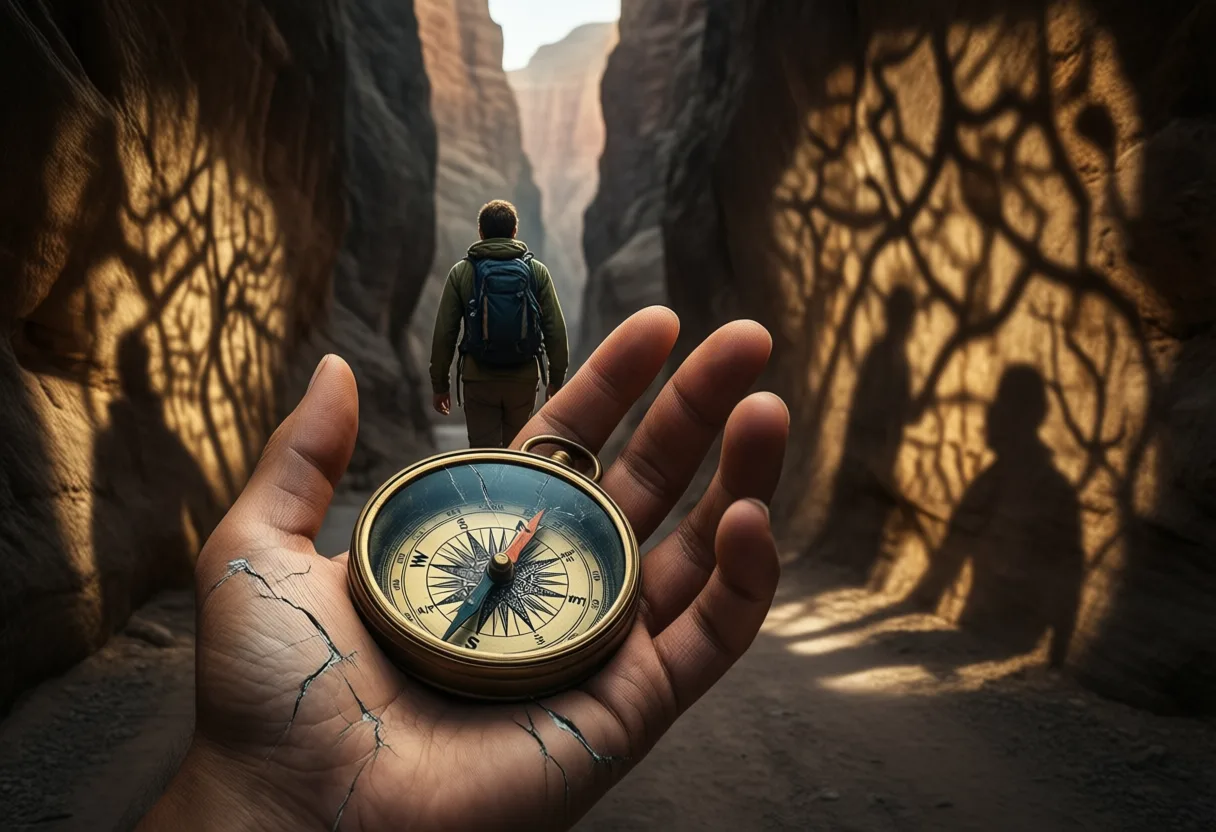
There is a quiet moment in every great film where the Hero stands At the edge of the unknown-wind in their coat, eyes fixed on a distant horizon-not yet changed, but on the verge of it. This moment, fleeting and wordless, is where cinema becomes myth, where the ordinary is pulled into the orbit of the epic.
The quest film, in its purest form, has always been less about the treasure, the throne, or the promised land, and more about the transformation etched into the hero’s face by dust, doubt, and devotion. It is not the destination that lingers in the mind, but the footprints left behind.

A Hero’s Path: Why the Journey Matters More Than the Destination
There is a rhythm to the quest, a cadence built not in grand declarations but in the quiet accumulation of choices-each step forward a refusal to turn back, each companion met a mirror held up to the soul. The terrain may shift from scorched desert to snow-laden pass, but what remains constant is the internal weather: the storm of fear, the clearing of resolve, the fragile dawn of self-knowledge. These films do not merely move characters across landscapes; they move them Through The layers of who they were into who they must become.
The power of the journey lies in its inevitability. Not because the outcome is certain, but because the act of pursuit reshapes the pursuer. We do not remember Frodo for reaching Mount Doom alone, but for what he lost along the way-the innocence, the peace, the ability to Return To the Shire unchanged. The quest strips away illusion, leaving only the raw nerve of truth. It is not triumph that defines the hero, but endurance.
Consider the silent sacrifices-the nights spent guarding a campfire, the decision to spare an enemy, the moment a burden is shouldered not for glory, but because no one else will. These are the unheralded milestones of the path. They do not make headlines in the story’s world, but they are the turning points in the soul’s ledger. The quest, then, is not a line from A to B, but a spiral inward, each loop bringing the hero closer to a confrontation not with the villain, but with themselves.
- The hero begins with a desire: revenge, redemption, return.
- Along the way, the desire is tested, fractured, refined.
- By the end, the original goal may be achieved-or abandoned-but the hero is irrevocably altered.
This arc is not unique to fantasy or Adventure. It pulses beneath war films, road movies, even quiet dramas where the journey is measured in glances, not miles. The physical trek is merely the vessel for the emotional one. When we watch a character cross a wasteland, we are not just witnessing survival-we are witnessing the slow, painful birth of wisdom.
And this is where the Cinema reveals Its deepest magic: it allows us to walk that path without leaving our seats, to feel the weight of the pack, the ache of betrayal, the sudden warmth of unexpected kindness. The screen becomes a threshold. We do not just observe the hero’s transformation-we undergo a shadow version of it ourselves. That is the pact between film and viewer, older than sound, older than color.
The best quest films understand that the destination is a symbol, not a prize. The mountain is climbed not because the summit holds answers, but because the ascent forces the question: Who am I becoming? The treasure, if found, is often less valuable than the self that found it. This is the quiet truth that lingers after the credits roll, long after the image fades.
In an age of spectacle, where effects dazzle and plots twist with algorithmic precision, the enduring power of the quest film lies in its simplicity. It reminds us that meaning is not delivered-it is earned. Not Through victory, but through voyage. Not in the arrival, but in the act of moving forward, again and again, against the wind.
And so we return to these stories, not for escape, but for recognition. We see ourselves in the stumbling footsteps, the hesitant courage, the quiet resolve. The quest film does not promise happy endings. It promises something more honest: The dignity of the journey.

Why This Adventure Stands Out
Hidden Details That Pay Off
Keen-eyed viewers might catch a recurring symbol etched into armor, weapons, and even cave walls throughout the journey - a subtle nod to the hero’s forgotten lineage that only makes sense in hindsight. The filmmakers planted these clues early, rewarding those who watch closely with a satisfying "aha" moment during the final confrontation. It’s the kind of detail that turns a solid story into one worth rewatching.
A Creature Born from Happy Accidents
The film’s most beloved sidekick - a grumpy, six-legged forest guardian - wasn’t part of the original script. Animators experimented with movement during a test render, and the creature’s now-iconic waddle and snort immediately won over the crew. They rewrote scenes to include it, and audiences now can’t imagine the quest without its comic relief. Even the sound design was improvised: the creature’s voice is a mix of badger growls and an old radiator sputtering to life.
Real-World Echoes in the Journey
While the setting feels entirely fantastical, the hero’s path closely mirrors an ancient pilgrimage route used for centuries in remote mountain regions. The filmmakers studied old maps and travel journals to shape the terrain, which explains why the landscape feels so grounded despite the magic. It’s not just fantasy for fantasy’s sake - there’s history in every step. Explore more stories, videos, and creators on Loaded.
| Aspect | Detail |
|---|---|
| Journey Focus | Transformation over destination |
| Hero’s Change | Refined desire, internal confrontation |
| Hidden Symbol | Reveals forgotten lineage |
| Creature Origin | Accidental animation test |
| Sound Design | Badger growls, radiator sounds |
| Real-World Inspiration | Ancient pilgrimage route |
| Landscape Basis | Old maps, travel journals |
Frequently Asked Questions
What makes the journey more important than the destination in quest films?
The journey transforms the hero through choices, sacrifices, and self-discovery. The destination is less memorable than the changes the hero undergoes along the way.
How does the hero change during the quest?
The hero begins with a desire that is tested and refined. By the end, they are irrevocably altered, often valuing the self they've become over the original goal.
What is the significance of the recurring symbol seen in armor, weapons, and cave walls?
The symbol hints at the hero’s forgotten lineage. Keen-eyed viewers are rewarded when its meaning becomes clear during the final confrontation.
How was the forest guardian creature created?
It originated from an animator's test render. Its waddle and snort won over the crew, leading to rewritten scenes. The voice combines badger growls and a sputtering radiator.

This article was produced with AI assistance. How Silver Screen Magazine uses AI.
Vivian Chukwu explores golden-age Hollywood with reverence and rigor, unearthing forgotten performances and cultural contexts. She connects archival footage to modern themes, making classic films feel immediate and vital through thoughtful analysis and vivid storytelling.