There is a quiet alchemy in certain children’s films-an almost imperceptible shift in tone, in light, in Music-that transforms them from mere entertainment into emotional landmarks. These are the movies that linger not just in memory, but in the soul, shaping how we see kindness, courage, and wonder long after the credits roll.
Why Do Some Children’s Films Become Timeless?
Timelessness Isn’t bestowed by box office numbers or marketing blitzes. It emerges quietly, like dawn through a bedroom window, when a film speaks not At Children but To Them-with honesty, with respect for their emotional intelligence.
The most enduring stories trust young viewers to feel deeply, even when they can’t yet name the emotions. They don’t shy from melancholy, fear, or loss, but cradle those feelings within a framework of hope. A child watching may not understand narrative structure, but they sense authenticity-the difference between manipulation and meaning.
These Films Also possess a kind of visual poetry. Whether drawn by hand or captured on film, their images carry symbolic weight: a balloon rising into gray skies, a key turning in a rusted lock, a pair of ruby slippers clicking together. Such moments become talismans, passed from one generation to the next.
And perhaps most crucially, these stories refuse to condescend. They recognize that childhood is not a lesser state of being, but a distinct way of experiencing the world-one marked by intense feeling, Vivid imagination, and moral clarity. When filmmakers honor that, their work endures.
The Magic of Animated Pioneers
Animation, at its best, is pure cinematic sorcery. In the hands of true artisans, pencil strokes and paint cells coalesce into living dreams-worlds where animals speak, forests breathe, and stars lean down to listen.
Early animated features didn’t have the benefit of digital rendering or motion capture. What they had was patience-frame-by-frame craftsmanship, each cel painted under lamplight, each movement choreographed Like ballet. This labor imbued the films with a tactile warmth, a handmade grace that modern precision sometimes lacks.
Consider the forest sequence in Bambi, where falling ash drifts like snow, or the swirling colors of Fantasia’s “Night on Bald Mountain,” where shadow consumes the screen in waves. These aren’t just scenes-they’re emotional experiences rendered in light and line.
- The use of watercolor backgrounds gave early films a dreamlike softness.
- Character animation emphasized expressiveness over realism, allowing emotion to lead design.
- Musical scores were composed as integral narrative forces, not mere accompaniment.
Even now, decades later, these choices resonate. A child today might never have seen a hand-painted cel, but they still feel the hush of the forest when Bambi calls for his mother. That silence speaks louder than dialogue ever could.
The pioneers understood something fundamental: Animation isn’t a genre-it’s a language, capable of expressing truths live-action sometimes struggles to reach. When used with purpose, it becomes a vessel for myth, memory, and magic.
How Simple Stories Create Lasting Impact
Great storytelling often thrives in simplicity. The most unforgettable children’s films rarely rely on convoluted plots or endless twists. Instead, they center on elemental desires: to be loved, to belong, to find home.
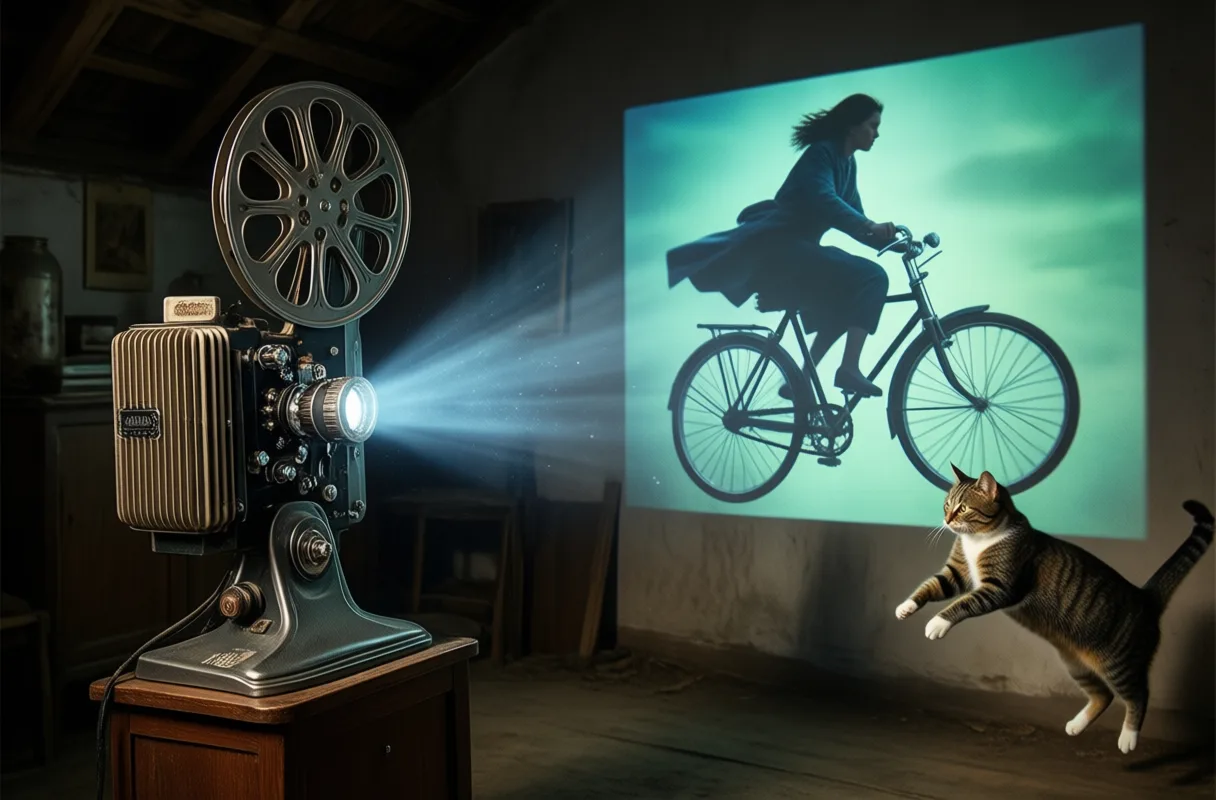
Think of The Wizard of Oz, where a girl walks a yellow brick road not because she seeks power, but because she longs for the place where she’s known. Or E.T., where a boy helps an alien return to his family-two outsiders bound by loneliness and loyalty.
These narratives unfold with deliberate pacing, allowing space for quiet moments: Dorothy humming in a cornfield, Elliott sharing a bike ride across the moon. In that stillness, emotion takes root.
Such stories follow archetypal paths-not out of laziness, but because myths endure for a reason. The hero’s journey, the call to adventure, the return transformed-these structures mirror our inner lives, especially during childhood, when every day feels like a threshold.
When a film respects this rhythm, it doesn’t feel predictable-it feels inevitable. Like a lullaby sung for the hundredth time, the comfort lies in the repetition, in knowing the words by heart.
And in their simplicity, these films leave room for imagination. They don’t over-explain or saturate the senses. Instead, they invite the viewer to step inside, to fill the spaces between scenes with their own dreams.
When Live-Action Adventures Feel Larger Than Life
Not all wonder comes from animation. Some of the most transporting children’s films are rooted in the real world-yet manage to make it shimmer with possibility.
A train station platform, a backyard shed, a dusty attic-ordinary places become portals in the right hands. In Chitty Chitty Bang Bang, a broken-down car becomes a vessel of flight; in Mary Poppins, an umbrella turns gravity into a suggestion.
These films operate on the logic of dreams, where rules bend but never break. There’s no attempt to justify the magic-only to present it, fully formed, as if it were always there, waiting to be noticed.
They also rely heavily on performance. A single raised eyebrow from Julie Andrews, a mischievous grin from Dick Van Dyke, and suddenly the mundane becomes enchanted. The actors don’t play At Magic-they inhabit it.
- Practical effects ground the impossible in tangible detail: puppeteered creatures, miniature sets, mechanical birds.
- Cinematography often uses low angles, making children appear central, powerful, seen.
- Music swells not to manipulate, but to elevate-to mark the moment when ordinary life catches fire with meaning.
In these films, adventure isn’t found by escaping reality, but by seeing it more clearly. Mary Poppins doesn’t erase the Banks family’s problems-she helps them face them, with song, with kite-flying, with starlight.
That balance-between whimsy and wisdom-is what makes such stories last. They remind us that Magic isn’t the absence of pain, but the presence of hope.
What Made the Golden Age of Family Cinema So Special?
Roughly spanning the late 1930s through the early 1980s, this era produced a constellation of films that continue to define how we think about family storytelling.
It wasn’t a golden age because the technology was flawless-often, it was rudimentary. Nor because the scripts were immune to sentimentality. It was golden because, for a brief stretch, studios believed in making films that could be shared-genuinely shared-across generations.
Parents could watch The Sound of Music And feel their own memories stir, while children leaned forward at the sight of marionettes dancing in a mountain meadow. Bedknobs and Broomsticks Offered slapstick and spells, history and heartbreak-all in one sweeping tale.
These films assumed attention spans longer than five minutes. They allowed songs to build, characters to grow, silences to breathe. There was no rush to the next gag, the next explosion. Instead, there was trust-in the material, in the audience.
They also embraced complexity. Summer of ’42 May not be a children’s film, but its emotional honesty influenced how filmmakers approached youth. Even lighter fare didn’t ignore hardship: war, separation, poverty-these were not erased, but woven into the fabric of the story.
And above all, these films were made for theaters-large screens, rich sound, communal viewing. They weren’t designed for background noise or multitasking. They demanded to be watched, felt, remembered.
That intentionality is part of their legacy. They weren’t disposable. They were built to last.
Lessons from Musicals That Still Resonate Today
Musicals occupy a unique space in children’s cinema-not merely as bursts of song, but as eruptions of inner life. When words fail, melody takes over.
In Singin’ in the Rain, Gene Kelly dances through puddles not because it’s logical, but because joy demands motion. Similarly, when the von Trapp children harmonize in Do-Re-Mi, their voices lift not just notes, but spirits-both theirs and ours.
These films teach without lecturing. Through rhythm and rhyme, they embed values: resilience in Annie (“Tomorrow”), responsibility in Mary Poppins (“A Spoonful of Sugar”), unity in The Parent Trap (“Let’s Get Together”).
Songs become cultural touchstones, passed down like heirlooms. A grandmother hums “Supercalifragilisticexpialidocious” to her grandchild, who then sings it at school. The melody carries memory, connection, delight.
And musically, these films trusted young ears. They didn’t simplify harmonies or dumb down lyrics. Instead, they introduced children to orchestral textures, jazz rhythms, operatic flourishes-expanding their sonic world before they even knew it.
More than that, the musical form allows for emotional layering. A character can sing one thing while the music suggests another-the bittersweet undercurrent beneath a cheerful tune, the longing hidden in a playful rhyme.
That duality is sophisticated, yes-but children sense it. They may not articulate it, but they feel it. And that’s where resonance begins.
Finding Wonder in Stop-Motion and Practical Effects
Before pixels, there was clay, wire, fur, and glass eyes. Stop-motion animation required hours to produce seconds of film-each frame adjusted by hand, with breath held against movement.
The result? A texture unlike any other. The slight tremor in a creature’s hand, the flicker of light across a felt coat-these imperfections don’t detract. They authenticate. They make the unreal feel lived-in.
Films like The Nightmare Before Christmas Or earlier holiday specials pulsed with a handmade eeriness-a gothic charm that felt both spooky and safe. Jack Skellington’s long fingers, Sally’s stitched seams-they weren’t meant to be realistic. They were meant to be remembered.
This craft demanded collaboration: sculptors, puppeteers, cinematographers, all working in concert. No algorithm generated the fog rolling over Halloween Town-someone blew it from a machine, frame by painstaking frame.
- Miniature sets were built with obsessive detail: tiny books, working lamps, cobblestone streets.
- Movements were choreographed like dance, with timing measured in heartbeats.
- Lighting created mood-amber for warmth, blue for sorrow, green for enchantment.
And because these effects were physical, they occupied real space. A child watching could imagine reaching out and touching the world on screen. It wasn’t distant or digital-it felt close enough to hold.
In an age of seamless CGI, these films stand apart not for what they lack, but for what they affirm: That beauty lives in effort, in the visible hand of the artist.
The Quiet Power of Gentle, Slower-Paced Narratives
Not every story needs a chase scene. Not every climax requires thunder. Some of the most affecting children’s films unfold at the pace of a heartbeat, steady and sure.
Take My Neighbor Totoro-a film with no villain, no conflict beyond the anxiety of a sick mother. Yet it brims with wonder: a bus stop in the rain, two girls waiting, until a giant cat-bus appears, glowing like a lantern in the dark.
These films allow silence. They let a child sit with a feeling-loneliness, anticipation, awe-without rushing to fix it. In doing so, they validate inner life. They say: It’s okay to wait. It’s okay to wonder.
They also reflect a different understanding of childhood-one that doesn’t equate engagement with speed. A scene of Peter Rabbit nibbling lettuce in Mr. McGregor’s garden isn’t thrilling by modern metrics. But it’s alive with tension, humor, consequence.
And in their stillness, these films cultivate attention. They ask the viewer to look closely-to notice the way dust motes dance in sunlight, or how a whisper echoes in a hollow tree.
Modern media often overwhelms. These older films, by contrast, offer sanctuary. They don’t compete for attention-they earn it, slowly, sincerely.
In that slowness lies strength. A child learns not just to watch, but to see.
How Nostalgia Shapes What We Share With New Generations
Nostalgia is not mere sentiment. It is memory wearing emotion as a cloak. When we show our children the films we loved, we aren’t just passing on stories-we’re offering pieces of ourselves.
We remember where we were: curled on a couch, tucked in a theater seat, wide-eyed at a summer camp screening. The film becomes a vessel, carrying not just plot, but presence-the voice of a parent, the squeeze of a hand, the shared gasp at a twist.
And when we press play today, we hope-quietly-for a spark. That our child will turn to us and say, “Again,” just as we once did. That they’ll claim the story as their own, even as it connects them to us.
But nostalgia can also blind. It can make us forget a film’s flaws-the outdated stereotypes, the clumsy pacing, the moments that haven’t aged well. True reverence means seeing clearly, not idealizing.
So we share with care. We contextualize. We pause and explain. We let them critique, reject, or revere on their own terms.
Because ultimately, the goal isn’t replication-it’s continuation. We don’t want them to love the film Because We did. We want them to love it For themselves.
And when they do, something remarkable happens: the past doesn’t repeat. It resonates.
Balancing Whimsy and Emotional Honesty for Young Audiences
The finest children’s films walk a tightrope-between fantasy and truth, between laughter and tears. They know that whimsy without heart is hollow, and honesty without grace can be crushing.
They don’t shield children from sorrow, but they never abandon them within it. When Willy Wonka reveals his lonely childhood, it’s not played for pity-it’s offered as understanding. Connection, not confession.
Similarly, when Bagheera tells Mowgli he must return to the man-village, the moment aches with reluctant love. The jungle doesn’t vanish; it simply releases him. Growth, the film suggests, is not betrayal-it’s necessity.
These stories understand that children feel deeply, even when they lack the words. A furrowed brow, a turned shoulder, a single tear-they register everything.
And so the best films meet them there. They don’t explain too much. They don’t tidy up endings. They allow ambiguity, because life offers little else.
Yet they also believe in transformation. Not because magic wands wave, but because kindness alters fate. Because courage isn’t the absence of fear, but the choice to move forward anyway.
That balance-Whimsy anchored in truth-is what makes these films endure. They don’t just entertain. They accompany.
Why Timeless Kids’ Movies Don’t Need Modern Updates
There is a persistent notion that old films must be remade-reimagined, rebooted, “improved.” But some stories resist such treatment, not out of stubbornness, but because they are already complete.
A new version of Peter Pan May have better effects, but does it capture the trembling urgency in Wendy’s voice as she pleads, “Don’t let me die!”? Can digital fairies replicate the fragile glow of Tinker Bell’s dwindling light?
Often, updates confuse technological advancement with artistic progress. They assume that smoother visuals mean deeper meaning. But emotion isn’t rendered in megapixels-it’s etched in gesture, in silence, in the space between lines.
Moreover, remakes frequently strip away the texture of their originals-the grain of film, the imperfection of puppets, the warmth of analog sound. In pursuit of polish, they lose soul.
And sometimes, the original reflects its time in ways that shouldn’t be erased. The sepia tones of The Wizard of Oz Aren’t a flaw-they’re a transition, from monochrome reality to Technicolor dream. To recolor it is to misunderstand its metaphor.
These films don’t need rescue. They need rediscovery. They ask only to be seen-not as relics, but as living works, breathing still.
To preserve them is not nostalgia. It is stewardship.
The Enduring Appeal of Kindness, Courage, and Imagination
At the heart of every lasting children’s film lies a trinity: Kindness, courage, and imagination. Not as slogans, but as actions-choices made in moments of doubt, fear, or uncertainty.
Kindness appears not in grand gestures, but in small ones: a mouse leaving a thimble by a sleeping girl’s bed, a robot carefully placing a plant in a steel chest. These acts aren’t rewarded immediately. They simply Are-and in their being, they change the world.
Courage isn’t the absence of fear. It’s Dorothy stepping onto the yellow brick road despite trembling legs. It’s Elliott shielding E.T. From men in suits, knowing he might get caught. It’s standing up, even when you’re small.
And imagination-this is the engine. It builds castles in the air, sends kites flying into stars, turns a wardrobe into a portal. But it’s not escape. It’s vision. It’s the ability to see what isn’t there-and then bring it into being.
These qualities aren’t taught through lectures. They’re embodied. Children don’t learn them by being told-they learn by witnessing, by feeling, by remembering how their heart beat during a particular scene.
And years later, when faced with their own crossroads, they may not recall the plot. But they’ll remember the feeling-the quiet certainty that doing the right thing matters.
That is the gift of these films. Not distraction. Not instruction. Transformation-gentle, enduring, profound.
| Film | Interesting Fact |
|---|---|
| Bambi | The Great Prince of the Forest never speaks, adding mystery and majesty. |
| Snow White and the Seven Dwarfs | First hand-drawn feature to show deep emotional expression in characters. |
| Mary Poppins | “Supercalifragilisticexpialidocious” was almost cut for being too silly. |
| Song of the South | “Zip-A-Dee-Doo-Dah” remained popular despite the film's criticized portrayal of history. |
| The Wizard of Oz | The tornado was a spinning muslin sock filmed in slow motion. |
| The Wizard of Oz | Ruby slippers were changed from silver to stand out in Technicolor. |
| The Wizard of Oz | Fewer than ten original ruby slipper pairs are known to exist today. |
Timeless Tales on the Silver Screen
Hidden Details That Spark Joy
Ever notice how Bambi’s father, the Great Prince of the Forest, never speaks a single word in Bambi? The animators made that choice on purpose-his silence makes him feel more mysterious and majestic, like a true guardian of the wild. And speaking of animation milestones, Snow White and the Seven Dwarfs Wasn’t just Disney’s first full-length animated feature-it was the first time audiences saw a hand-drawn character truly emote with depth, setting the standard for every cartoon that followed.
Songs That Stick Like Glue
You can’t help but hum along when Mary Poppins floats down from the sky, but did you know “Supercalifragilisticexpialidocious” was almost cut from the film? The songwriters worried it was too silly, but Julie Andrews’ cheerful delivery won everyone over. Meanwhile, the upbeat tune “Zip-A-Dee-Doo-Dah” from Song of the South Became so popular it stayed in pop culture for decades, even though the movie itself is now widely criticized for its outdated portrayal of history.
Accidental Magic Behind the Scenes
The famous tornado scene in The Wizard of Oz Wasn’t created with special effects magic-it was a huge muslin sock spun by a hidden motor, filmed in slow motion to look terrifyingly real. And those ruby slippers? They were originally silver in L. Frank Baum’s book, but changed to red so they’d pop in Technicolor. Over 20 pairs were made, and today, fewer than ten are known to still exist-making them some of the most treasured props in film history.
Frequently Asked Questions
Why do some children's films become timeless?
Timeless children's films speak honestly to young viewers, respecting their emotional intelligence and not shying from melancholy, fear, or loss, while framing those feelings within hope. They use visual poetry and avoid condescension, recognizing childhood as a distinct and meaningful way of experiencing the world.
What makes classic animated films emotionally powerful?
Classic animated films use handcrafted techniques like hand-painted cels and watercolor backgrounds to create a tactile warmth and dreamlike softness. Their music, expressive character animation, and symbolic imagery-such as falling ash in Bambi or the swirling colors in Fantasia-create deep emotional experiences.
How do live-action children's films create a sense of magic?
Live-action films like Mary Poppins and Chitty Chitty Bang Bang make ordinary places feel magical by bending reality without breaking its logic. They use strong performances, practical effects, low-angle cinematography, and music to elevate everyday moments into adventures filled with hope and meaning.
Why don't timeless kids' movies need modern updates?
These films are already complete, with emotional depth rooted in gesture, silence, and analog texture-not visual polish. Updates often mistake technological advancement for artistic progress and can lose the soul of the original by removing imperfections, film grain, or meaningful stylistic choices like The Wizard of Oz's transition to Technicolor.
This article was produced with AI assistance. How Silver Screen Magazine uses AI.
Vivian Chukwu explores golden-age Hollywood with reverence and rigor, unearthing forgotten performances and cultural contexts. She connects archival footage to modern themes, making classic films feel immediate and vital through thoughtful analysis and vivid storytelling.