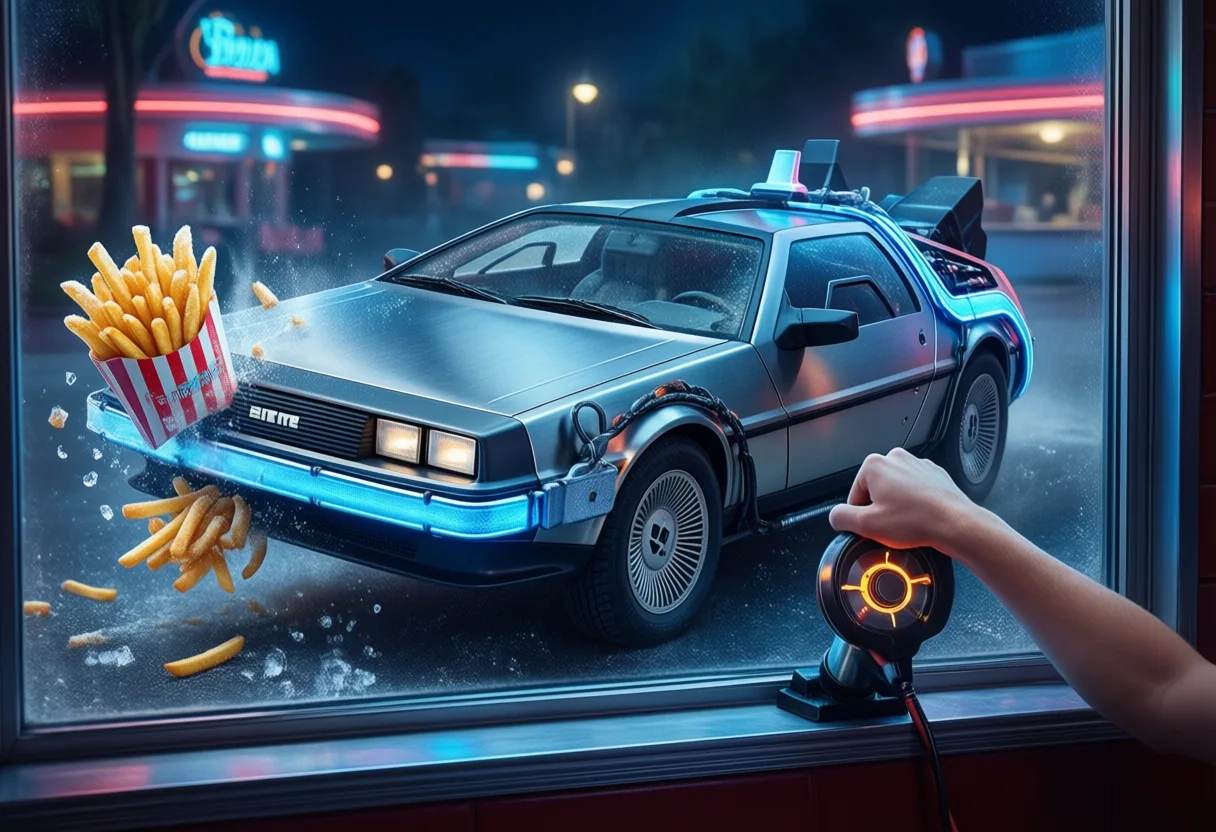
There’s a moment in every great film where time seems to fold in on itself-where the screen stops being glass and becomes a portal. You’re not just watching history; you’re living it Backward, forward, sideways, all at once. It happened the first time Marty McFly plugged into that DeLorean and lit up the night sky with flux capacitors and teenage panic.
That movie-Back to the Future-wasn’t just a hit. It was a cultural reset. One part sci-fi, one part high school satire, and 100% pure nerve, it spun nostalgia into something urgent, something dangerous. And like the best of its kind, it didn’t just reflect a generation-it gave that generation a language.
The Alchemy of Time Travel and Teen Angst
What made Back to the Future Stick wasn’t the gadgets or the gags, though both were sharp as switchblades. It was the way it weaponized innocence. Here was a kid who wasn’t trying to save the world-he just wanted his parents to fall in love. Yet in fixing their past, he nearly erased his own future. Talk about Family drama.
The film understood something most sequels still miss: Emotion drives spectacle. You don’t care about 88 miles per hour until you see Marty’s fingers start to fade. The ticking clock isn’t measured in seconds but in identity, in legacy, in whether your mom will ever look at you without awkward flirtation.
It wasn’t the first movie to play with Time. But it was the first to make time feel personal. And in doing so, it joined a rarefied club-films that land like meteorites, shaking the ground long after impact.
- They’re often dismissed as “just” entertainment.
- They embed themselves in slang, fashion, even how we imagine possibility.
- They become shorthand for an entire era’s hopes, fears, and haircuts.
Films That Bent Reality and Broke Rules
Before there was a DeLorean, there was a monolith spinning through space in 2001: A Space Odyssey. Before Doc Brown shouted “Great Scott!”, Kubrick whispered silence louder than any explosion. The film didn’t explain its symbols. It trusted audiences to feel them-to float alongside Bowman into the infinite, unsure if it was evolution or extinction.
Then came The Matrix, where reality cracked open like a corrupted file. Suddenly, leather coats and green code weren’t just cool-they were armor against illusion. The Wachowskis didn’t invent existential dread, but they did give it a killer soundtrack and some seriously fluid kung fu.
And let’s not forget E.T. The Extra-Terrestrial. Spielberg took alien contact and tucked it under a suburban bed. No lasers, no invasions-just a bike flying toward the moon, silhouetted against dusk. It proved you could break hearts with a creature made of rubber and longing.
Each of these films, like Back to the Future(https
When Time Travel Met Teen Comedy
The Clock Tower That Almost Wasn't
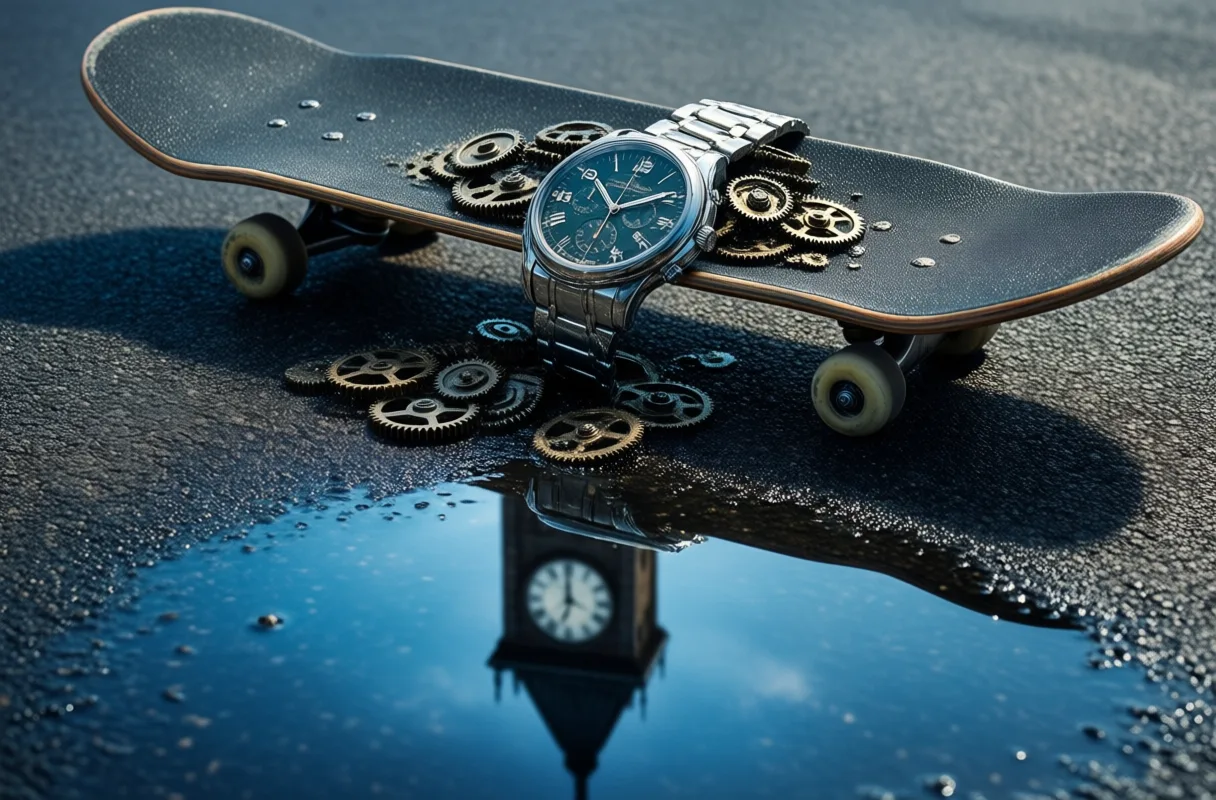
Back to the FutureS iconic clock tower wasn’t built from scratch-it was a real structure at Universal Studios’ Courthouse Square, originally constructed for silent films in the 1920s. The clock itself, frozen at 10:04 p.m., became one of cinema’s most recognizable symbols, representing the exact moment lightning strikes the clock tower in 1955. Fun fact: the filmmakers originally wanted to use a shopping mall as the starting point for the time jump, but the name “Twin Pines Mall” was changed to “Lone Pine Mall” after Marty accidentally destroys one of the pine trees in the past-making the timeline’s ripple effect part of the movie’s clever fabric.
Casting Quirks and Last-Minute Swaps
Michael J. Fox wasn’t the first choice for Marty McFly-Eric Stoltz was cast and filmed several weeks’ worth of scenes before the studio realized the tone wasn’t working. The role was re-cast with Fox, who was juggling filming duties on the TV show Family Ties-so he often shot Back to the Future scenes at night, sometimes working 18-hour days. Meanwhile, Christopher Lloyd’s portrayal of Doc Brown was inspired by the wild energy of legendary comedian Harpo Marx, giving the eccentric scientist his physical expressiveness and unpredictable charm.
A Soundtrack That Time-Travelled Too
The movie’s famous guitar riff from “Johnny B. Goode” wasn’t just a performance-it was a carefully timed joke. When Marty takes the stage at the Enchantment Under the Sea dance, the band members stare in confusion because rock and roll hasn’t been invented yet in 1955. The actual song was recorded by a session musician mimicking Chuck Berry’s style, since Berry himself wasn’t available. And the DeLorean’s time-travel effect sound? That was created by blending a bell tolling with a car slowing down on wet pavement and a rising whoosh-proof that some of cinema’s most memorable moments come from pure audio invention.
Frequently Asked Questions
What makes Back to the Future a cultural reset?
It combined sci-fi and high school satire with emotional depth, turning nostalgia into something urgent and personal. The film gave a generation a shared language and became a lasting cultural touchstone.
Was the clock tower in Back to the Future a real structure?
Yes, it was a real building at Universal Studios’ Courthouse Square, originally built in the 1920s for silent films. The clock was frozen at 10:04 p.m., the moment lightning strikes in 1955.
Why was Michael J. Fox not the first actor cast as Marty McFly?
Eric Stoltz was originally cast and filmed for several weeks, but the studio recast the role with Fox when they realized the tone wasn’t working.
How did the movie influence fashion and music?
The film embedded itself in slang, fashion, and music. The DeLorean’s time-travel sound was an audio invention, and 'Johnny B. Goode' highlighted rock and roll before its time.
This article was produced with AI assistance. How Silver Screen Magazine uses AI.
Rohan Kilpatrick dissects the personal lives of stars with wit and precision, balancing insider access with ethical awareness. He delivers the latest whispers and headlines with a sharp eye for irony, never sacrificing style for sensationalism.