

A film’s first breath is not in the projector’s glow, but in the silence that follows its final frame-when a critic picks up a pen or taps a keyboard, and a legacy begins to form. The box office fades, the premieres end, but the words remain, etching themselves into the cultural memory like grooves on celluloid.
The Weight of Words: How Criticism Outlives Box Office
Great films are often remembered not by how much they earned, but by how deeply they were felt-and how fiercely they were debated. The roar of opening weekend crowds may echo through theaters, but it is the quiet judgment of Critics That often outlives the fanfare. A single review, sharp as a frame line, can elevate a film to myth or relegate it to obscurity, shaping how future generations see not only the movie, but the director behind it.
Box office numbers chart popularity, but they do not measure resonance. A film that stumbles at Release May, years later, be exalted as visionary-its initial failure reinterpreted as prescience. Conversely, a smash hit can erode in cultural esteem, its acclaim revealed as fleeting, tethered more to timing than truth.
Critics, in this way, become archivists of taste. Their assessments, however subjective, serve as early markers in the long journey of a film’s afterlife. They do not merely reflect reception-they help construct it.
What Happens When a Director’s Vision Clashes with Critical Reception?
When a filmmaker’s ambition outpaces the expectations of the moment, the collision with criticism can be seismic. A director’s most personal work-bold, unconventional, emotionally raw-often meets resistance not because it fails, but because it refuses to conform.
Some filmmakers pour years into a vision only to be met with dismissal, their craft mistaken for indulgence. The language of critique, in these moments, can feel less like analysis and more like judgment-of tone, of pacing, of choices that only the director fully understood.
Yet these very films, once scorned, sometimes become touchstones. Time reveals what immediacy cannot: that a film dismissed as self-indulgent may in fact be prophetic. The tension between director and critic is not always a battle-it is often a dialogue delayed by decades.
- A film too strange for its time may later be hailed as groundbreaking.
- A director’s repetition of themes, once called redundant, can be reevaluated as thematic mastery.
- Emotional intensity, once labeled excessive, may be recognized as authenticity.
The First Reviews Are Never the Last Word
A premiere is not a verdict. The first wave of Reviews, however loud, is only the opening note in a much longer symphony. History has shown, again and again, that Initial reactions are rarely the final word.
Critics respond to context-cultural mood, industry trends, personal bias. What feels alienating in one era can feel revelatory in another. The film that baffles reviewers in 1975 might be studied in film schools by 1995.
Consider how a director’s early work, once seen as chaotic or impenetrable, is later understood as the birth of a new language. The tools for interpretation evolve; so too does our capacity to see.
- A slow pace may once have been called dull-now it’s meditative.
- Ambiguity once frustrated-now it invites contemplation.
- Visual excess once overwhelmed-now it’s celebrated as expression.

A Single Frame in Time: Why Initial Reactions Don’t Define Greatness
A review is a moment captured-frozen in the heat of first impression. But art is not static, and neither is understanding. A film exists not in a single screening, but in the sum of all its viewings, across time and temperament.
Greatness often arrives late. It sidles in quietly, long after the press junkets have ended and the headlines faded. A film once written off as a misfire may, through repeated viewings, reveal layers unseen at first glance.
Directors know this, even when they ache from rejection. They make films not just for now, but for later-hoping that somewhere down the line, someone will see what they saw.
- The texture of a performance.
- The weight of a silence.
- The precision of a cut.
These are things that can be missed in haste, but never truly lost.
When the Director’s Cut Rewrites History
Sometimes, the director’s vision was never fully seen-at least, not at first. Studio interference, runtime limits, or editorial mandates can strip a film of its soul. But when a director’s cut emerges, years later, it can feel like a resurrection.
These re-releases do more than restore footage-they restore intent. A film once deemed incoherent may, with its full rhythm restored, suddenly sing. Critics return, sometimes with humility, to reassess what they once misunderstood.
The director’s cut is not just an alternate version-it is often the true one. And when it lands, it can shift the entire legacy of a film, turning scorn into reverence.
- Lost subplots clarify meaning.
- Extended scenes deepen emotion.
- Pacing regains its natural breath.
What was once dismissed as flawed becomes, in hindsight, essential.
The Slow Burn: Films That Found Their Audience Years Later
Not all films ignite on release. Some smolder for years, waiting for the right cultural wind to fan them into flame. These are the slow burns-movies that slipped through the cracks only to become beacons.
They find their people not in theaters, but in living rooms, in late-night viewings, in whispered recommendations. A generation discovers them not through ads, but through obsession.
These films often share a quality: they are out of step with their time. Too strange, too quiet, too honest. But that very quality becomes their strength when the world finally catches up.
- A character study once called boring is now seen as profound.
- A surreal narrative once called confusing is now called poetic.
- A performance once deemed odd is now called iconic.
Legacy is not always immediate. Sometimes, it takes twenty years to hear the echo.

Critics as Time Capsules - What They Preserve (and Overlook)
Critics do not just judge films-they document the moment in which they are seen. Their reviews are as much about the era as the art. A pan may say less about the film than about what the critic feared or failed to recognize.
In this way, criticism becomes a mirror. It shows us not only what was made, but what was acceptable, what was feared, what was possible.
Yet for all they preserve, critics also overlook. The marginalized voice, the unfamiliar style, the quiet masterpiece-these are often missed in the rush to define what matters.
- A film by a woman may be reduced to “personal” when it is universal.
- A foreign film may be exoticized rather than understood.
- A genre piece may be dismissed as pulp when it is poetry.
Time, mercifully, corrects some of these omissions.
The Auteur Paradox: Genius or Ego?
The auteur theory holds that a director is the author of a film-its guiding mind, its soul. But when a film fails, that same theory can turn reverence into accusation. Was it vision? Or vanity?
This paradox haunts directors who dare greatly. When a film soars, they are hailed as masters. When it stumbles, they are called egotists. The same traits-obsession, control, repetition-are praised or punished depending on outcome.
Yet the greatest directors are often the most stubborn. They return to the same themes, the same images, the same obsessions, not out of laziness, but out of necessity. They are not making movies-they are making a body of work.
- Repetition becomes rhythm.
- Fixation becomes philosophy.
- Stubbornness becomes integrity.
The line between genius and ego is thin-and only time can trace it.
How One Review Can Cement a Career - or End It
A single sentence from a powerful critic can alter a trajectory. It can open doors-or close them. For a young director, a rave can feel like anointment. A pan can feel like exile.
The weight of early reception is immense. Studios notice. Financiers notice. The industry notices. A film once seen as promising may never find funding again, not because it lacked merit, but because it lacked approval.
And yet, some directors persist. They work in shadows, in smaller formats, in foreign markets. They keep making films, not for acclaim, but because they must.
- One review does not define a life’s work.
- But it can delay recognition by decades.
- And in the film world, delay can mean erasure.
Legacy in Reverse: Reassessing the Forgotten and the Maligned
History is not fixed. It breathes. It reconsiders. Films once dismissed as failures are now taught in classrooms. Directors once ridiculed are now revered.
This reversal is not rare-it is necessary. Art demands second chances. It demands distance. It demands eyes unclouded by the noise of release.
We now see clearly what was once obscured: the innovation in the awkward, the beauty in the flawed, the courage in the misunderstood.
- A film once called self-indulgent is now seen as brave.
- A director once labeled difficult is now called visionary.
- A genre once deemed lowbrow is now studied as art.
The past is not static. It is rewritten every time we watch again.
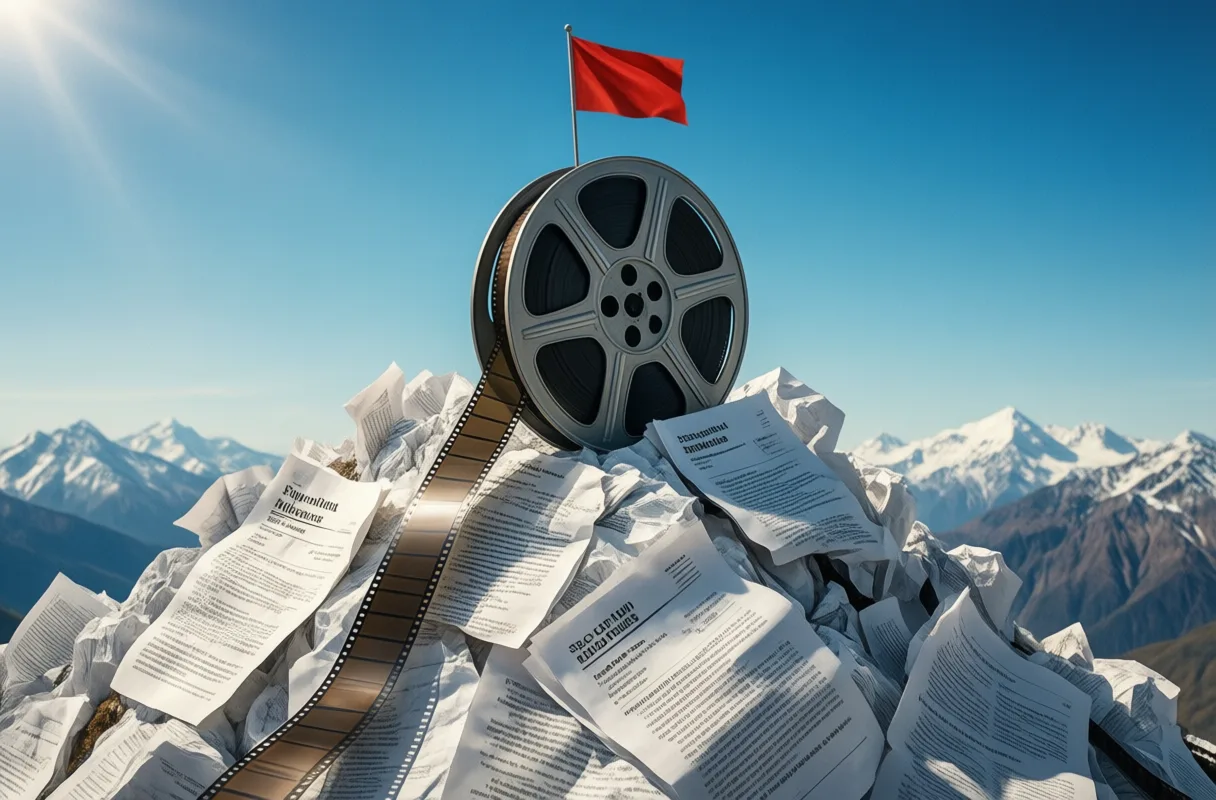
Why Some Directors Thrive Outside the Critical Spotlight
Not all greatness needs validation. Some directors build careers far from the glare of acclaim, working in genres, in regions, in formats that critics rarely honor. Yet their influence spreads like roots beneath the soil.
Their films may never top lists, but they are cherished. They are quoted. They are lived in. They are passed from hand to hand, not through reviews, but through love.
These directors often speak a different language-one of craft, of consistency, of quiet devotion to story. They do not make films for awards. They make them for audiences.
- Their work accumulates meaning over time.
- Their names become synonymous with a feeling.
- Their legacy is not written-it is felt.
The Echo Chamber Effect: When Reviews Become the Story
Sometimes, the reviews overshadow the film. A controversy, a feud, a single damning line-it becomes the narrative. The movie itself is lost beneath the noise.
In the age of aggregation and instant reaction, criticism can become performance. The goal shifts from understanding to provocation. The nuance fades. The complexity is flattened.
And in that echo chamber, directors may feel less like artists and more like targets. The conversation is no longer about what the film is, but what it means to the critic.
This is the danger: when criticism stops being a dialogue with art and becomes a monologue about power.
What We Gain - and Lose - When Critics Hold the Reins
Critics shape taste. They elevate, they dismantle, they preserve. Without them, we might miss the depths of a performance, the brilliance of a structure, the courage of a choice.
But they also exclude. They reflect the biases of their time. They can silence voices that do not speak their language.
What we gain is context, insight, passion. What we lose is the possibility of seeing for ourselves-uninfluenced, unguided, unafraid.
In the end, film is not just reviewed-it is lived. It is remembered. It is returned to. And no single review, no matter how sharp, can contain all that a film becomes.
When Critics and Directors Clash - And Collide
The Review That Changed a Film’s Fate
Sometimes, a single review can flip a movie’s entire trajectory. Take The Shawshank Redemption, now a beloved classic. At release, it barely made waves at the box office and was overshadowed by flashier films. But as glowing critical reappraisals piled up over years-especially after its home video release-it climbed in public esteem, proving that time and thoughtful critique can reshape a film’s legacy far beyond opening weekend numbers.
Directors Who Defied the Critics - And Won (or Didn’t)
Not all directors play nice with critics. David Lynch famously dismissed reviews early in his career, trusting his surreal vision over mainstream taste. Yet ironically, many of his once-polarizing films like Mulholland Drive Are now staples in “greatest films” lists-thanks in part to critical reevaluation. On the flip side, some filmmakers, like Paul Thomas Anderson, have seen their early works initially met with confusion, only for later analysis to uncover deeper layers that reshaped how audiences saw their entire filmography.
The Festival Effect: Where First Impressions Matter
A premiere at Cannes or Venice can make or break a film’s critical journey before most people even see it. A standing ovation-or a chorus of boos-can echo through review seasons and influence global reception. Remember when Titane Stunned Cannes with its wild premise? Initial reviews were split between horror and admiration, but that buzz helped propel it to an unexpected Palme d’Or win, showing how early critical reactions at festivals can elevate even the most unconventional director-driven projects.
Frequently Asked Questions
Can a film become successful after poor initial reviews?
Yes, some films gain acclaim years after release through critical reevaluation and audience rediscovery. Time can reveal depth and innovation initially overlooked.
How do director's cuts affect a film's legacy?
Director's cuts can restore original vision and intent, transforming misunderstood films into revered works. Lost scenes and corrected pacing often clarify meaning and emotion.
Why do some directors succeed without critical approval?
Some directors build devoted followings through consistent craft and audience connection rather than critical recognition. Their legacy grows through cultural impact and personal resonance.
Can one review change a director's career?
Yes, a single powerful review can open or close industry opportunities. Early praise or dismissal may delay recognition but doesn't define a filmmaker's entire journey.
This article was produced with AI assistance. How Silver Screen Magazine uses AI.
Vivian Chukwu explores golden-age Hollywood with reverence and rigor, unearthing forgotten performances and cultural contexts. She connects archival footage to modern themes, making classic films feel immediate and vital through thoughtful analysis and vivid storytelling.