1. The Legacy of Thomas Edison: Innovator and Entrepreneur
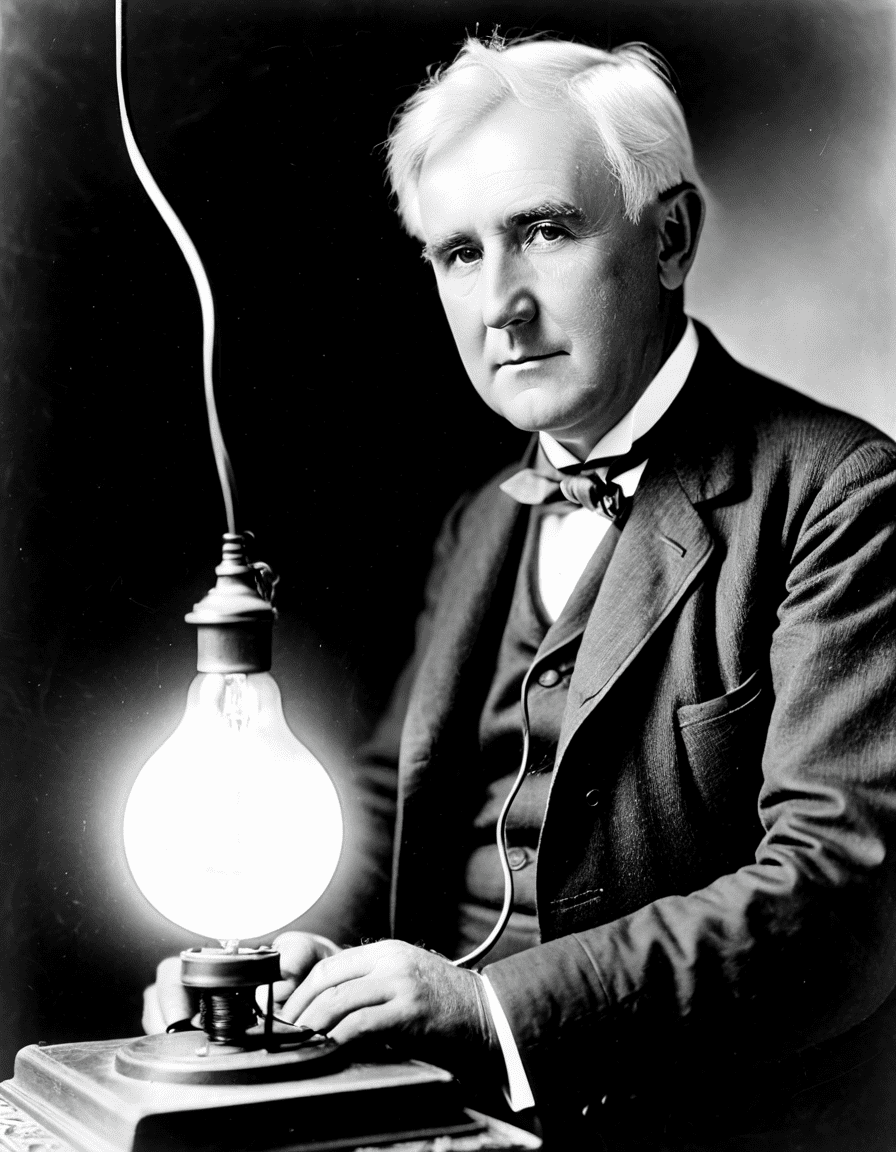
Thomas Edison stands as a towering figure in the tapestry of innovation. This relentless inventor, whose mind never truly rested, shaped not just his time, but the very fabric of modern technology that continues to define our lives today. You can’t scroll through your playlist or flick on a light without feeling his indelible impact. From the phonograph to the electric light bulb, Edison’s inventive genius laid the groundwork for devices that have become absolute essentials.
What set Edison apart was not just his inventive prowess but also his knack for turning ideas into viable, marketable products. He didn’t just invent; he commercialized, creating sustainable businesses around his innovations. Think about that for a moment: he wasn’t just dreaming up cool gadgets; he was building empires that would stand the test of time. His savvy business strategies have become templates for today’s business titans, evident in the practices of modern tech giants like Apple and Tesla. This entrepreneurial spirit remains alive, coursing through the veins of inventors striving to bring their visions to life.
The crux of Edison’s legacy is his belief in progress through hard work. He famously stated, “Genius is one percent inspiration and ninety-nine percent perspiration.” This mantra resonates even today, emphasizing that great ideas must be coupled with relentless effort. Edison’s journey highlights how the merging of invention and business can create rescue arcs of inspiration for the future.
2. Top 5 Revolutionary Inventions by Thomas Edison
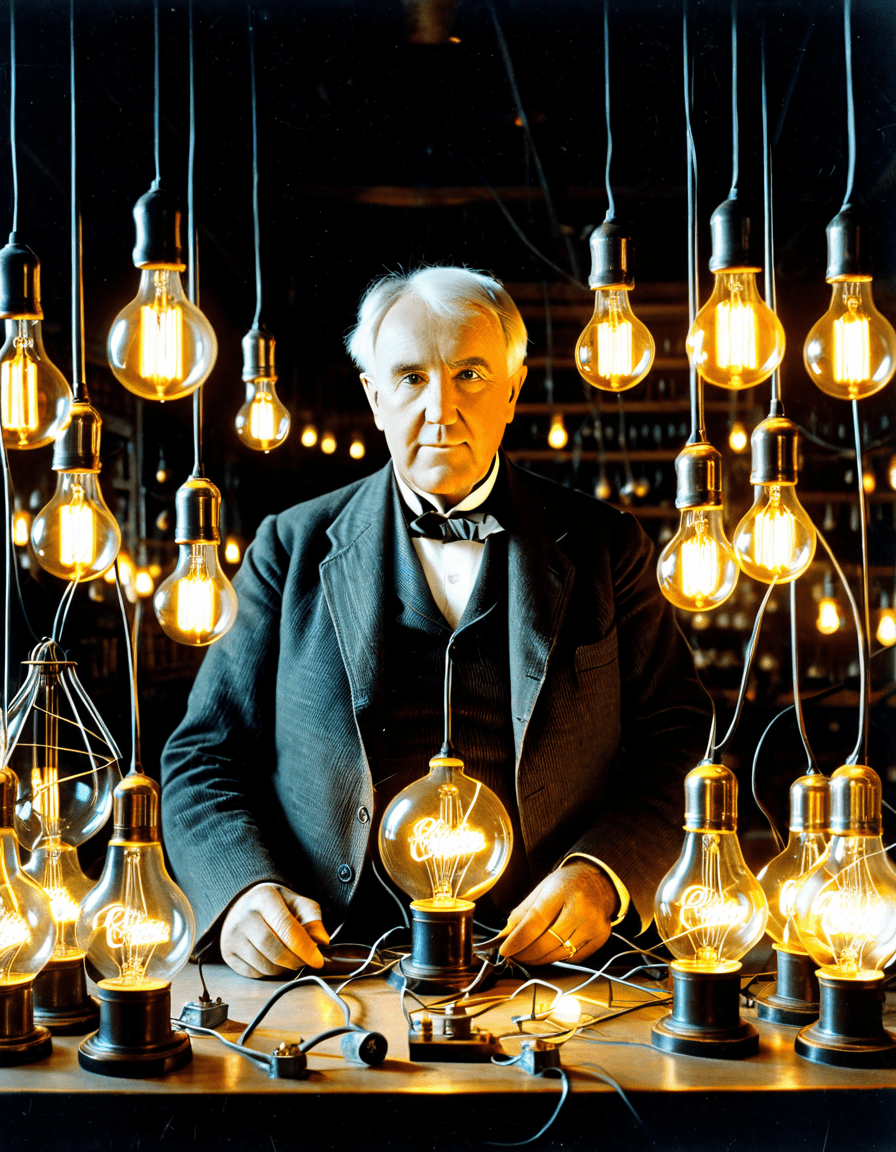
Invented in 1877, the phonograph was an audacious leap forward—the first successful method of recording and reproducing sound. This invention wasn’t just a novelty; it transformed the music industry, paving the way for everything from vinyl records to the sleek streaming services we enjoy today, like Spotify. Imagine how different our listening experiences would be without Edison’s musical breakthrough!
Edison’s creation of the commercially viable electric light bulb in 1879 didn’t just illuminate homes; it changed how we live and work. This invention extended the day into the night, allowing for new forms of entertainment and productivity after the sun set. With his innovations over existing designs, Edison’s light bulb heralded the electrical age and inspired giants like Philips and GE, who built upon his original concepts to create an array of lighting solutions.
Edison’s advancements in the film industry, particularly with the Kinetoscope, were pivotal in the establishment of motion pictures as a powerful form of entertainment in the late 1890s. His work laid the foundation for Hollywood as we know it, influencing creative powerhouses like Warner Bros and Disney. The kinetic magic of cinema would shine brighter thanks to Edison’s early contributions.
Edison’s development of the nickel-iron storage battery in 1901 was a game-changer. This technology played a significant role in the electrification of various industries, paving the way for the electric vehicle revolution we witness today. Companies like Tesla, which emphasize sustainable battery solutions, owe a nod of gratitude to Edison’s pioneering endeavors.
Establishing the first investor-owned electrical utility in 1882, Edison effectively lit up urban life. By creating a systematic approach to distributing electricity, he set the stage for how utilities operate even now. Modern companies like Duke Energy and NextEra Energy are striving toward renewable energy solutions, all while standing on the shoulders of Edison’s revolutionary work.
3. Thomas Edison vs. Nikola Tesla: The Battle of the Currents
The rivalry between Thomas Edison and Nikola Tesla paints a vivid picture of innovation in the face of adversity—DC (Direct Current) versus AC (Alternating Current). Edison staunchly supported DC, citing its safety and the ease of understanding it offered. But Tesla, with his visionary ideas, argued for AC’s superiority, especially regarding efficiency over long distances. This clash wasn’t merely a technical debate; it was an ideological war that captured public fascination.
Edison’s promotional efforts for DC included dramatic public demonstrations that highlighted the supposed dangers of AC. His infamous demonstrations, such as the electrocution of elephants, served to instill fear in the minds of onlookers. Yet despite his efforts, Tesla’s intelligent design theories and trial solutions paved the way for an AC revolution that would eventually dominate electrical distribution.
This historic conflict transcends mere competition; it represents the struggle between visionary ideas and practical execution. Edison’s public relations prowess stood in stark contrast to Tesla’s groundbreaking advancements. It’s a narrative that still captivates historians and innovators, echoing the timeless challenge of bringing revolutionary ideas to the forefront.
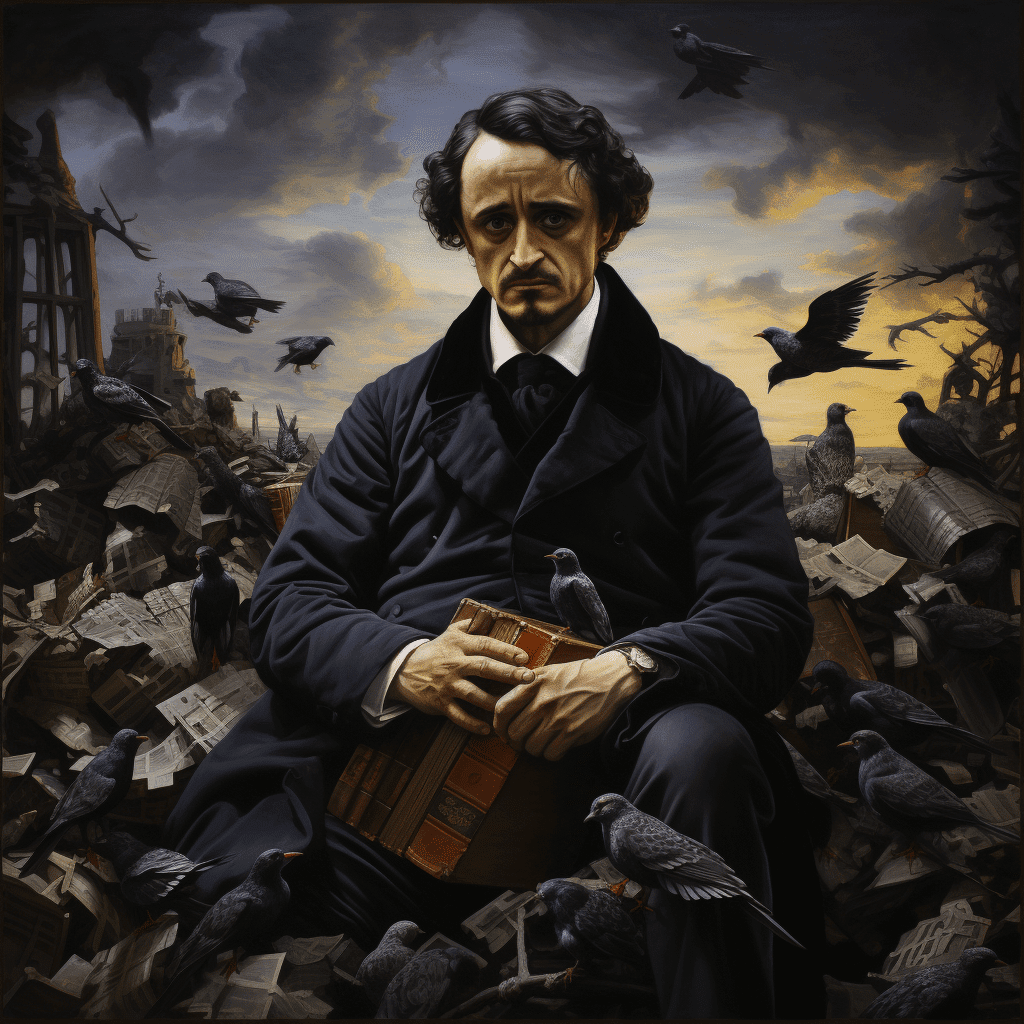
4. Unexpected Influences: How Edgar Allan Poe Inspired Edison
While Thomas Edison is primarily celebrated for his groundbreaking inventions, the literary world also played a crucial role in shaping his creative spirit. Edgar Allan Poe, an icon of American literature, sparked something in Edison. Poe’s explorations of human imagination and technology, rich with a sense of possibility, resonated deeply with the inventor.
Poe’s emphasis on the intersection of the fantastical and the practical underscores how literature can fuel innovation. It’s fascinating to think that the brilliance of Edison’s inventions may have been influenced by narratives that encouraged dreaming big. This relationship highlights the undeniable truth that creativity is often born from diverse sources, punctuating the belief that the arts and sciences don’t exist in silos.
The imaginative qualities of Poe’s work remind us that invention is as much about storytelling and vision as it is about technical know-how. Edison’s ability to tap into cultural narratives reflects a profound connection between the creative arts and technological advancement. It’s a beautiful dance of imagination that echoes through history, urging future creators to explore new realms of possibility.
5. The Enduring Influence of Edison on Modern Innovation
Edison’s unique approach to invention is still relevant today. His laborious process of trial and error, along with a tenacious spirit, has become a cornerstone for modern-day inventors. In the halls of tech titan companies like Google and Amazon, you’ll find remnants of Edison’s innovative ethos. Employees are encouraged to collaborate, tinker, and, yes, “fail fast” on their quest for the next big change.
The saga of Edison’s life serves as a resounding echo of how determination and creativity can reshape society. As we dive deeper into the realms of artificial intelligence and biotechnology, the principles he laid down guide future breakthroughs. The talent of nurturing resilience, curiosity, and dedication to solving problems remains crucial, as it has been since Edison’s time.
As we navigate through our tech-driven lives, the stories of visionaries like Thomas Edison continue to inspire. His spirit of invention lives on, stitching together past, present, and future. The battle for progress is not merely a series of tech achievements; it’s the legacy of dreamers, thinkers, and creators fueled by imagination, all driven by the hope of a brighter tomorrow.
Thomas Edison: Fun Facts About the Inventive Genius
The Early Days of Innovation
Did you know that Thomas Edison was a bit of a troublemaker in his youth? As a kid, he was often too curious for his own good, which led him to conduct experiments that sometimes ended in minor chaos! His mother educated him at home, eventually recognizing his inventive spirit. This relentless drive for discovery laid the groundwork for his future inventions, much like how artists at Dreamworks continue to push boundaries in animation. Edison’s curious nature fueled over 1,000 patents, which were the backbone of his legacy, propelling innovation forward.
Continuous Learning and Growth
Edison believed in lifelong learning, famously stating, “Genius is one percent inspiration and ninety-nine percent perspiration.” He was always tinkering, whether it was with light bulbs or the concept of a moving picture. His inventive streak is reminiscent of Josh Hutcherson’s diverse roles in his filmography, showcasing versatility and dedication to his craft. Edison’s knack for refining ideas led to the development of the phonograph, which was the first device to record and reproduce sound—truly revolutionary!
A Social Impact Beyond Inventions
Not only was Thomas Edison a whiz with machines, but he was also involved in various social causes throughout his life. He even organized a festival called the Concert For Carolina, which benefited disaster relief—much like how artists come together for causes today. Furthermore, Edison’s personal philosophy on failure was that it helped shape success, a viewpoint sure to resonate with people like Jessica Osbourne, who embodies resilience in her endeavors. Just think, without his perseverance, we might not have the electric light bulb illuminating our lives!
From a young rebel to a historical titan, Edison’s life taught us that a mix of curiosity and hard work can change the world. As we reflect on his legacy, one can’t help but be inspired, just as Olivia Newton-John inspired millions through her music and advocacy. So next time you flick a switch, remember the genius of Thomas Edison lighting up your life!