In the flickering glow of the silver screen, few child actors have navigated the treacherous arc from precocious talent to respected adult performer with the quiet grace and steady resolve of AnnaSophia Robb. Her journey-woven through confectionary dreams, tragic losses, and the quiet ache of growing up in public-mirrors the very stories she has brought to life, each role a stepping stone across a widening river of expectation and reinvention.
What Sparked AnnaSophia Robb’s Rise to Stardom?
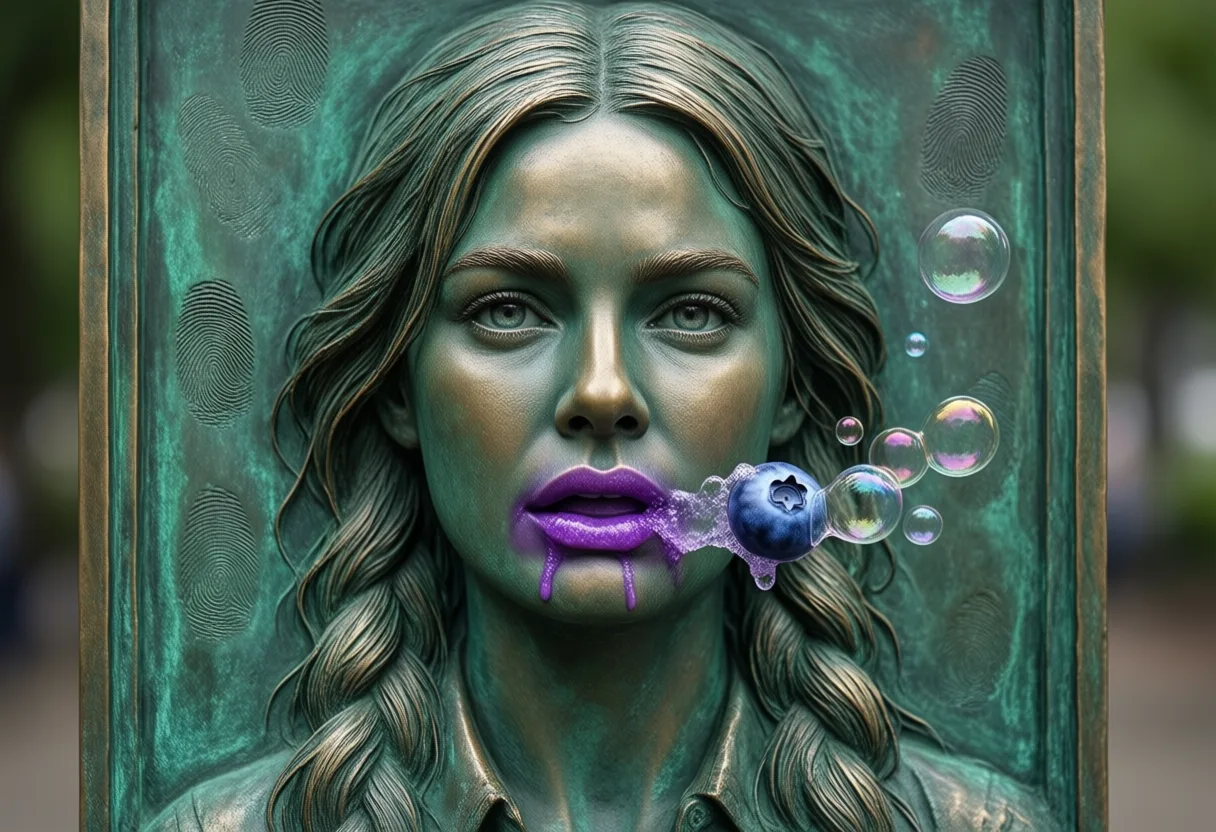
It began not with fanfare, but with a glint of mischief behind braces and a voice too crisp for its years. In 2005, Tim Burton’s reimagining of Charlie and the Chocolate Factory Unfurled its candy-colored grotesquerie across theaters, and within it, AnnaSophia Robb carved a character both detestable and unforgettable: Violet Beauregarde, the gum-chewing, boastful contestant whose hubris turned her into a giant blueberry. Her performance was not merely comic; it pulsed with the brittle confidence of a child raised on trophies and televised glory, a satirical portrait of ambition untempered by humility.
Robb’s casting was no accident. She possessed a rare duality-a porcelain doll exterior masking a sharp, almost unnerving presence. Where other Child actors Leaned into wide-eyed wonder, she offered calculation, a knowingness that unsettled and intrigued. It was this quality that made her Violet more than a caricature; she became a cautionary emblem of excess in a world already drunk on spectacle.
Her breakout was swift, but not sudden. Prior to Wonka’s factory, she had already demonstrated emotional depth in Because of Winn-Dixie (2005), where she played Opal Buloni, a lonely girl who finds connection through a scruffy dog and a cast of misfit townspeople. In that film, Robb’s performance shimmered with vulnerability and quiet resilience, revealing a range Far beyond The brashness of Violet. The duality of these two roles-One a satire of vanity, the other a hymn to empathy-announced a young actor of uncommon sensitivity and control.
The Role That Defined a Generation of Young Actors
If Charlie and the Chocolate Factory Introduced her to the world, it was Bridge to Terabithia (2007) that cemented her place in the cultural memory of a generation. As Leslie Burke, the imaginative, fearless girl who Builds A fantasy kingdom with her new friend Jess, Robb delivered a performance of luminous authenticity. Leslie wasn’t just a friend; she was a catalyst, a force of creative liberation in a world constrained by poverty, insecurity, and emotional repression.
The film’s emotional crescendo-the sudden, devastating loss of Leslie-rested entirely on the foundation Robb had built. Her absence wasn’t just felt by Jess; it echoed in the silence left behind in theaters, where audiences, especially young ones, grappled with grief for the first time through fiction. Robb’s portrayal made Leslie immortal not because she was perfect, but because she was Fiercely alive, creatively boundless, and unafraid to be different.
In an era when children’s films often sanitized emotion, Bridge to Terabithia Refused to look away. Robb’s performance was central to its honesty. She didn’t Perform childhood; she inhabited it-its joys, its cruelties, its fleeting magic. For countless viewers, Leslie became a ghostly companion, a reminder of the power of imagination and the fragility of connection. It was a role that didn’t just define a film-it defined a moment in cinematic history for young audiences.

From Candy Factory to Forest Kingdom: A Journey Through Early Roles
The span between Charlie and the Chocolate Factory And Bridge to Terabithia Was brief, yet within those two years, AnnaSophia Robb traversed emotional landscapes as vast as any adult actor might encounter in a decade. She moved from the artificial candy-coated absurdity of Wonka’s world to the windswept woods of rural Virginia, shedding satire for sincerity, comedy for tragedy.
Each role demanded a recalibration of tone and truth. As Violet, she was a walking punchline with a core of steel; as Opal in Because of Winn-Dixie, she was a vessel of gentle healing, her wide eyes absorbing the quiet sorrows of adults around her. And then, as Leslie, she became something transcendent-a symbol of creative freedom cut down too soon. These early performances weren’t just stepping stones; they were Distinct artistic statements, each revealing a new facet of her emotional intelligence.
Robb’s filmography in those formative years reads like a curriculum in child psychology and narrative depth. She didn’t chase franchises or sequels. Instead, she chose stories where children were not accessories to adult plots, but the emotional center. Whether bonding with a dog, building an imaginary kingdom, or confronting the grotesque excess of consumer culture, her characters were always searching-for belonging, for meaning, for a way to make sense of a world that often felt indifferent.
Beyond Childhood Fame: Transitioning Into Mature Roles
The transition from child star to adult actor is a minefield littered with cautionary tales. The industry often discards young performers once their features lose their baby fat, their voices lose their innocence. Yet AnnaSophia Robb did not vanish. She stepped back, recalibrated, and returned with a discerning eye for roles that challenged her, that refused to let her coast on past glories.
She could have chased mainstream success with sequels or teen romances. Instead, she gravitated toward independent films that explored isolation, identity, and emotional fracture. In Sleepwalking (2008), she played a neglected teenager thrust into an unstable guardianship, her performance marked by a weary stoicism that belied her years. The film was quiet, uneven, but Robb’s presence was a steady pulse beneath its surface-a girl learning to survive, not thrive.
Then came The Way, Way Back (2013), a nuanced comedy-drama about a shy adolescent finding his voice at a summer water park. Robb’s role as Susanna, the observant, kind-hearted daughter of a park employee, was small but resonant. She didn’t dominate the frame, but she anchored emotional moments with a quiet warmth. Her chemistry with the lead felt lived-in, never forced, a testament to her ability to listen and react with authenticity.
These choices signaled a deliberate shift. She was no longer the child wonder; she was becoming an actor of subtlety and restraint. In an industry obsessed with virality and visibility, Robb chose depth over dazzle, complexity over convenience. Her career was no longer about being seen-it was about being felt.
Why Some Child Actors Fade-And Why She Didn’t
Many child stars flame out not because they lack talent, but because the roles dry up, the industry moves on, or the weight of early fame distorts their sense of self. The camera once adored them for their cuteness, their precocity, their ability to mimic adult emotions without truly feeling them. But adulthood demands something else: presence, vulnerability, the courage to be unremarkable in service of truth.
AnnaSophia Robb avoided this fate not by luck, but by choice. She never leaned into the machinery of celebrity. There were no tabloid scandals, no reality shows, no desperate attempts to stay relevant. Instead, she treated acting as a craft, not a commodity. Her absence from the spotlight between major roles wasn’t a retreat-it was a recalibration, a time to grow beyond the expectations of what a “child star” should become.
She also avoided typecasting by refusing to repeat herself. After playing the imaginative girl, the bratty contestant, the grieving friend, she sought roles that defied easy categorization. Whether in The Reaping (2007), a supernatural thriller where she played a mysterious child with apocalyptic visions, or in Down a Dark Hall (2018), a gothic YA horror, she embraced ambiguity. These weren’t safe choices-they were explorations of darkness, both literal and psychological.
Her resilience lies in this willingness to Disappear into roles that don’t flatter or glorify her. While others chased visibility, she pursued authenticity. In doing so, she preserved not just her career, but her artistic integrity.
Stepping Into Sci-Fi and Adventure with Race to Witch Mountain And Jumper
Not all of Robb’s post-childhood work dwelled in quiet introspection. She also embraced the spectacle of genre films, proving her versatility in high-concept adventures that demanded physicality, timing, and a sense of wonder. In Race to Witch Mountain (2009), she played a genetically engineered alien teen with psychic abilities, navigating Earth’s dangers alongside a skeptical cab driver. The film was a throwback to 1970s sci-fi, and Robb brought a cool, otherworldly precision to her role-her expressions minimal, her movements deliberate.
Then came Jumper (2008), a flashy, effects-driven tale of teleporting teens hunted by a secret order. As Millie, the childhood friend and love interest of the protagonist, Robb provided emotional grounding amid the chaos. Her performance was warm, grounded, a reminder of the life the jumper was trying to protect. Though the film received mixed reviews, Robb’s presence was a stabilizing force-A tether to reality in a story unmoored by power and paranoia.
These films could have been mere paycheck roles, but Robb treated them with seriousness. She understood that even in genre fare, characters must feel real. Her Millie wasn’t just a damsel; she was curious, brave, and capable of making her own choices. In a landscape where female roles in action films often serve as props, Robb quietly insisted on agency.
Her work in these films demonstrated that she could thrive in both intimate indies and big-budget spectacles-not by changing who she was, but by adapting her strengths to the demands of the story.

A Shift Toward Complex Characters in Independent Cinema
As the 2010s unfolded, AnnaSophia Robb increasingly gravitated toward independent cinema, where character depth often outweighs box office ambition. These films-less seen, more felt-allowed her to explore psychological complexity and moral ambiguity in ways mainstream projects rarely permit.
In Soul Surfer (2011), she took on the true story of Bethany Hamilton, the surfer who lost her arm in a shark attack and returned to the sport with defiant courage. Robb didn’t just imitate Hamilton’s journey; she embodied its emotional weight-the fear, the frustration, the slow rebuilding of identity. Her performance avoided sanctimony; instead, it was grounded in physicality and quiet determination. The film could have been a simplistic triumph narrative, but Robb infused it with The gritty realism of recovery.
Later, in Words on Bathroom Walls (2020), she played a compassionate, perceptive student who befriends a teenager with schizophrenia. The role required a delicate balance-warmth without condescension, support without saviorism. Robb achieved this with grace, her character serving as a mirror for the protagonist’s struggle, not a cure. The film tackled mental health with rare honesty, and Robb’s performance was a crucial part of its empathy.
These roles revealed a mature actor unafraid of discomfort. She didn’t shy away from stories that asked difficult questions or portrayed flawed, struggling people. In doing so, she aligned herself with a tradition of American cinema that values truth over polish, character over spectacle.
Finding Depth in Lesser-Known Gems Like Sleepwalking And The Way, Way Back
Some of AnnaSophia Robb’s most compelling work exists in the margins-films that didn’t dominate headlines but linger in the mind. Sleepwalking (2008), though overlooked, showcased her ability to convey emotional neglect with minimal dialogue. As a teenager passed from one unstable relative to another, she communicated years of abandonment through silence, posture, and fleeting expressions.
Similarly, The Way, Way Back (2013) was a quiet triumph of ensemble storytelling. Robb’s Susanna was the emotional anchor for the protagonist’s coming-of-age, but she never stole scenes. Instead, she created a sense of safety, of being seen-something the lead had long been denied. Her performance was understated, yet essential, like a steady hand on a shaky shoulder.
These films matter not because they were hits, but because they allowed Robb to Explore the nuances of human connection-how it forms, how it falters, how it heals. In an era of cinematic noise, she chose stillness. In a culture that rewards volume, she spoke in whispers.
Her choices reflect a philosophy: that acting is not about being noticed, but about being necessary to the story. These lesser-known roles may not have earned awards, but they earned something more lasting-respect from those who understand the craft.
Confronting Real-World Challenges in Soul Surfer And Words on Bathroom Walls
AnnaSophia Robb has often been drawn to stories rooted in real-life adversity, where resilience is not a plot device but a daily practice. In Soul Surfer, she didn’t just play a survivor; she studied one. The physical transformation-learning to surf one-armed, adopting Hamilton’s mannerisms-was only part of it. More important was the emotional discipline required to portray faith, fear, and determination without veering into sentimentality.
The film’s power lies in its refusal to treat Bethany’s story as miraculous. Yes, she returns to the water, but the journey is messy, painful, and nonlinear. Robb captures that uncertainty, the moments of doubt that threaten to undo everything. Her performance is a Testament to perseverance, not perfection.
In Words on Bathroom Walls, she confronted another kind of invisibility: mental illness. As a student who sees beyond stigma, she portrayed empathy as an active choice, not a passive trait. Her character doesn’t “fix” the protagonist; she walks beside him, offering presence, not solutions. In a genre often prone to romanticizing or exploiting mental health struggles, Robb’s performance was refreshingly grounded.
These roles suggest a deeper commitment-not just to acting, but to storytelling as a form of witness. She doesn’t play victims; she plays people. And in doing so, she gives dignity to their struggles.
Late-Career Reinvention and a Powerful Presence in 2024
In 2024, AnnaSophia Robb reemerged with a performance that silenced any notion of her as a relic of 2000s cinema. In Rebel Ridge, a gritty, atmospheric thriller directed by Jeremy Saulnier, she plays a small-town resident caught in a web of systemic corruption and violent resistance. The film, tense and morally complex, marks a bold evolution in her career.
Robb’s character is not the wide-eyed innocent or the plucky sidekick. She is grounded, wary, shaped by years of quiet endurance. Her performance is restrained but potent, her eyes scanning every interaction for threat or betrayal. The film’s dark tone and political undercurrents demand a different kind of presence-one built on stillness, on the weight of unspoken history.
This is not a nostalgic return. It is a reinvention. Rebel Ridge Positions Robb not as a former child star, but as a serious dramatic actor capable of holding her own in an ensemble of intense, uncompromising performers. The film has been praised for its realism and tension, and Robb’s role is central to its emotional anchor.
For audiences who remember her as Violet or Leslie, Rebel Ridge Is a revelation. She is older, yes, but also Clearer, sharper, more fully formed. The girl who once dreamed in candy factories and forest kingdoms now walks through a world of shadows, and she does so with unwavering conviction.
How Rebel Ridge Signals a Bold New Chapter
Rebel Ridge Is more than a film; it is a statement. Its deliberate pacing, moral ambiguity, and social critique reflect a cinematic vision uninterested in easy answers. And within this framework, AnnaSophia Robb doesn’t just participate-she belongs.
Her casting signals a shift in how the industry sees her. No longer slotted into YA adaptations or family dramas, she is now being entrusted with roles that demand gravitas, complexity, and emotional maturity. The film’s themes-corruption, resistance, the cost of truth-resonate with a contemporary urgency, and Robb’s performance feels lived-in, authentic.
This new chapter is not about reinvention for reinvention’s sake. It is the natural culmination of a career built on thoughtful choices, quiet dedication, and an unwavering commitment to character. She has not sought the spotlight; she has earned it, role by role, decision by decision.
In Rebel Ridge, we see not the fading echo of a child star, but the arrival of a formidable adult actor. The magic hasn’t left her-it has deepened, matured, taken root in soil richer than fame.
What Her Career Arc Teaches About Longevity in Film
AnnaSophia Robb’s journey offers a masterclass in sustainable artistry. In an industry that discards as quickly as it anoints, she has endured not by chasing trends, but by Staying true to the work. Her choices reflect a deep respect for storytelling, for character, for the quiet power of restraint.
She never tried to be everything. Instead, she became someone audiences could trust-someone who would not betray a role for vanity or convenience. Her transitions-from child to adult, from studio films to indies, from fantasy to realism-were not abrupt pivots, but gradual evolutions, each step grounded in authenticity.
Longevity in film is not about staying famous. It is about staying relevant through integrity. Robb achieved this by avoiding the traps of typecasting, celebrity, and self-parody. She stepped away when necessary, returned when ready, and always chose roles that challenged her, even if they didn’t guarantee acclaim.
For aspiring actors, her career whispers a quiet truth: The spotlight fades, but craft endures. In the end, it is not the number of roles, but the depth within them, that defines a legacy. And AnnaSophia Robb, with each performance, continues to build one worth remembering.
From Golden Ticket to Golden Performances
AnnaSophia Robb first charmed audiences as the gum-obsessed Violet Beauregarde in Tim Burton’s Charlie and the Chocolate Factory (2005), a role that catapulted her into the spotlight with a mix of sass and memorable purple hue. That breakout performance set the stage for a string of heartfelt and adventurous roles that showcased her range beyond candy-coated quirks.
Standout Roles That Stuck
She brought warmth and quiet strength to Bridge to Terabithia (2007), a film that resonated with a generation of young viewers and remains a beloved coming-of-age story. Around the same time, she played the spirited Opal in Because of Winn-Dixie, a role that highlighted her ability to carry a film with sincerity and charm. Fans of sci-fi adventure also remember her turn in Race to Witch Mountain (2009), where she held her own alongside seasoned actors in a high-stakes extraterrestrial thriller.
Her filmography continued to evolve with roles in Jumper (2008), Soul Surfer (2011), and more recent projects like Rebel Ridge (2024), proving her staying power across decades. While some of her lesser-known films like The Reaping And Down a Dark Hall Leaned into darker tones, Robb consistently delivered grounded performances. For fans curious about other actors who’ve made a mark in both comedy and drama, check out this list of anna Faris Movies And tv Shows You Won ’ T Believe She Did. From child star to versatile performer, AnnaSophia Robb’s career is a quiet standout in modern cinema.
Frequently Asked Questions
What was AnnaSophia Robb's breakout role?
AnnaSophia Robb's breakout role was as Violet Beauregarde in Tim Burton’s Charlie and the Chocolate Factory (2005), where she played a boastful contestant who turns into a giant blueberry.
Which film made AnnaSophia Robb a cultural icon for a generation?
Bridge to Terabithia (2007) cemented her place in cultural memory, with her performance as Leslie Burke resonating deeply with young audiences for its authenticity and emotional depth.
How has AnnaSophia Robb transitioned from child roles to adult roles?
She avoided typecasting by choosing complex, independent films and genre projects with emotional depth, demonstrating restraint and authenticity in roles that challenged her as an adult actor.
What recent film marks a bold new chapter in AnnaSophia Robb’s career?
In 2024, Robb starred in Rebel Ridge, a gritty thriller that showcases her evolution into a serious dramatic actor with a restrained, powerful presence.
This article was produced with AI assistance. How Silver Screen Magazine uses AI.
Vivian Chukwu explores golden-age Hollywood with reverence and rigor, unearthing forgotten performances and cultural contexts. She connects archival footage to modern themes, making classic films feel immediate and vital through thoughtful analysis and vivid storytelling.