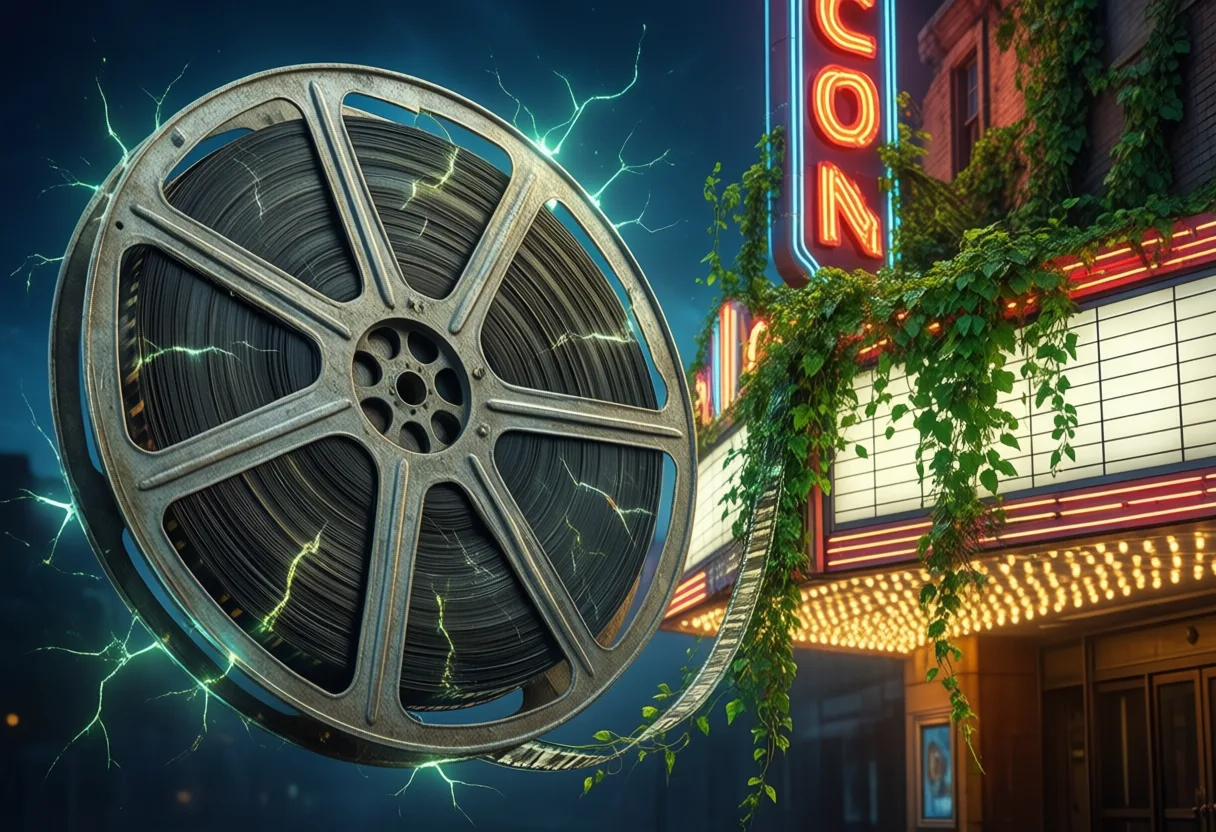
There was a time when the flicker of light on a silver screen didn’t just tell stories-it conjured dreams. In smoky theaters and grand picture palaces, audiences surrendered to worlds where heroes wore capes of dignity, lovers spoke in glances, and Shadows Whispered secrets no one dared say aloud.
What Defines the Golden Age of Hollywood?
The Golden Age of Hollywood wasn’t merely an era-it was a revolution wrapped in celluloid. Spanning roughly from the late 1920s to the early 1960s, it marked the rise of the studio system, where studios like MGM, Warner Bros., and Paramount didn’t just Produce films-they manufactured myth. These were years when every frame felt deliberate, every performance polished to a high sheen under the watchful eyes of producers who treated cinema like cathedral-building.
The machinery of stardom turned relentlessly, churning out icons whose faces became as familiar as family. Studios controlled not only scripts and directors but also the private lives of their actors, crafting personas that blurred the line between fiction and reality. It was an age of artifice, yes-but within that artifice bloomed astonishing truth.
The Films Weren’t simply entertainment; they were cultural anchors during times of upheaval-echoing the anxieties of war, the tremors of social change, and the quiet yearnings of ordinary lives. Whether through sweeping epics or intimate dramas, these movies gave voice to a nation learning how to dream in public.
Why These Films Still Matter Today
To Watch A film from the Golden Age is not to indulge in nostalgia-it is to witness the foundation of modern storytelling. These movies taught us how to feel in the dark, how to fall in love through a close-up, how to fear through silence. Their influence lingers in every well-timed cut, every haunting score, every performance that dares to be both larger than life and deeply human.
They matter because they refined the grammar of cinema. Before there were auteurs with radical visions, there were craftsmen perfecting the rules-rules we now break with intention because they first established them. The emotional precision of a Billy Wilder script, the visual poetry of a John Ford landscape, the rhythmic tension of a Hitchcock sequence-these are not relics. They are blueprints.
And perhaps most importantly, they remind us that restraint can be more powerful than excess. Without CGI or digital manipulation, filmmakers relied on lighting, composition, and performance to create wonder. In an age of sensory overload, their economy of expression feels radical-a whisper in a world shouting.
The Birth of Cinematic Storytelling: Early Innovations That Shaped Modern Film
Long before nonlinear narratives and handheld realism, filmmakers were inventing the language of cinema one silent reel at a time. The transition from silent pictures to talkies wasn’t just technological-it was existential. Suddenly, voices could tremble, laughter could crackle, and a single word could carry the weight of a thousand images.
Directors like D.W. Griffith experimented with cross-cutting and parallel action, laying the groundwork for suspense and emotional contrast. Though his work remains controversial, his technical innovations influenced generations. Others, like F.W. Murnau in Sunrise, proved that silent film could achieve lyrical depth rivaling poetry, using light and shadow to sculpt emotion.
These early pioneers understood that film wasn’t just about recording action-it was about orchestrating experience. A dolly shot could reveal guilt. A dissolve could suggest memory. Every edit was a heartbeat in the rhythm of revelation. They didn’t have sound effects or color grading-they had timing, intuition, and nerve.
Epic Adventures and Swashbuckling Heroes: Defining the Golden Age Action Film
Adventure in the Golden Age wasn’t about destruction-it was about destiny. Sword fights unfolded with balletic precision, not chaotic explosions. Heroes like Errol Flynn’s Robin Hood didn’t save the world; they defended honor, one thrust at a time. These were tales spun from legend, where courage wore doublets and villains sneered with theatrical flair.
Films like The Adventures of Robin Hood (1938) used Technicolor not just to dazzle but to elevate-the reds of cloaks, the gold of thrones, all heightened to signal moral clarity. The camera moved with the swashbuckler, tracking leaps across chandeliers and duels atop drawbridges, turning action into spectacle without losing its soul.
Even when set in ancient lands or mythical pasts, these adventures reflected contemporary ideals-resistance against tyranny, loyalty to the oppressed, the romance of rebellion. They offered escape, yes, but also a code: that bravery, wit, and a well-placed quip could tilt the scales of justice.
When Musicals Ruled the Screen: The Rise of Song and Dance in American Cinema
There was a moment-perhaps between the curtain rise of Singin’ in the Rain And the final bow of West Side Story-when America believed that joy could burst from the chest in song. The Golden Age musical wasn’t escapism; it was emotional amplification. When words failed, the music took over, turning longing into melody and heartbreak into choreography.
Gene Kelly danced in puddles not because it rained, but because happiness couldn’t be contained. Fred Astaire floated across ballrooms as if gravity were a suggestion. These weren’t mere performances-they were declarations of freedom, where movement became metaphor. A staircase pirouette wasn’t just skill; it was defiance of limitation.
Behind the glamour lay meticulous craft. Every number was rehearsed into muscle memory, every camera move synchronized with a tap step. And yet, the illusion was perfection: that this ecstasy was spontaneous, that anyone might, in a moment of pure feeling, break into song and find the world dancing with them.
Shadows and Secrets: The Emergence of Film Noir and Moral Complexity
After the war, the lights dimmed. The optimism of victory gave way to something darker, more introspective-film noir emerged not as a genre but as a state of mind. These were stories where heroes were flawed, women were dangerous, and fate arrived in the form of a .38 revolver and a rain-slicked alley.
In Double Indemnity And The Maltese Falcon, dialogue snapped like gunfire, and every shadow hid a betrayal. Low-key lighting carved faces into halves-one side illuminated, the other swallowed by darkness. It wasn’t just style; it was psychology made visible. Noir didn’t ask who did it-it asked why they did it, and whether redemption was possible.
These films rejected easy answers. The detective wasn’t always noble. The dame wasn’t always guilty. And the city-often unnamed, always oppressive-pulsed with corruption beneath its neon glow. They were cautionary tales wrapped in cigarette smoke, reminding audiences that desire, however quietly voiced, could unravel everything.
Dramas That Mirrored Society: Family, War, and Identity on the Silver Screen
While epics soared and comedies sparkled, it was the quiet dramas that often cut deepest. Films like Gentleman’s Agreement And On the Waterfront Didn’t flinch from the fractures in American life-antisemitism, labor corruption, the cost of silence. They held mirrors to society, sometimes cracked, always honest.
Postwar cinema grappled with return-soldiers coming home to lives they no longer recognized, families strained by absence, identities reshaped by trauma. In The Best Years of Our Lives, the wounds weren’t just physical; they were carried in the pauses between words, in the way a man stared too long at a flight of stairs.
These stories mattered because they refused to look away. They showed marriage as negotiation, parenthood as uncertainty, heroism as endurance rather than triumph. In doing so, they elevated the everyday into the epic-proving that the most powerful battles aren’t fought on battlefields, but in living rooms lit by lamplight.
Comedies That Broke Boundaries: Wit, Romance, and Social Satire
Laughter in the Golden Age wasn’t frivolous-it was subversive. From the screwball chaos of His Girl Friday To the razor-edged banter of The Philadelphia Story, comedy became a weapon against pretension, a tool for questioning class, gender, and power. Women didn’t just participate in these jokes-they led them, sharp-tongued and unapologetic.
Cary Grant dodged misunderstandings like bullets. Katharine Hepburn delivered lines as if fencing. These weren’t just romantic pairings-they were ideological clashes wrapped in tuxedos and tailored suits. The best comedies thrived on contradiction: love born from conflict, resolution found in absurdity.
And beneath the farce lay commentary. When a millionaire wandered among the poor in It Happened One Night, it wasn’t just cute-it questioned wealth and connection. When a woman pretended to be a man in Some Like It Hot, it toyed with identity decades before such conversations entered the mainstream. Humor opened doors that drama couldn’t kick down.
Legendary Performances: Iconic Roles That Cemented Hollywood Stardom
Some faces belong to history. Bette Davis staring down the camera in All About Eve, her eyes burning with ambition and dread. James Stewart in It’s a Wonderful Life, unraveling under pressure, then finding grace in despair. These weren’t just roles-they were transformations, moments when acting ceased to be imitation and became revelation.
Humphrey Bogart didn’t play Rick Blaine-he became him, a man whose cynicism masked a broken heart. Vivien Leigh didn’t portray Scarlett O’Hara; she embodied a force of nature clinging to survival. These performances endure not because they were popular, but because they felt true-raw nerves exposed under studio lighting.
Even supporting turns left marks. Think of Peter Lorre’s haunted whisper in M, or Ethel Barrymore’s quiet sorrow in None But the Lonely Heart. Stardom wasn’t just about leading men and femmes fatales-it was about presence, the ability to command attention even in silence. And in the Golden Age, presence was everything.
Behind the Camera: Visionary Directors Who Transformed the Art of Film
While stars shone bright, it was the directors who shaped the shadows around them. Alfred Hitchcock didn’t just make thrillers-he orchestrated anxiety, turning staircases, birds, and motel showers into instruments of dread. His control was absolute, every frame a calculated provocation.
John Ford painted the American West not as it was, but as it was imagined-vast, mythic, burdened by history. His films carried the weight of national identity, where landscapes spoke louder than dialogue. Meanwhile, Frank Capra crafted parables of hope, where ordinary men stood against corruption and won-not through strength, but through stubborn decency.
These filmmakers weren’t just employees of studios; they were artists negotiating within constraints. They worked under tight schedules, censorship codes, and commercial demands, yet still managed to imprint their vision onto every scene. Their legacy isn’t just in what they filmed-but in how they saw.
Technological Leaps: How Sound, Color, and Cinematography Changed Everything
The arrival of sound didn’t just add voices-it changed everything. Early microphones were hidden in flower vases, actors had to stand still to be heard, and entire careers vanished overnight because accents didn’t translate. But from that awkward birth came intimacy. For the first time, a whisper could be heard across a theater.
Then came color-not just tinted reels, but full Technicolor, a dream logic made real. Films like The Wizard of Oz Used it not for realism, but transformation-Kansas in sepia, Oz in saturated hues, marking the shift from drudgery to wonder. Color became meaning.
Cinematographers like Gregg Toland (Citizen Kane) redefined depth, using wide-angle lenses and deep focus to keep foreground and background equally sharp, allowing multiple stories to unfold in a single frame. These weren’t gimmicks-they were revolutions in perception, proving that how we see a story changes what it means.
Enduring Legacies: Why These Films Remain Essential Viewing
To dismiss these films as old-fashioned is to misunderstand their function. They are not museum pieces-they are ancestors. Every time a director uses a slow zoom to build tension, every time a character delivers a monologue against a city skyline, they echo techniques perfected in the 1940s and ‘50s.
They teach us pacing. Modern films often rush; Golden Age classics linger-on a face, a gesture, a silence. That restraint builds emotion more effectively than any explosion. They remind us that suspense isn’t about knowing what will happen, but about dreading-or hoping-it will.
And perhaps most crucially, they model craftsmanship. These were films made by people who believed in revision, rehearsal, and responsibility to the audience. There was pride in the work, a sense that cinema could elevate as well as entertain. In an age of disposability, that ethic feels revolutionary.
Beyond the Glamour: Debunking Myths About Hollywood’s Golden Era
The Golden Age was not a paradise. The studio system was rigid, often exploitative, controlling actors’ lives with ironclad contracts and publicity machines that erased individuality. Scandals were buried, careers ruined, and diversity largely absent-Hollywood reflected the inequalities of its time, not transcended them.
Women, though luminous on screen, rarely held power behind the camera. People of color were marginalized, cast in stereotypical roles or excluded entirely. The glamour we remember was selective, curated for white, middle-class audiences. The dream was real, but it wasn’t for everyone.
Recognizing this doesn’t diminish the art-it deepens it. Understanding the contradictions allows us to appreciate the achievements not as flawless miracles, but as hard-won victories within a flawed system. The beauty exists alongside the blemishes, and both must be seen.
The Cultural Landscape That Shaped the Movies
These films didn’t emerge in a vacuum. They were responses-to the Depression, to war, to the atomic age, to shifting gender roles. During World War II, movies boosted morale, sent messages, and helped process loss. Afterward, they questioned the cost of victory, the fragility of peace.
Television began rising in the 1950s, forcing studios to innovate-wider screens, 3D, epic runtimes-to give audiences something they couldn’t get at home. The cultural pendulum swung between escapism and confrontation, and cinema followed, reflecting both the fears and aspirations of a nation in flux.
Even fashion, music, and architecture found echoes in film. The sleek lines of Art Deco influenced set design; jazz rhythms slipped into scores; postwar suburban anxiety seeped into domestic dramas. The movies were never just stories-they were barometers of the American soul.
How to Watch and Appreciate These Films in the Modern Age
Approach these films not as homework, but as conversation. Turn off the phone, dim the lights, let the pacing unfold. Some scenes may feel slow by today’s standards-but that slowness allows emotion to settle, like dust after an earthquake.
Watch for details: the way a hat is tilted, a door left ajar, a line delivered with irony. Directors of the era trusted audiences to catch subtleties. And when a character sings or dances, don’t expect realism-expect emotional truth. These moments aren’t breaks from the story; they are its core.
For those seeking modern parallels, consider how amy adams movies list: 10 Unforgettable Roles You Can’T Miss reflect the same blend of vulnerability and strength once embodied by actresses of the Golden Age-proof that certain truths in performance transcend time.
Final Reel: Keeping the Golden Age Alive
The projector may have changed, but the magic remains. To watch a Golden Age film is to step into a shared dream-one that shaped how we see love, justice, courage, and ourselves. These aren’t just old movies. They are living documents of a craft in its prime.
We preserve them not out of obligation, but out of love-for the craft, the risk, the beauty of a perfectly timed close-up. They remind us that cinema, at its best, isn’t about technology or trends, but about human connection across time.
So press play. Let the overture rise. Let the credits roll. And for a few hours, believe again in the power of a single image to change everything.
| Film | Innovation or Fact |
|---|---|
| Gone with the Wind | Used a bulky three-strip Technicolor camera requiring custom dollies |
| The Wizard of Oz | Features a stagehand with a modern headset in the Wicked Witch’s castle |
| Citizen Kane | Orson Welles co-wrote, directed, and starred at age 25 |
| Casablanca | Humphrey Bogart initially saw Rick as just another wartime role |
| Sunrise | F.W. Murnau achieved poetic depth in silent film through light and shadow |
| Double Indemnity | Defined film noir with snapping dialogue and shadowy moral ambiguity |
| Singin’ in the Rain | Celebrated the transition from silent films to talkies |
Must-See Milestones from Hollywood’s Golden Era
Behind the Silver Screen Magic
Ever wonder how Gone with the Wind Got its lush Technicolor look? The film used a special three-strip camera process that was so bulky, it needed custom-built dollies to move smoothly. That famous scene of Scarlett standing amid the wounded soldiers at Atlanta’s train depot? It took weeks to film and involved hundreds of extras, many of them local Atlantans recruited just for the occasion.
Stars, Scandals, and Surprises
Bette Davis famously clashed with studio execs over her roles, even suing Warner Bros. In the 1930s to break her contract-something almost unheard of at the time. Though she lost, the bold move gave other actors more leverage down the line. Meanwhile, Humphrey Bogart didn’t want to play Rick in Casablanca. He saw it as just another wartime drama until the script evolved-and until he realized the chemistry with Ingrid Bergman was something special.
Hidden Details You Might Have Missed
Keep an eye on the background of The Wizard of Oz-during the Wicked Witch’s castle scenes, a crew member accidentally walks into frame wearing a modern-style headset. It’s not a time traveler; it was likely a stagehand using early radio comms. And while Citizen Kane Is hailed for its innovation, Orson Welles was only 25 when he co-wrote, directed, and starred in it-a rare feat that still stuns filmmakers today.
Frequently Asked Questions
What defines the Golden Age of Hollywood?
The Golden Age of Hollywood spanned from the late 1920s to the early 1960s. It was marked by the rise of the studio system and the creation of cinematic myths through polished storytelling and star-making machinery.
Why are Golden Age films still important today?
These films established the foundational grammar of cinema, influencing modern storytelling through emotional precision, visual poetry, and restrained expression. They remain blueprints for filmmakers.
How did technology change filmmaking during the Golden Age?
The arrival of sound added intimacy, allowing whispers to be heard. Technicolor brought dreamlike transformation, and cinematographers used deep focus to reveal multiple stories in one frame.
What role did directors play in shaping Golden Age films?
Directors like Alfred Hitchcock, John Ford, and Frank Capla transformed film as an art form. They crafted suspense, mythic landscapes, and parables of hope while working within studio constraints.
This article was produced with AI assistance. How Silver Screen Magazine uses AI.
Vivian Chukwu explores golden-age Hollywood with reverence and rigor, unearthing forgotten performances and cultural contexts. She connects archival footage to modern themes, making classic films feel immediate and vital through thoughtful analysis and vivid storytelling.