
A film flickers to life in the dark-a beam of light carving Shapes From shadow, summoning laughter, dread, longing. It is not merely watched; it is Felt, remembered, argued over in cafes and cars long after the credits roll. Yet too often, the response to that experience is reduced to a thumbs-up or a star rating, a tweet-length quip that evaporates like steam off hot pavement.
Great criticism does not vanish. It lingers like the scent of old film stock-tangy, faintly chemical, alive with memory. To write about cinema with honesty and insight is to step into a long conversation, one that stretches from the nickelodeons of 1905 to the streaming queues of today, where every viewer is both audience and critic.
Why Most Film Reviews Miss the Mark
Too many Reviews mistake Reaction for reflection. They rush to judgment like sprinters off the blocks, chasing the high of viral wit or the comfort of consensus. A punchy one-liner about a superhero costume or a plot hole becomes the headline, while the film’s rhythm, its silences, its quiet revolutions go unremarked. These pieces are written not to explore, but to perform-to prove how clever, how hip, how Right The writer is.
When criticism becomes a sport, nuance is the first casualty. The texture of a performance, the weight of a Director’s choice, the way a camera lingers on a face just a second too long-these details don’t lend themselves to snappy verdicts. They demand patience. They ask for stillness in a culture built on speed.
And so we drown in hot takes while true understanding sinks beneath the noise. The result is a landscape where opinions multiply like pixels, but wisdom remains rare. A film may be dissected frame by frame, yet its soul remains untouched.
What Separates a Hot Take from a Lasting Critique?
A hot take flares brightly and burns out fast. It thrives on certainty, on the illusion of finality. It tells you what to think, not how to see. A lasting critique, by contrast, opens doors. It doesn’t close them. It invites you into the film’s world, then hands you a lantern and says, Look here. Notice this.
The best criticism is not an endpoint, but an invitation to look deeper. It acknowledges ambiguity. It wrestles with contradiction. It knows that a film can be technically flawed and emotionally perfect, or vice versa. It understands that art doesn’t have to be flawless to be necessary.
Think of the reviews that endure-not because they were right, but because they were Alive. They pulsed with the same energy as the films they described. They didn’t just assess; they Responded, with intellect and feeling entwined. That balance-between analysis and emotion, judgment and empathy-is the mark of work that outlives the moment.
The Screening Room Mindset: How to Watch with Critical Intent
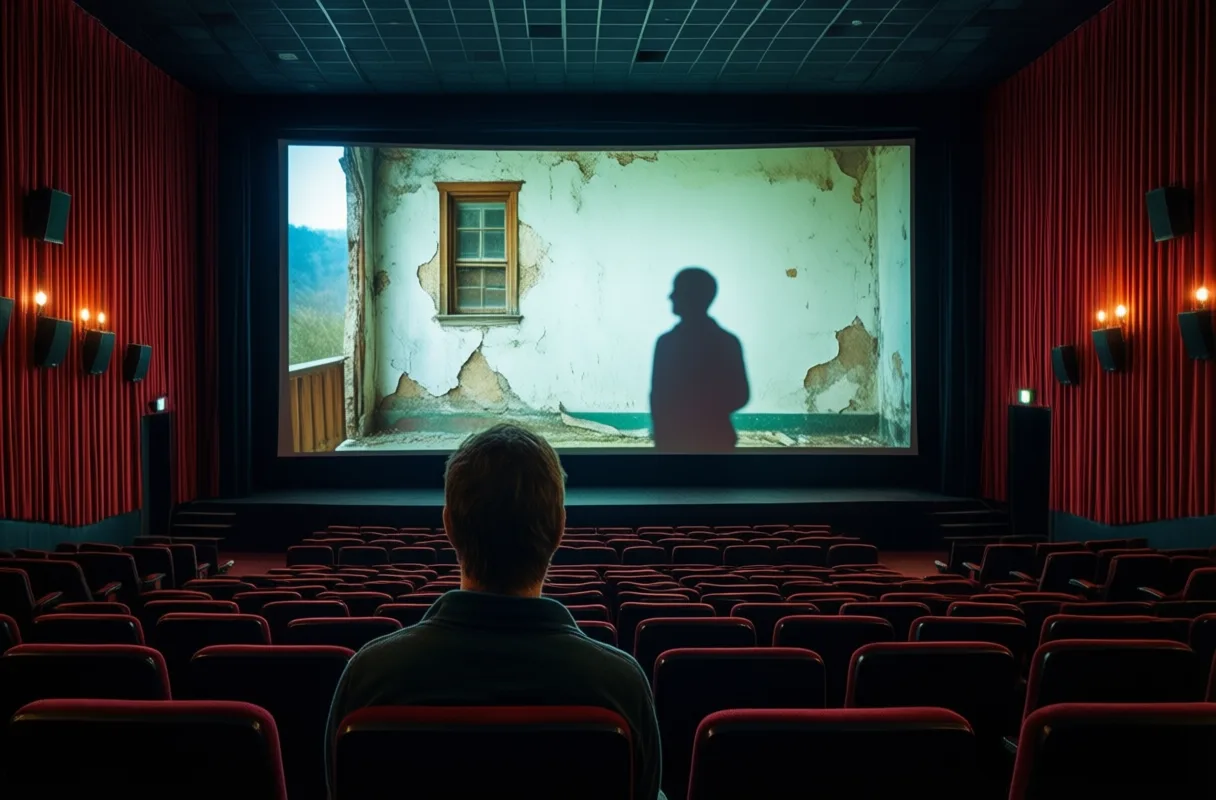
To critique a film well, you must first learn how to watch it poorly-at least at first. The first viewing should not be an audit. It should be an immersion. Let the story carry you. Laugh when the audience laughs. Flinch when the music swells. Surrender, just a little, to the illusion.
But beneath that surrender, a quiet awareness hums. This is the screening room mindset: to be both participant and observer, swept up and standing apart. You feel the film in your chest while your mind notes the cut that stitches tension to release, the actor’s slight hesitation before a line, the color grading that bleeds warmth from the frame.
Great critics are not cold dissectors. They are deeply feeling people who’ve trained themselves to notice. They know that emotion is data. A knot in the stomach, a sudden lump in the throat-these are clues, not distractions. They ask: Why now? What made that moment land? The answers lie in craft, in intention, in the invisible architecture of cinema.
Avoiding the Hype Trap: First Reactions vs. Measured Judgment
The theater empties. The screen goes dark. Someone beside you says, “That was amazing,” and suddenly the verdict feels settled. The hype machine, already humming with trailers and TikTok clips, kicks into overdrive. In that moment, dissent feels like betrayal.
But first reactions are fragile things-shaped by expectation, fatigue, the person you came with, the sandwich you ate an hour ago. They are valid, but they are not final. The critic’s duty is not to echo the room, but to return to the film alone, in silence, and ask: What remains when the noise fades?
Measured judgment requires distance. It means waiting. It means watching again, if possible. It means resisting the urge to be first and choosing, instead, to be clear. A film praised at midnight may crumble by morning. One dismissed as dull may reveal its depth in stillness.
The most honest reviews are often written not in the heat of the moment, but in its aftermath-when the applause has died, the memes have aged, and only the film, in all its complexity, remains.
7 Pillars of the Honest and Insightful Review
1. Anchor Your Opinion in Observable Craft, Not Just Feeling
Disliking a film because it made you uncomfortable is valid. But to say Why It made you uncomfortable-was it the pacing? The moral ambiguity? The way the lead actor refused to look the camera in the eye?-that is criticism.
Base your response in what is actually on screen. The color palette. The editing rhythm. The Sound design That hums beneath dialogue like a warning. When you say a performance is “cold,” show us the stillness in the actor’s hands, the way they swallow words before speaking. Ground your emotion in evidence.
This doesn’t mean reducing art to a checklist. It means making your subjective experience legible. A feeling unmoored from craft is just noise. But a feeling tied to a deliberate choice-a long take, a key change, a shadow creeping across a wall-becomes insight.
2. Contextualize the Film Within Its Genre and Era
A Western isn’t just a story about cowboys. It’s a conversation with Stagecoach, Shane, Unforgiven. A horror film carries the fingerprints of Psycho, The Texas Chain Saw Massacre, Hereditary. To ignore this lineage is to watch the film in a vacuum.
Every film speaks in a dialect shaped by what came before. A romantic comedy that subverts the meet-cute does so because we’ve seen a thousand meet-cutes. A sci-fi film that avoids aliens does so in rebellion against decades of pulp tradition. Know the grammar of the genre, and you’ll see the rebellion-and the homage-more clearly.
Even the year of release matters. A film made in 1974 carries the scars of Vietnam, Watergate, the collapse of old Hollywood. One made in 2020 breathes the air of isolation, digital overload, a world unmoored. Context isn’t padding. It’s oxygen.
3. Separate the Artist from the Art Without Dodging Ethics
A director’s past actions may stain the way we see their work. That doesn’t mean we stop seeing it. To ignore the art is to surrender power. To ignore the artist is to abdicate responsibility.
Criticism must hold both truths at once. A film can be formally brilliant and ethically troubling. A performance can be transcendent while the performer’s behavior off-screen is indefensible. The critic’s role is not to pardon or punish, but to acknowledge the tension.
We don’t have to boycott every flawed creator. But we do have to name the flaw. We can say: This shot is masterful. And yes, I remember what he said in that interview. Honesty demands nothing less.
4. Acknowledge Bias-Then Push Past It
You hate musicals. You love noir. You’re tired of reboots. You’re drawn to films with strong female leads. These preferences are not flaws-they’re part of your lens. But a lens distorts as much as it clarifies.
Name your bias. Then challenge it. Ask: Am I rejecting this because it’s bad, or because it’s not my taste? A great film often makes us uncomfortable not because it fails, but because it forces us to expand.
Even better: imagine the viewer who is not you. What might they see that you don’t? The parent, the immigrant, the teenager-each brings a different life to the screen. Criticism that ignores this is criticism that speaks only to itself.
5. Prioritize Clarity Over Cleverness in Language
A dazzling sentence means nothing if it obscures the point. Wit has its place, but not at the cost of understanding. The goal is not to impress, but to illuminate.
Write so the reader sees the film more clearly, not so they admire your vocabulary. Avoid jargon. Avoid the pretense of objectivity. Say what you mean. If a scene moved you, say so-and then explain how.
Cleverness can be a shield, a way to hide behind irony when vulnerability is called for. But the best writing risks sincerity. It trusts the reader to meet it halfway.
6. Highlight What’s Unspoken: Tone, Pacing, Silence
Dialogue tells us what characters say. The spaces between tell us what they mean. A lingering close-up. A cut held a beat too long. A soundtrack that drops out, leaving only breath.
The unspoken is often the truest part of a film. Tone-the mood that seeps into your bones-is built in these moments. Pacing isn’t just speed; it’s rhythm, the heartbeat of the story. Silence isn’t absence; it’s presence, charged with meaning.
Notice when a film refuses to explain. When it trusts you to feel before you understand. These are acts of respect. Point them out. They are the quiet miracles of cinema.
7. Offer a Defensible Verdict, Not Just a Rating
A star rating is a destination. A review is the journey. Anyone can give four stars. Few can explain why those stars matter.
Your verdict should emerge from what came before. It should feel earned, not arbitrary. If you call a film “a masterpiece,” show us the seams, the choices, the risks that justify the word. If you call it “empty,” prove it-not with scorn, but with observation.
And if you’re torn? Say so. A film can be both flawed and unforgettable. A verdict doesn’t have to be simple to be honest.

When the Audience and Critic See Different Movies
It happens often: a film adored by audiences is torn apart by critics, or vice versa. The disconnect isn’t proof that one side is wrong. It’s proof that cinema is subjective, that we carry different lives into the theater.
A critic may praise a film’s formal daring while audiences crave emotional payoff. An audience may embrace a nostalgic sequel that critics see as creatively bankrupt. These aren’t failures of taste. They’re reflections of different needs.
The critic seeks meaning. The audience often seeks connection. Neither is superior. But the critic’s job isn’t to mirror the crowd, nor to defy it. It’s to offer a distinct perspective-one grounded in attention, in context, in a lifetime of watching.
When the gap is wide, that’s not a crisis. It’s an invitation to dialogue. Why does this film land differently? What does that say about us, about the moment, about the art?
How Consensus Forms (and Fractures) Over Time
In the days after release, opinions scatter like shrapnel. Some praise. Some pan. Some shrug. But slowly, a shape emerges-a rough agreement, a critical consensus. The film is “overrated.” “Underrated.” “a turning point.”
But consensus is not truth. It’s a snapshot, a mood. And moods change. A film dismissed in its time may be reclaimed decades later-its themes suddenly urgent, its style newly influential.
Time is the ultimate critic. It strips away hype, forgives flaws, reveals layers. The films that endure do so not because they were universally loved, but because they continue to speak-differently, deeply, across generations.
And with time, the reviews that endure are those that saw not just the film, but what it might become.

Beyond the Score: What to Do When a Film Defies Easy Judgment
Some films resist verdicts. They are messy, contradictory, alive with contradiction. They offend in one moment and soar in the next. They challenge not just taste, but the very idea of judgment.
For these films, the star rating fails. The binary of “good” or “bad” collapses. The honest response is not a score, but a question: What have you done to me?
Write about the struggle. Admit the confusion. Let the review mirror the experience. A film that resists easy answers deserves a response that does the same.
Sometimes, the most truthful thing a critic can say is: I don’t know. But I can’t stop thinking about it.
The Long View: Revisiting Films with Fresh Eyes
Return to a film years later. The world has changed. You’ve changed. The film may feel different-not because it’s altered, but because you have.
A movie once seen as daring may now feel dated. One once dismissed as shallow may reveal hidden depths. The passage of time doesn’t invalidate first impressions. It enriches them.
Revisiting is not about correcting the past. It’s about expanding the present. It reminds us that films are not fixed objects, but living things, shaped by when and how we meet them.
The best films grow with us. And the best criticism leaves room for that growth.
Why Great Reviews Stick Around Longer Than the Films They Cover
Some films fade. Their effects wear thin. Their innovations become clichés. But the reviews-the best ones-remain. They outlive box office returns, award seasons, even the actors’ careers.
Because great criticism is not about the film alone. It’s about what the film Means. It captures a moment, a feeling, a way of seeing. It becomes part of the cultural record.
A perfect review doesn’t just describe a film. It becomes a companion to it. It walks beside the viewer, long after the screen goes dark. It reminds us not just of what we saw, but of how we felt, and why it mattered.
And in that way, the critic becomes part of the art-not as creator, but as witness. And sometimes, the witness speaks longest of all.
| Principle | Purpose | Key Action |
|---|---|---|
| Anchor Opinion in Craft | Ground feelings in observable details | Link emotion to editing, sound, or performance choices |
| Contextualize Film | Understand film within genre and era | Reference influences, historical moment, or genre norms |
| Separate Artist from Art | Acknowledge ethical tensions | Note brilliance and troubling behavior separately |
| Acknowledge Bias | Recognize personal preferences | Challenge assumptions and consider other viewers |
| Prioritize Clarity | Illuminate, not impress | Use plain language over jargon or wit |
| Highlight the Unspoken | Notice tone, silence, pacing | Focus on what’s felt, not just what’s said |
| Offer Defensible Verdict | Justify conclusions with evidence | Make the rating reflect the review’s journey |
What Critics Know That You Don’t
The Hidden Rules of the Game
Movie reviews aren’t just about liking or hating a film-they’re part of a long tradition shaped by audience expectations and editorial standards. One lesser-known fact: many major publications assign films a star rating on a half-star increment system, not just whole stars. This allows for more nuance-say, distinguishing between a solid three-star movie and one that’s barely passable. It also means a four-star review is rarer than you’d think, often reserved for films considered exceptional within their genre or form.
Another quirk? Reviewers usually watch movies in plain conditions-not fancy IMAX or Dolby Cinema setups-because they need to assess how a film will play for the average viewer at a standard multiplex. That doesn’t mean spectacle goes unnoticed, but it keeps the focus on storytelling, acting, and direction rather than tech specs. And here’s a fun twist: some critics avoid reading other reviews until after they’ve written their own to prevent subconscious influence, preserving their honest first reaction.
Timing matters too. Most reviews are published within 24 hours of press screenings, which often happen just days before a film's release. That tight window means critics must form strong opinions quickly, balancing gut response with thoughtful analysis. It’s why the best critiques feel both immediate and insightful-crafted under pressure, but never rushed in spirit.
Frequently Asked Questions
What is the difference between a hot take and a lasting film critique?
A hot take delivers a quick, certain opinion meant to perform, while a lasting critique invites deeper understanding. It embraces ambiguity, balances emotion with analysis, and remains relevant over time.
How should a critic watch a film for a thoughtful review?
The first viewing should be immersive, allowing emotional response while quietly noting craft elements like editing, performance, and tone. The critic must be both participant and observer.
Why do some critics avoid reading other reviews before writing their own?
To prevent subconscious influence and preserve their honest, independent reaction. This ensures their perspective remains original and not shaped by others' opinions.
How do major publications use star ratings differently?
Many use half-star increments to add nuance, distinguishing between films that are solidly rated versus barely passable. A four-star review is rare and reserved for exceptional films.
This article was produced with AI assistance. How Silver Screen Magazine uses AI.
Vivian Chukwu explores golden-age Hollywood with reverence and rigor, unearthing forgotten performances and cultural contexts. She connects archival footage to modern themes, making classic films feel immediate and vital through thoughtful analysis and vivid storytelling.