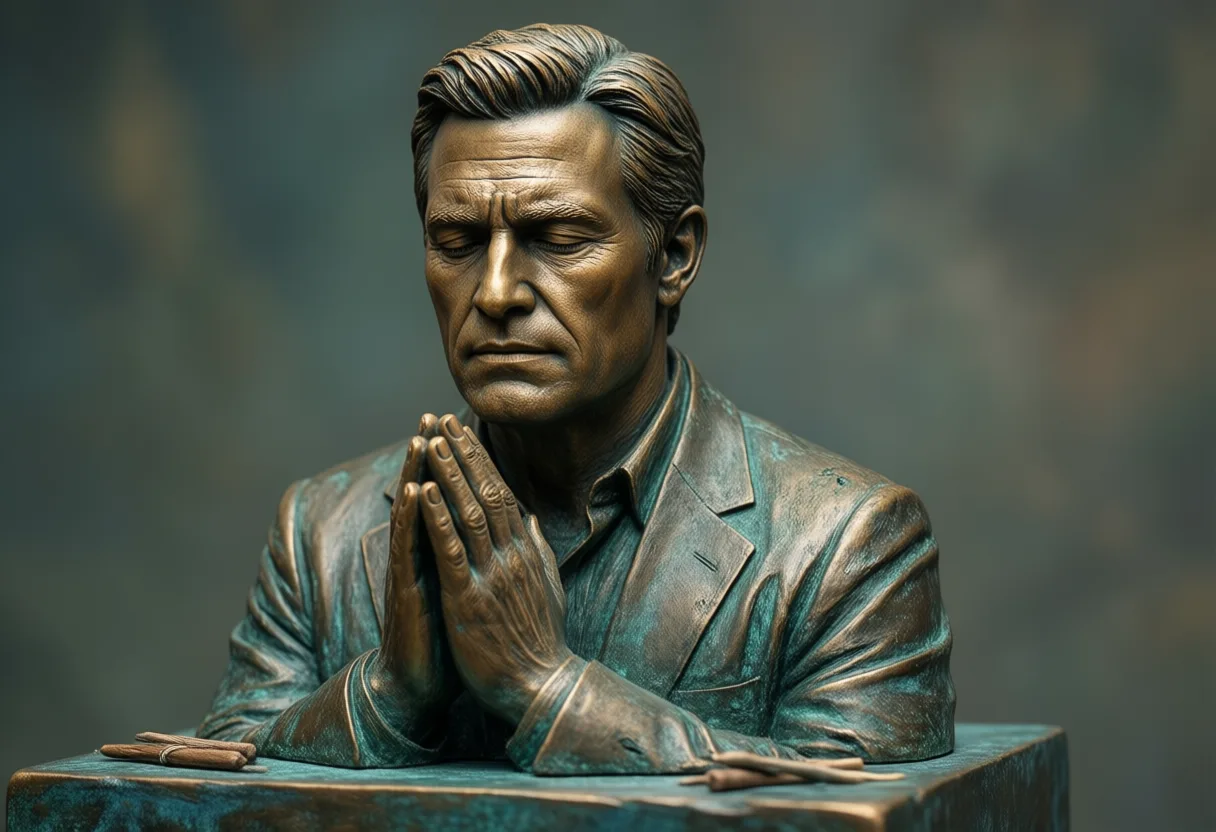
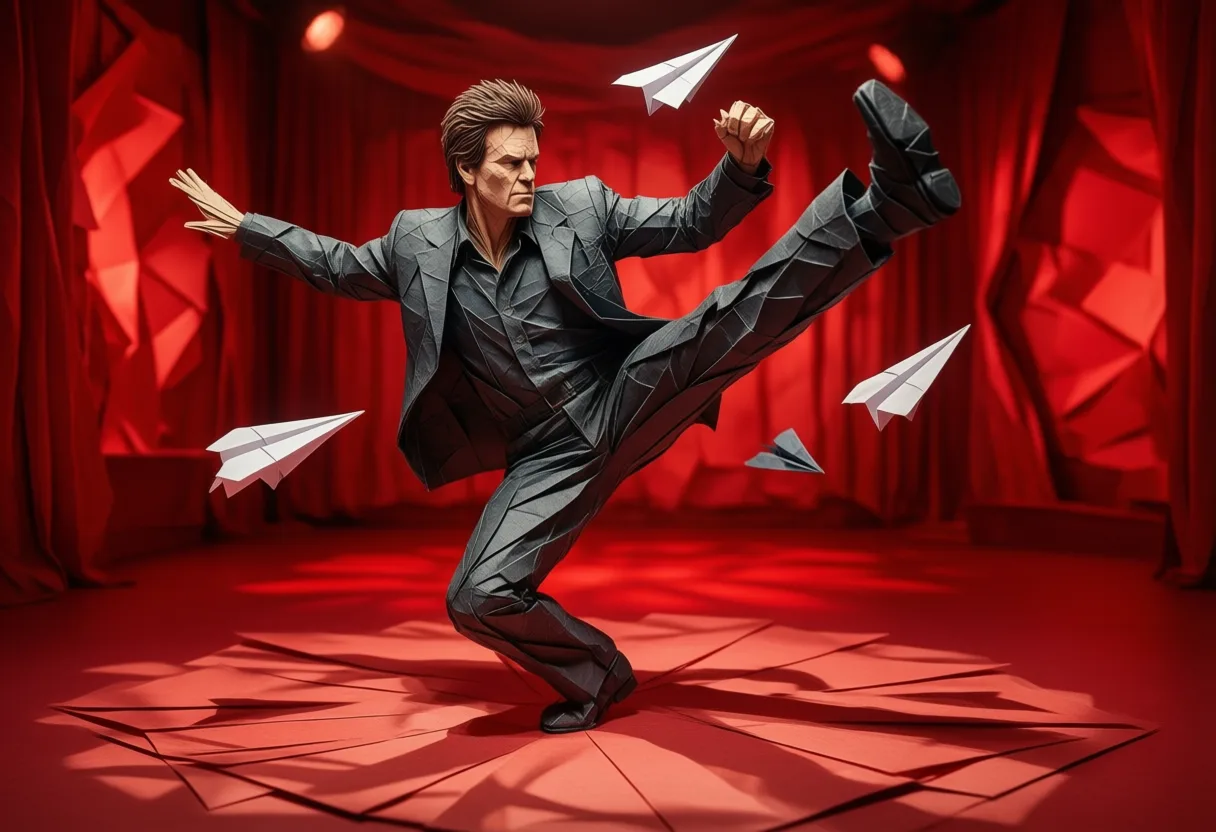
Kevin Bacon didn’t just ride the wave of 1980s pop culture-he helped create it. One minute he’s a sweaty, rebellious teen stomping on a church floor in Footloose, the next he’s standing shoulder to shoulder with Tom Hanks in a NASA capsule hurtling Through space. His career is a masterclass in reinvention, a tightrope walk between mainstream charm and fearless character work.
What Sparked Kevin Bacon’s Rise from Cult Classic to Household Name?
Hollywood loves a breakout, but few breakouts stick. Kevin Bacon didn’t just land on Screen-he carved out a space. It wasn’t overnight fame, nor was it handed to him. His ascent came from a blend of instinct, timing, and a refusal to be boxed in. From slasher films to presidential hearings, he’s played heroes, villains, and everything in between.
Bacon’s early roles were never about flash. They were about presence. There’s a quiet magnetism in the way he holds a scene, even when he’s not the lead. He doesn’t shout for attention-he earns it. That subtlety became his signature, a thread that runs through every phase of his filmography.
And let’s be honest: no one predicted that the guy from Friday the 13th Would end up sharing screen time with Jack Nicholson and Dustin Hoffman. But Bacon did. Not by chasing trends, but by choosing roles that challenged him-and by doing them well. That’s how you go from Campy horror To cultural relevance.
The Early Roles That Defined a New Kind of Screen Presence
From College Pranks to Summer Camp Scares
Kevin Bacon’s First major Role came in National Lampoon’s Animal House (1978), a riotous comedy that defined a generation’s sense of humor. He played a minor but memorable part-just enough to catch the eye, not enough to be typecast. It was a foot in the door, nothing more. But Bacon knew how to use that crack of light.
Then came Friday the 13th (1980), where he became one of horror’s most infamous early victims. His character, Jack, met a gruesome end-strangled by a wire while in a compromising position. The scene became legendary, not because of Bacon’s acting, but because of how quickly it turned him into a pop culture footnote. Yet, he wore it like a badge. He didn’t run from it. He used it.
What set Bacon apart wasn’t star power-it was instinct. He didn’t chase fame. He chased roles with texture. And in 1982, he found one in Diner. Directed by Barry Levinson, the film was a mosaic of male friendship, insecurity, and the awkward transition into adulthood. Bacon’s performance as Timothy Fenwick Jr. Was understated, layered with sarcasm and vulnerability. It wasn’t flashy, but it was real.
The Quiet Confidence of a Rising Talent
Diner Didn’t make Bacon a star. But it made him credible. Critics noticed. Directors noticed. He wasn’t just another pretty face-he was someone who could hold a scene without speaking, who could convey doubt with a glance. That kind of presence doesn’t come from acting school. It comes from watching people.
The film’s ensemble cast-future stars like Mickey Rourke and Steve Guttenberg-worked like a jazz quartet, improvising, riffing, feeding off each other. Bacon wasn’t the loudest, but he was always in tune. He understood rhythm, both in dialogue and in silence. That’s rare.
And that’s why, when Footloose Came calling, he was ready. Not because he could dance-though he could-but because he could sell the anger, the frustration, the need to break free. He wasn’t Playing A teenager. He was playing a kid who felt trapped. And America ate it up.
How Did Footloose Transform a Promising Career into a Cultural Phenomenon?
A Dance Film That Shook the 1980s
Footloose (1984) wasn’t just a movie-it was a movement. Set in a small town where dancing was banned after a tragic accident, the film tapped into a national nerve. It was Rebel Without a Cause With a synth soundtrack. And Kevin Bacon, as Ren McCormack, became its unlikely rebel king.
He didn’t just dance. He Fought With his body. The opening scene-Bacon in a truck, drumming on the dashboard to “On the Road Again”-set the tone. This wasn’t a musical. It was a manifesto. And Bacon delivered it with a mix of swagger and sincerity that felt earned, not manufactured.
The film’s success was explosive. It grossed over $80 million, spawned a soundtrack that dominated the charts, and turned Bacon into a household name. But more than that, it gave him a paradox: he was now famous for playing someone who wanted to be free. And freedom, in Hollywood, can be its own kind of cage.
The Weight of Being the “Dancing Guy”
After Footloose, the offers poured in. Studios wanted another teen idol, another dance movie, another anthem. But Bacon wasn’t interested. He didn’t want to be typecast as the guy who shakes his hips. He wanted to act. And so he walked away from the spotlight, not in defiance, but in search of substance.
That’s when the real work began. He took roles that didn’t promise box office gold but offered complexity. Quicksilver (1986) was a misfire-a Wall Street wannabe turned bike messenger-but Bacon committed to it anyway. It wasn’t great, but it showed range. He wasn’t afraid to fail.
Then came She’s Having a Baby (1988), a John Hughes film that explored the anxieties of young adulthood. Bacon played a supporting role as a slick, cynical yuppie, the anti-hero to Kevin Kline’s neurotic protagonist. It was a small part, but he made it memorable-smug, sharp, and just a little dangerous.
Balancing Light and Dark: From Quicksilver To She's Having a Baby
Bacon has always flirted with duality. Even in his lighter roles, there’s an edge. In Quicksilver, he plays a stockbroker who loses everything and starts over as a bicycle courier. The premise sounds like a redemption arc, but the film never quite lands. Still, Bacon brings a restless energy to it-like he’s running from something he can’t name.
It’s not a classic. But it’s telling. Bacon wasn’t chasing hits. He was testing himself. Can he carry a film alone? Can he make a flawed character sympathetic? The answers weren’t always yes, but the questions mattered.
Then, in She’s Having a Baby, he shifts tone completely. As Jefferson, the slick friend who represents everything the protagonist fears becoming, Bacon is effortlessly cool-and quietly terrifying. He’s not a villain, but he’s not a friend, either. He’s a mirror. And that’s where Bacon excels: in roles that reflect the shadows we don’t want to see.
Facing Monsters Both Real and Imagined: Tremors And Flatliners
The Charm of a Man Versus Nature (and Worms)
Tremors (1990) should not work. It’s a B-movie about giant underground worms terrorizing a Nevada desert town. And yet, it endures. Why? Kevin Bacon. As survivalist-turned-reluctant-hero Val McKee, he brings wit, panic, and just enough bravado to sell the absurdity.
He doesn’t play it straight-but he doesn’t camp it up, either. There’s a sincerity in his fear, a realism in his reactions. When he’s running from a graboid, you believe he might not make it. And when he cracks a joke mid-chaos, it feels like a defense mechanism, not a script cue.
The film became a cult classic, and Bacon embraced it. He returned for sequels, not for the money, but because he loved the character. That kind of loyalty is rare in Hollywood. Most stars outrun their genre roots. Bacon leaned into his.
Dancing on the Edge of Death in Flatliners
Later that same year, he starred in Flatliners, a sci-fi horror about medical students who experiment with near-death experiences. Bacon played Joe Hurley, a brooding, guilt-ridden student haunted by visions from his past. It was a darker role, more introspective, more punishing.
The film was uneven, but Bacon’s performance wasn’t. He brought a quiet intensity to Joe, a man wrestling with buried sins. There’s a scene where he confronts a hallucination of a boy he once bullied-Bacon doesn’t scream, doesn’t cry. He just stands there, paralyzed by shame. It’s devastating.
Together, Tremors And Flatliners Show Bacon at his most versatile. One is pure fun, the other pure dread. And he nails both. That’s not luck. That’s skill.
Standing Among Titans: The Quiet Power of Bacon’s Role in Apollo 13
Not the Leader, But the Glue
In Apollo 13 (1995), Bacon played Jack Swigert, the command module pilot thrust into the spotlight after an in-flight crisis. He wasn’t the mission commander-that was Tom Hanks’ Jim Lovell-but he was central to the tension. Swigert was the outsider, the astronaut added last-minute, the one the crew didn’t fully trust.
Bacon didn’t try to steal scenes. He didn’t need to. His performance was all restraint. A furrowed brow, a clipped response, a glance at the oxygen levels-small moments that built a larger portrait of a man under unimaginable pressure.
The film was a critical and commercial triumph, nominated for nine Oscars. And while Hanks got the headlines, Bacon’s work was quietly essential. He played the role not as a hero, but as a human being trying to do his job in a broken machine. That’s the kind of acting that doesn’t win awards-but gets remembered.
The Ensemble as Character
What made Apollo 13 Work wasn’t just the story. It was the ensemble. Bacon, Hanks, and Bill Paxton didn’t feel like actors playing astronauts. They felt like astronauts. And Bacon, in particular, brought a stoic professionalism that grounded the film.
He didn’t have the emotional arcs of Hanks or the comic relief of Paxton. His role was subtler: the man who keeps his head when others are losing theirs. In a film about survival, Bacon played the quiet engine of calm.
It’s a reminder that not every great performance needs a monologue. Sometimes, it’s enough to sit in a capsule, say your lines flatly, and let the weight of the moment do the work.
Navigating Morality in the Shadow of History: JFK And A Few Good Men
The Man in the Middle of the Conspiracy
In JFK (1991), Oliver Stone’s sprawling, fever-dream investigation into the Kennedy assassination, Bacon played FBI agent Fritz. It’s a small role, but a pivotal one. He’s the interrogator, the man who questions Jim Garrison’s (Kevin Costner) theories while hiding his own doubts.
Bacon doesn’t overplay it. He’s bureaucratic, detached, but with a flicker of unease. You sense he knows more than he’s saying. That ambiguity is perfect for the film’s paranoid tone. He’s not a villain. He’s a functionary. And that’s scarier.
The film was polarizing, but Bacon’s performance wasn’t. It was precise, economical, unforgettable in its restraint. He didn’t need screen time to make an impact. He just needed a few scenes to suggest an entire system of silence.
The Colonel Who Couldn’t Look Away
Then came A Few Good Men (1992), where Bacon played Colonel Nathan Jessup’s right-hand man, Lieutenant Colonel Matthew Markinson. Again, a supporting role. Again, unforgettable.
Markinson is the officer who knows the truth about the “code red” but lacks the courage to speak it. When he finally breaks down in court, admitting his complicity, Bacon delivers one of the film’s most haunting moments. His voice cracks. His hands tremble. He doesn’t scream-he collapses.
It’s a five-minute scene, but it haunts the entire film. Bacon doesn’t play him as weak. He plays him as trapped. And that’s the tragedy. He’s not evil. He’s just a man who chose obedience over honor.
Both roles show Bacon’s mastery of moral ambiguity. He doesn’t play good or evil. He plays the space in between.
A Bold Turn Toward Redemption: The Emotional Weight of The Woodsman
The Woodsman (2004) is not an easy film. It’s about a man, Walter, who returns to his hometown after serving time for molesting children. Bacon plays him with a stillness that borders on unbearable. There’s no music, no dramatic arcs-just a man trying to survive his own shame.
It was a risky role. Most actors would avoid it. Bacon sought it out. He didn’t excuse Walter. He didn’t condemn him. He just showed him-tense, isolated, constantly bracing for judgment.
The performance was widely acclaimed. Critics called it brave, fearless, transformative. And it was. But more than that, it was honest. Bacon didn’t play a monster. He played a man who had done monstrous things and was trying, however imperfectly, to live with himself.
It’s a career highlight-not because it’s flashy, but because it’s fearless. It’s the kind of role that defines an actor’s legacy.
Legacy in the 2000s: Mystic River And Frost/Nixon
The Weight of the Past in Mystic River
In Mystic River (2003), Clint Eastwood’s brooding crime drama, Bacon played FBI agent Kevin Whitey Powers. Again, a supporting role. Again, essential. He’s the outsider, the investigator trying to make sense of a tragedy rooted in childhood trauma.
Bacon brings a weary authority to the part. He’s not the emotional center-that’s Sean Penn and Tim Robbins-but he’s the lens through which we see the investigation unfold. He’s methodical, skeptical, but never cold.
The film was a critical triumph, earning six Oscar nominations. And while Bacon didn’t get a nod, his performance was a reminder that great acting doesn’t always demand the spotlight. Sometimes, it just needs to be true.
The Art of the Interview in Frost/Nixon
In Frost/Nixon (2008), Bacon played Jack Brennan, Nixon’s loyal chief of staff. He’s not on screen much, but he’s always present-hovering, protecting, manipulating. He’s the guardian of the fallen president, and Bacon plays him with a quiet ferocity.
There’s a scene where he confronts David Frost, warning him not to go too far. Bacon doesn’t raise his voice. He doesn’t need to. His posture, his stare, his clipped tone-everything says, Back off.
It’s another masterclass in economy. No grand speeches. No dramatic exits. Just a man doing his job, protecting his boss, and failing to stop history.
Both films-Mystic River And Frost/Nixon-are testaments to Bacon’s ability to elevate an ensemble. He’s not always the star. But he’s always essential.
Why Does Kevin Bacon Continue to Choose Roles That Defy Expectations?
Because he can. Because he wants to. Because he’s never been interested in being just one thing. While other stars chase franchises or awards bait, Bacon keeps moving-into TV, into indie films, into roles that scare him.
He starred in City on a Hill, a crime drama that let him explore corruption and redemption. He returned to horror with The Toxic Avenger Remake. He even popped up in MaXXXine (2024), playing a sinister figure from Hollywood’s past.
He doesn’t need the work. He wants it. And that distinction matters.
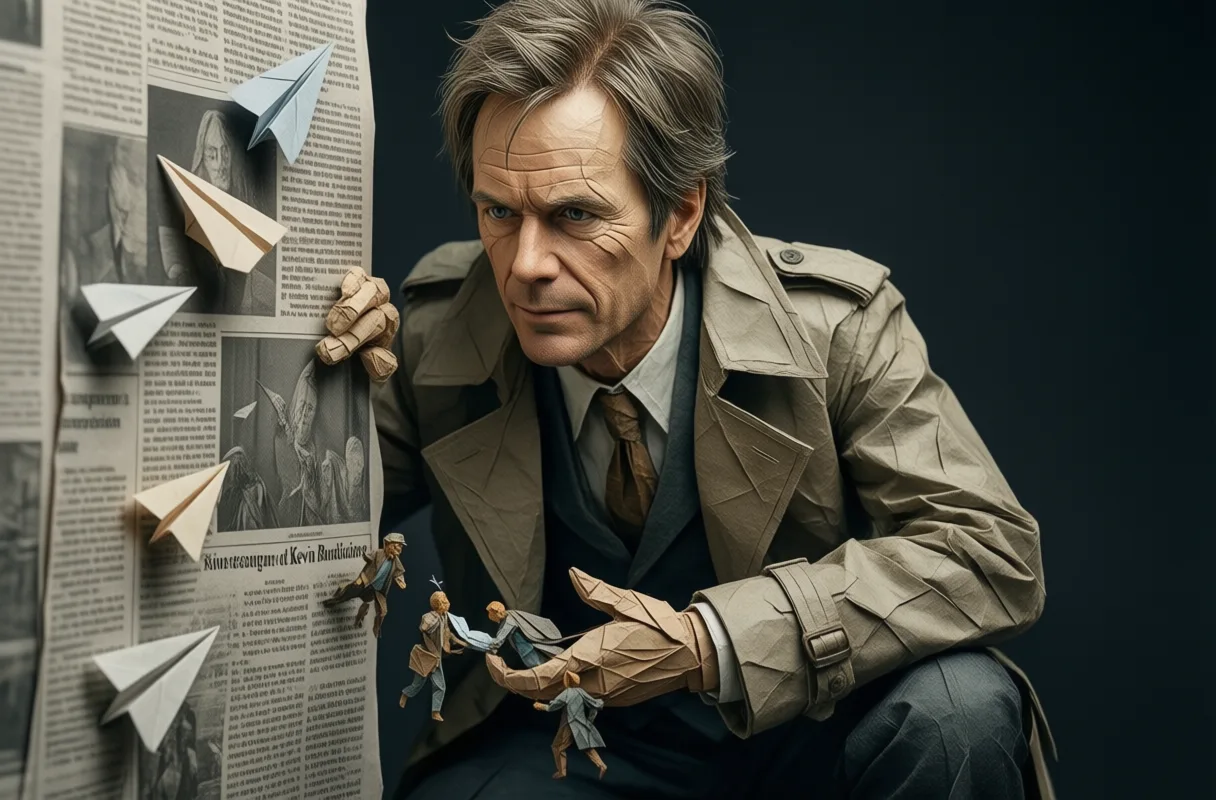
The Unseen Thread: Connecting Decades of Versatility
What ties Kevin Bacon’s career together isn’t genre. It’s honesty. Whether he’s dancing, screaming, or sitting in silence, he’s always present. He doesn’t act At The audience. He lives In The moment.
He’s played heroes, villains, cowards, and survivors. He’s been funny, terrifying, heartbreaking. And through it all, he’s remained unpredictable. You never know what he’ll do next. And that’s the point.
He’s not chasing legacy. He’s building it, one role at a time.
What Can Aspiring Actors Learn from His Career Arc?
Choose roles that scare you. Don’t run from failure. Embrace supporting parts. And never stop working.
Bacon didn’t become great by playing safe. He became great by saying yes to the weird, the dark, the complicated. He trusted his instincts. And he trusted the work.
That’s the lesson: talent gets you in the room. Discipline keeps you there.
Where Does the Man Behind the Myth Go From Here?
He keeps acting. He keeps choosing. He keeps surprising.
At this point, Kevin Bacon doesn’t owe Hollywood anything. He’s proven himself a hundred times over. And yet, he shows up-on screen, on set, in character-like he still has something to prove.
Maybe he does. Or maybe he just loves the game too much to quit.
Either way, we’re lucky to watch.
From Dance Floors to Deep Space: The Many Lives of Kevin Bacon
A Legacy Built on Bold Roles
You might know him for kicking off his shoes and dancing away small-town rules in Footloose, but Kevin Bacon’s career stretches far beyond that iconic 1984 hit. Long before Ren McCormack shook up a repressive town, Bacon made an early splash in National Lampoon’s Animal House (1978), playing a sharp-dressed fraternity brother. He then helped launch a horror franchise by appearing in the original Friday the 13th (1980), where his character’s fate on Camp Crystal Lake became one of cinema’s most memorable opening scenes. These early roles set the stage for a career full of surprises.
From Thrillers to True Stories
Bacon’s range shines in how he shifted from teen drama to intense, real-life portrayals. In Apollo 13 (1995), he stepped into the shoes of astronaut Jack Swigert, bringing quiet determination to the harrowing true story of a failed moon mission. That same knack for grounded performance appears in JFK (1991), where he played a suspiciously connected New Orleans businessman, and in A Few Good Men (1992), standing alongside Tom Cruise and Jack Nicholson in the courtroom drama. He also embraced genre fun, co-starring in the cult favorite Tremors (1990), where he battled giant underground worms with wit and nerve.
Later Triumphs and Lasting Impact
Even as the years passed, Bacon kept delivering powerful performances. His chilling yet empathetic turn in The Woodsman (2004) earned widespread praise, proving his willingness to tackle difficult, layered characters. He brought sharp political tension to Frost/Nixon (2008) and emotional depth to Mystic River (2003), both of which remain among his most highly regarded films. With recent appearances in projects like Leave the World Behind (2023) and MaXXXine (2024), Bacon continues to evolve, showing that a career built on bold choices never really goes out of style.
Frequently Asked Questions
What was Kevin Bacon's first major film role?
Kevin Bacon's first major role was in National Lampoon’s Animal House (1978), where he played a minor but memorable part as a sharp-dressed fraternity brother.
How did Footloose impact Kevin Bacon's career?
Footloose (1984) transformed Kevin Bacon into a household name, grossing over $80 million and making him famous for playing rebellious teen Ren McCormack in a cultural phenomenon.
What role did Kevin Bacon play in Apollo 13?
In Apollo 13 (1995), Kevin Bacon played Jack Swigert, the command module pilot thrust into the spotlight during a failed moon mission, delivering a restrained and essential performance.
Why is Kevin Bacon’s performance in The Woodsman considered significant?
Bacon’s role in The Woodsman (2004) was considered brave and fearless, portraying a man returning home after serving time for child molestation with honesty and stillness, earning widespread acclaim.


This article was produced with AI assistance. How Silver Screen Magazine uses AI.
Rohan Kilpatrick dissects the personal lives of stars with wit and precision, balancing insider access with ethical awareness. He delivers the latest whispers and headlines with a sharp eye for irony, never sacrificing style for sensationalism.