Think You Know Cinema History? These Questions Will Test Your Mettle
Cinema is not merely a sequence of images strung together with light and time-it is memory made visible, emotion etched in celluloid. To love film deeply is to feel the weight of its silences, the precision of its glances, the architecture of its Shadows. For those who’ve spent midnight hours in dimly lit rooms, eyes fixed on flickering screens, there comes a moment when admiration turns into inquiry: How well do we truly know this art?
The History Of film is a mosaic of defiance, reinvention, and quiet revolutions. It is written not only in awards and box office tallies but in the hushed arguments between directors and producers, the rejected scripts that later became canon, and the actors who embodied roles they were never meant to play. To test one’s knowledge of classic cinema is not to recite trivia-it is to trace the pulse of an era through its most enduring images.
Consider the 1930s, when studios held Court like Feudal lords and stars were both royalty and prisoners.
- The term “box office poison” was a dagger disguised as industry jargon.
- It was wielded not in whispers but in print, a public branding meant to sideline performers whose appeal was deemed waning or too costly.
- Names once synonymous with glamour found themselves exiled, not by scandal, but by cold arithmetic and shifting tastes.
What Studio Executives Called “Box Office Poison” in the 1930s
In 1935, a group of powerful theater owners released a List That sent tremors through Hollywood’s golden corridors. The label “box office poison” was affixed to several top-tier stars, not for lack of talent, but for a perceived disconnect between their salaries and their drawing power. These were names that had defined the early sound era-actresses and actors whose faces sold tickets, magazines, and dreams.
The accusation was less about art than economics.
- Studios had invested heavily in star personas, building mythologies around elegance, romance, and moral clarity.
- When the Great Depression tightened its grip, audiences began favoring grit over glamour, authenticity over artifice.
- The stars labeled as poison were often those whose on-screen personas felt increasingly out of step with a world in crisis.
Yet irony clings to this chapter like nitrate to film stock. Several of those branded as liabilities would return to prominence, their careers reborn through reinvention. The insult, meant to erase, instead became a footnote in longer, more complex legacies-a reminder that in cinema, as in life, reputation is never final.
From Noir to Neorealism: Trivia That Separates Fans from True Cinephiles
To watch a film is one thing. To See It-frame by frame, cut by cut, gesture by gesture-is another. The true cinephile doesn’t just consume stories; they dissect the grammar of their telling. This is where casual admiration parts ways with deep understanding, where knowledge of a plot gives way to appreciation of process.
Post-war European cinema emerged not from studios but from rubble. Filmmakers, stripped of resources, turned limitation into language. They shot on location with non-professional actors, embraced natural light, and trusted the power of silence. The result was not a retreat from narrative but a refinement of truth.
One movement, in particular, rejected the polished fictions of Hollywood in favor of raw, unscripted life.
- It believed stories didn’t need to be invented-they only needed to be observed.
- Dialogue was often improvised, scripts treated as suggestions rather than blueprints.
- The camera became a witness, not a manipulator, lingering on faces worn by labor and loss.
This was cinema stripped bare, not for effect, but out of necessity and conviction. To understand it is to grasp that storytelling can thrive without spectacle-that sometimes, the most powerful images are the ones that simply let the world speak for itself.
Which Post-War Film Movement Redefined Global Storytelling Without Scripts?
Emerging from the ashes of World War II, a new cinematic voice rose in Italy, unpolished and urgent. Without the luxury of soundstages or studio financing, filmmakers took their cameras into the streets, capturing the rhythms of everyday survival. This was not escapism; it was excavation.
The movement rejected the artifice of traditional filmmaking.
- Actors were often passersby, drawn into scenes without rehearsal.
- Scripts existed in outline form, if at all, allowing reality to shape the narrative.
- The focus remained on the Working class, the displaced, the silent majority left behind by war and industry.
Its influence rippled outward, touching filmmakers from India to Latin America, from France to the American indie scene decades later. It proved that emotional truth could be found not in dialogue, but in a child’s exhausted face, a mother’s waiting gaze, a man pushing a broken bicycle down a long road. The story was no longer something told-it was something lived.
The Hidden Details Behind Iconic Opening Scenes
An opening shot is a promise. It sets the tone, the tempo, the temperature of everything to come. The greatest films announce themselves not with fanfare, but with precision-a single image that pulls us into a world already in motion. These moments are crafted with the care of a composer choosing the first note of a symphony.
Consider the slow creep of a camera through a fog-drenched alley, or the sudden burst of music over a title sequence that dances across the screen. These are not accidents of editing but declarations of intent. The opening of a film is its first act of seduction, and the masters knew how to make it unforgettable.
Some directors treated the beginning as a puzzle to be solved in reverse.
- One renowned filmmaker insisted on shooting a pivotal early scene out of sequence, demanding the crew treat it as if it were the final act.
- The performance was shaped by an ending the actors hadn’t yet filmed, lending it an eerie prescience.
- The effect was subtle but profound-a sense of fate already sealed, even as the story began.
These choices reveal a mind obsessed with structure, with the invisible threads that bind time and emotion. To notice them is to move beyond plot and into the realm of craft.
What Famous Director Insisted on Shooting a Key Scene in Reverse Order?
There are directors who follow scripts, and then there are those who rewrite reality. One such auteur, known for his meticulous control and psychological depth, once disrupted the natural flow of production to achieve a specific emotional texture. He believed that knowing the end could change the way an actor inhabited the beginning.
For a crucial early sequence, he filmed the climax first-weeks before the opening scenes were shot.
- The actors arrived on set disoriented, their characters already broken before they’d been built.
- Their performances carried a weariness that couldn’t be faked, a haunted quality that seeped into every line.
- The scene, when viewed in order, felt inevitable, as though the characters were walking toward a doom they’d already lived.
This method wasn’t about confusion-it was about authenticity. By collapsing time, the director forced his cast to carry the weight of the entire story from the very first frame. It was a gamble, but one that paid off in performances of rare depth and cohesion.
Forgotten Rules of the Hays Code That Shaped Classic Hollywood
Before ratings, before content warnings, there was a code-a set of moral guidelines that dictated what could be shown, said, or even implied on screen. Born in the 1930s, enforced with religious fervor, the Hays Code was less a suggestion than a doctrine. It governed not just sex and violence, but tone, consequence, and hierarchy.
Under its rules, crime could never pay, marriages had to be respected, and evil had to be punished-on screen, at least.
- A kiss could last no longer than three seconds.
- A married couple might sleep in separate beds, their love constrained by decorum.
- Even lighting was policed: shadows could suggest danger, but never endorse it.
The code didn’t just censor; it shaped storytelling. Writers became masters of implication, directors of suggestion. A closed door could imply more than a naked frame; a lingering glance could carry the weight of a forbidden affair. The artistry of classic Hollywood was born not despite these restrictions, but because of them.
Why Certain Words Were Banned from Screenplays Until the 1960s
Language in classic Hollywood was a tightrope act. Writers danced around words that today seem harmless-words like “pregnant,” “virgin,” or “God” used in vain. These weren’t just taboo; they were threats to the moral fabric the studios claimed to uphold. To speak them was to risk rejection, delay, or worse-irrelevance.
The code didn’t merely ban words; it policed their echoes.
- A character could be “in trouble” without naming the condition.
- A priest could be shown, but never doubted.
- A marriage could crumble, but only if virtue was ultimately rewarded.
These omissions created a coded language of their own. Audiences learned to read between the lines, to hear what wasn’t said. And filmmakers, ever resourceful, found ways to smuggle truth past the censors-through irony, through silence, through the smallest shift in an actor’s expression. The result was a cinema of restraint, where what was hidden often spoke louder than what was shown.
Behind the Magic: Practical Effects That Still Fool Audiences Today
Long before pixels and render farms, filmmakers conjured wonder with wires, paint, and ingenuity. The monsters, explosions, and impossible landscapes of classic cinema were not born in servers but in workshops, on soundstages, in the hands of artisans who treated illusion as sacred craft. These were not shortcuts-they were solutions forged in necessity.
Consider the creature that emerged from the shadows, its skin glistening under hot lights, its movements uncanny and alive.
- It was made of foam, rubber, and sweat.
- Its eyes were hand-painted lenses, its breath a puff of hidden smoke.
- No computer generated its menace-only the skill of a technician who spent weeks perfecting a single blink.
These effects endure because they occupy real space, interact with real light, and carry the texture of the physical world. A digital effect can be flawless; a practical one can be Believable. And in cinema, belief is everything.
How a Low-Budget Sci-Fi Film Pioneered Techniques Used Decades Later
In the 1950s, a modestly funded science fiction film slipped into theaters with little fanfare. Made outside the studio system, shot quickly and cheaply, it relied on innovation rather than spectacle. Yet within its humble frames lay techniques that would echo through generations.
The filmmakers, lacking the means for elaborate sets, used forced perspective and miniature models with revolutionary precision.
- A spaceship wasn’t large-it was made to Feel Large by placing tiny figures in the foreground.
- Explosions were filmed in slow motion, then reversed, creating a surreal implosion effect.
- Lighting was used not just for visibility, but to suggest scale and depth where none existed.
Decades later, directors of blockbusters would cite this film not as nostalgia, but as instruction. Its methods, born of constraint, became blueprints for realism in an age of excess. It proved that imagination, not budget, was the true currency of cinematic wonder.
The Actors Who Almost Missed Their Defining Roles
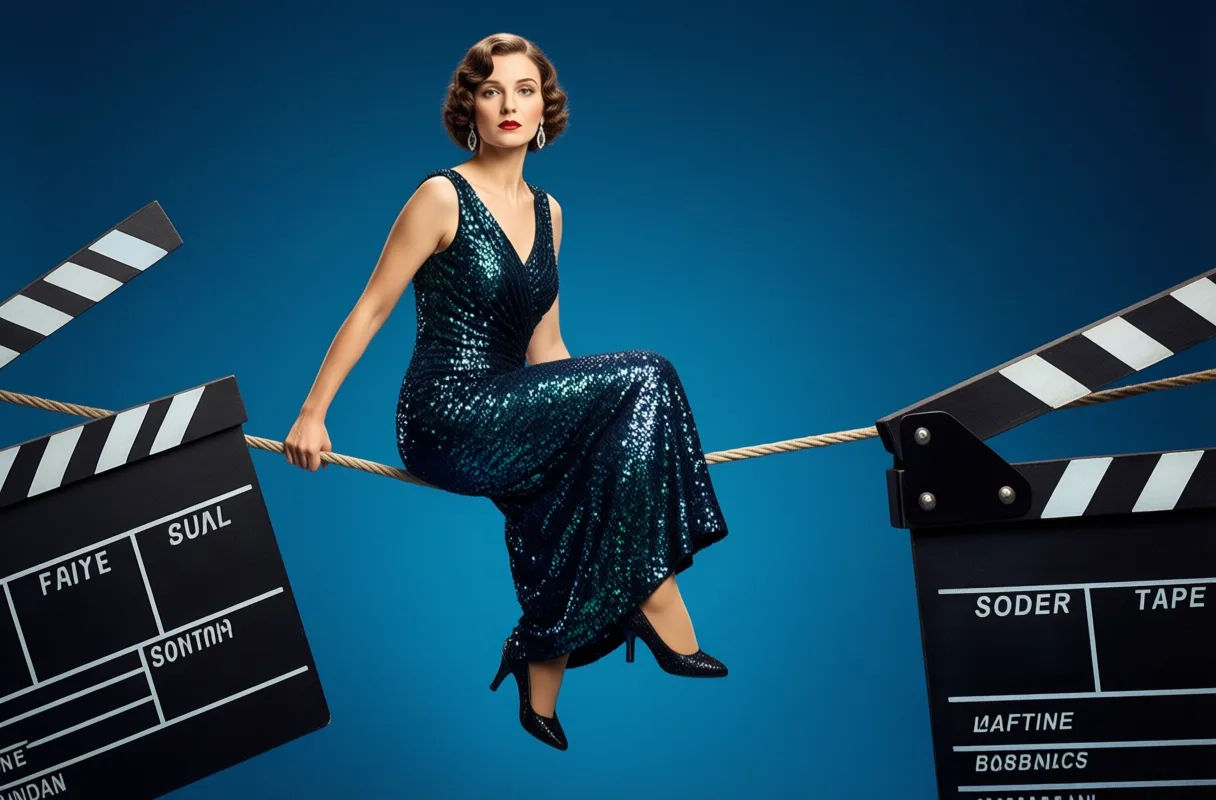
Casting is fate disguised as logistics. Some of the most iconic performances in film history were nearly lost to hesitation, doubt, or sheer bad timing. The right actor in the wrong place at the wrong moment can vanish into obscurity; the same actor, given one chance, can become immortal.
Studios often sought safety-familiar faces, proven draws, controllable stars.
- Visionary directors, however, looked for something else: a spark, a danger, an unpredictability.
- Many legendary performers were rejected for being too intense, too unconventional, too Real.
- Their presence didn’t sell tickets-they Were The ticket.
The alchemy of casting remains one of cinema’s great mysteries. It is not just about talent, but about timing, chemistry, and the invisible current that flows between actor and role. Some performances feel inevitable in retrospect, but were anything but at the time.
Which Legendary Performer Was Initially Rejected for Being “Too Unfilmable”?
There was a time when one of the most mesmerizing screen presences of the 20th century was deemed unsuitable for film. Critics and executives alike questioned whether his intensity could translate to the camera, whether his stage-trained gestures would feel too large, too theatrical. He was called “too internal,” “too still,” “too unfathomable.”
Yet when he finally faced the lens, something shifted.
- His stillness became focus.
- His silence became tension.
- His eyes, once said to be unreadable, became windows to entire worlds.
Directors learned to trust his economy, to frame him in close-up and let the camera do the listening. What had been seen as a limitation became his power. The man once called “unfilmable” redefined what film acting could be-not through volume, but through depth.
When Sound Changed Everything-And Almost Ruined It
The arrival of sound in cinema was not a smooth transition-it was a reckoning. The late 1920s saw the collapse of silent film as a dominant form, and with it, the careers of those who could not adapt. Voices mattered now. Accent, diction, timbre-these became as important as face and form.
The camera, once free to glide, became imprisoned by microphones.
- Early sound equipment was bulky, immobile, and sensitive.
- Actors had to speak directly into hidden mics, limiting movement.
- The art of visual storytelling was suddenly competing with the novelty of noise.
Many silent stars, whose expressions had captivated audiences for years, found their voices mismatched to their images. Some had accents deemed unsuitable; others spoke too softly, too quickly, or not at all. The transition wasn’t just technological-it was cultural, aesthetic, deeply personal.
The Silent Star Whose Career Vanished with the First Talking Picture
One actress, beloved for her delicate expressiveness and ethereal presence, saw her career dissolve almost overnight. Her face had been a canvas of emotion, her gestures poetic. But when sound came, her voice-soft, accented, untrained-was deemed incompatible with the new era.
Studios hesitated to cast her.
- Test screenings revealed audiences distracted, even disbelieving.
- Her name, once above the title, faded from marquees.
- Within a few years, she had disappeared from the screen entirely.
Her story is not unique, but it is emblematic. The advent of sound didn’t just change how films were made-it redrew the map of who could be seen, who could be heard, who could endure. The silent era didn’t just end; it was silenced.
Not All Masterpieces Were Instant Hits
There is a cruel irony in film history: the works now hailed as visionary were often rejected in their time. Audiences, critics, even studios have misjudged greatness, dismissing what they could not yet understand. A masterpiece is not always recognized at birth-it may take years, even decades, for its true shape to emerge.
Some films were too bold, too strange, too far ahead of their moment.
- They challenged conventions of narrative, morality, or form.
- They asked questions audiences weren’t ready to hear.
- They were box office failures, written off as curiosities or mistakes.
Yet time has a way of correcting the record. What was once seen as a flaw-a slow pace, an ambiguous ending, a lack of resolution-later becomes the source of its power. The films that endure are often those that refused to conform, that trusted the audience to catch up.

What Acclaimed Director’s Final Film Was a Box Office Failure Upon Release?
One of cinema’s most revered auteurs concluded his career with a film of quiet intensity and moral complexity. It was personal, introspective, stripped of the spectacle that had defined his earlier work. Critics were divided; audiences stayed away. The box office numbers were dismal, the studio disheartened.
Yet in the years that followed, the film gained stature.
- Scholars studied its composition, its pacing, its use of silence.
- Young directors cited it as a revelation.
- It became a touchstone for those who believed cinema could be both intimate and monumental.
The director never lived to see its reevaluation. But the film, once dismissed, now stands as a testament to artistic integrity-the final word of a master who refused to repeat himself. In the end, its failure became part of its truth.
Beyond the Marquee: The Real-Life Scandals That Influenced On-Screen Drama
Behind the glamour of the silver screen lay a world of secrets, power struggles, and hidden tragedies. Studios didn’t just produce films-they managed reputations, buried scandals, and shaped narratives both on and off the screen. The line between fiction and reality was often deliberately blurred.
When a star’s private life threatened to overshadow their public image, the studio machinery kicked in.
- Affairs were concealed, arrests hushed up, tragedies rewritten.
- Press releases told cleaner versions of messier truths.
- Scripts were altered to align with the manufactured persona.
These cover-ups weren’t just about image-they influenced the kinds of stories that could be told. Taboos on screen mirrored taboos in life. And sometimes, the most dramatic moments in Hollywood history never made it to the screen, existing only in memos, whispers, and locked files.
Studio Cover-Ups That Altered the Fate of Major Productions
The power of the old studio system extended far beyond casting and editing. It reached into courtrooms, hospitals, and private homes. When a scandal threatened a production, studios didn’t hesitate to intervene-reassigning directors, rewriting endings, even shelving films entirely.
One major picture was nearly recut after a leading actor’s arrest.
- The studio feared association, demanded changes to distance the film from the actor’s real-life troubles.
- The director fought back, arguing that the performance was inseparable from the role.
- A compromise was reached, but the original vision was lost.
These interventions remind us that films are not created in a vacuum. They are shaped by forces beyond art-by money, fear, and the relentless demand for control. The final product we see is often a negotiation between truth and survival.
The Timeless Test of a True Film Buff
To be a true film buff is not to memorize dates or rattle off trivia. It is to feel the grain of the film, to sense the choices behind every cut, every shadow, every silence. It is to understand that cinema is not just entertainment-it is history, psychology, philosophy in motion.
Anyone can name a director.
A cinephile understands their obsession.
Anyone can quote a line.
A lover of film feels its weight in the pause before it’s spoken.
Knowledge without context is noise. The real test lies in seeing not just what is on screen, but what led to it-the struggles, the compromises, the miracles of timing and trust. That is the depth that separates watching from understanding.
Why Knowing the Answer Isn’t Enough-Context Is Everything
A fact is a dot. Context is the line that connects it to everything else. To know that a film was shot on location is one thing; to understand that it was done because the studio had burned down is another. To name an actor is easy; to grasp how their personal grief shaped a performance is revelation.
The best questions don’t ask for names or dates.
They ask Why A scene lingers, How A technique changed cinema, What Was risked in its making.
They invite us not to recall, but to reflect.
And in that reflection, we come closer to the heart of the art-not as spectators, but as witnesses. That is the privilege of true film knowledge. It doesn’t just inform. It transforms.
| Film or Topic | Key Detail | Impact or Legacy |
|---|---|---|
| Gone with the Wind premiere | Lasted over four days in Atlanta | Holds record for longest premiere |
| Casablanca quote | Bogart never said 'Play it again, Sam' | Misquote became iconic in pop culture |
| Psycho shower scene | Score used only violins, recorded in three takes | Proved simplicity can create terror |
| Citizen Kane | Used deep focus and non-linear storytelling | Later ranked #1 by AFI despite Hearst controversy |
| Singin' in the Rain | Gene Kelly danced with 103-degree fever | Created one of cinema's most joyful sequences |
| Hays Code | Kisses limited to three seconds; separate beds for couples | Shaped storytelling through restriction |
| Practical effects | Made with foam, rubber, and hand-painted details | Still fool audiences due to physical realism |
Think You Know the Golden Era?
Behind the Silver Screen Magic
Ever wonder how Gone with the Wind Ended up with that iconic green curtain dress? Costume designer Walter Plunkett actually dyed a velvet drapery from Selznick Studios to create Scarlett O’Hara’s makeshift gown-resourcefulness at its finest during wartime fabric shortages. That same film holds the record for the longest premiere in history, which took place in Atlanta and lasted over four days, complete with parades and period costumes.
Lines That Lived Forever
Some movie quotes became famous almost by accident. Humphrey Bogart never actually said “Play it again, Sam” in Casablanca-the closest he came was “If she can stand it, I can. Play it!” Yet the misquoted line stuck in pop culture. Meanwhile, the chilling score of Psycho’s shower scene was made using only violins-no other instruments-and recorded in just three takes, proving simplicity can be terrifyingly effective.
When Films Broke the Mold
Citizen Kane Pioneered techniques like deep focus cinematography and non-linear storytelling, but its release was nearly blocked by William Randolph Hearst, who believed it was based on his life. Despite the controversy, it later topped the AFI’s list of greatest American films. On a lighter note, Singin’ in the Rain Featured some of the most joyful dance sequences ever filmed-even though Gene Kelly had a 103-degree fever the day they shot the title number.
Frequently Asked Questions
What does 'box office poison' mean in 1930s Hollywood?
It was a label used by theater owners in 1935 to describe stars whose high salaries were seen as not matching their audience draw. The term targeted top-tier performers, not due to lack of talent, but because of economic concerns during the Great Depression.
Which post-war film movement rejected scripts and used non-professional actors?
A movement that emerged in Italy after World War II shot on location with non-professional actors and minimal scripts. It focused on observing real life, emphasizing emotional truth over spectacle.
Why was a legendary performer once considered 'unfilmable'?
He was initially rejected for being too internal, too still, and too intense for the camera. His stage-trained presence was thought to be too theatrical, but his stillness and silence later became powerful tools in film.
What famous director filmed a key scene out of sequence to shape actor performances?
One renowned director shot a pivotal early scene as if it were the final act, so actors performed with the emotional weight of the ending. This created a sense of inevitability and depth in their performances.
This article was produced with AI assistance. How Silver Screen Magazine uses AI.
Vivian Chukwu explores golden-age Hollywood with reverence and rigor, unearthing forgotten performances and cultural contexts. She connects archival footage to modern themes, making classic films feel immediate and vital through thoughtful analysis and vivid storytelling.