
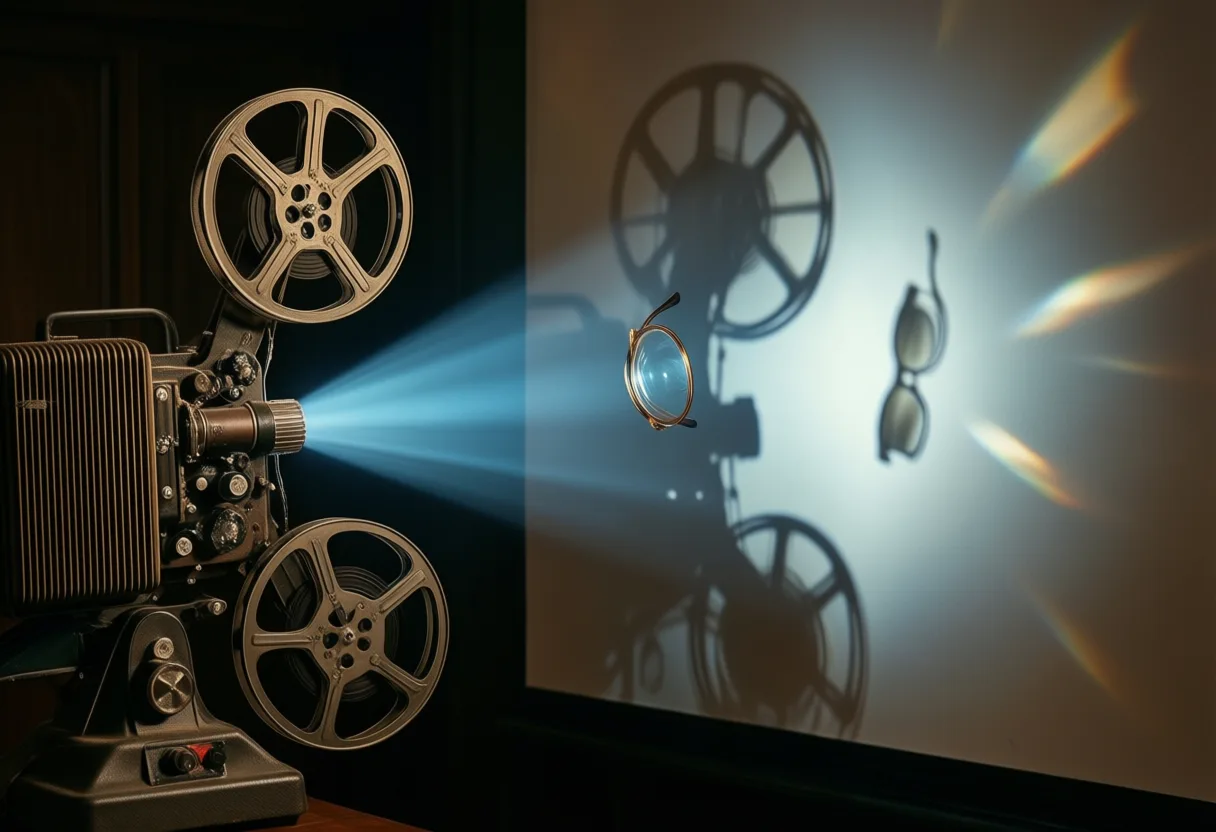
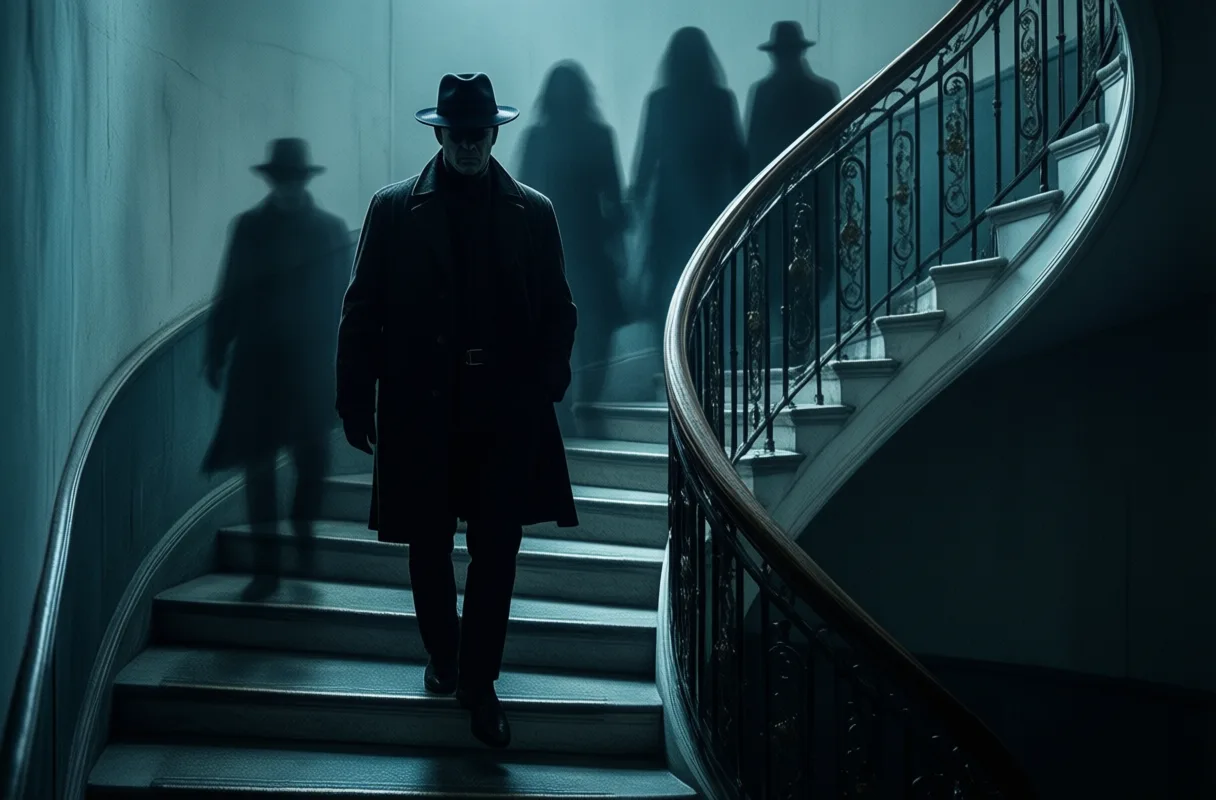
There’s a moment in every great old movie-not always obvious, never scripted-that tells you why it’s lasted. It’s not the famous line or the Oscar win. It’s the flicker in an actor’s eye, the way a shadow falls across a stairwell, or the silence after a gunshot that lingers just a beat too Long.
That’s what separates the rewatchable from the relegated-to-a-disk-in-a-drawer. And lately, a quiet but fierce conversation has reignited about how we judge the classics-not just whether they’re good, but Why We agree (or don’t) that they are.
A New Lens on Golden Age Storytelling
Old movies aren’t relics. They’re living arguments. We return to them not just for nostalgia, but because they hold up a mirror-one cracked by time, yes, but still reflective. The best of the Golden Age didn’t just entertain; they Interrogated. They slipped subtext past censors, turned melodrama into metaphor, and let camera movement speak louder than dialogue.
You can see it in the way a noir frames a betrayal-not with a close-up scream, but with a slow zoom on a forgotten cigarette burning in an ashtray. These Films Trusted audiences to Feel Before they understood. That restraint gave them staying power. Today’s blockbusters often shout their themes. The classics whispered, and that whisper echoes.
What we’re seeing now isn’t just a revival. It’s a reevaluation. Critics, scholars, and fans are watching these films not as museum pieces, but as active participants in an ongoing conversation about craft, culture, and control. The camera didn’t lie back then-but it Did Negotiate with the studio, the audience, and the moment.
- The tension between artistic ambition and studio demands shaped every frame.
- Performances were often calibrated for the back row of a theater, not the intimacy of a tablet screen.
- Yet, the emotional truths still land, sometimes harder now than they did on release.
Why Do Some Classics Stand the Test of Time?
Let’s be blunt: not all classics deserve their pedestals. Some survive on reputation, others on a single brilliant scene padded with mediocrity. But the ones that truly endure do more than impress-they Connect. They tap into something elemental: loneliness, ambition, desire, fear. Universal, but never generic.
The difference often lies in economy. The best classics say more with less. A glance replaces a monologue. A dissolve suggests the passage of years. There’s no room for filler when every reel costs money and attention spans are short. That pressure forged a kind of cinematic discipline we rarely see today.
Consider the pacing. Modern films Dawdle. The classics Moved. Even the quiet ones had momentum. A character walks down a hallway, and you Know Something’s coming-not because of music, but because the director made the hallway feel like a trap. That’s mastery. That’s why we’re still watching.
- Emotional precision over exposition.
- Visual storytelling that doesn’t telegraph.
- Performances that suggest rather than declare.
It’s not about black-and-white versus color, or film versus digital. It’s about Intention. The enduring films were built to last, not just to open big. They were made by people who understood that a story isn’t just told-it’s Constructed, like a vault meant to outlive its builders.

The Role of Critical Consensus in Shaping Legacy
Critical consensus is a funny thing. It can anoint a film a masterpiece on opening night-or bury it for decades. Some films were panned upon release, only to be resurrected by later generations with different eyes. Others were hailed as genius, then slowly revealed as hollow with time.
Taste is not static. What feels radical in one era can seem tame in the next. What was once dismissed as trash might later be seen as raw, urgent, or ahead of its time. Critics Aren’t prophets. They’re interpreters, working with the tools and biases of their moment.
And yet, consensus matters. Not because it’s always right, but because it reflects a collective calibration. When multiple voices-different backgrounds, ages, ideologies-arrive at a similar conclusion, it’s worth pausing. That doesn’t mean dissent should be silenced. It means the conversation is working.
- Consensus can correct blind spots over time.
- It can also reinforce them, especially when dominated by a narrow perspective.
- The health of film culture depends on both agreement and argument.
Today, with Reviews Scattered across blogs, social media, and algorithms, the idea of a unified critical voice feels almost quaint. But that fragmentation has also made room for voices once excluded. The canon isn’t shrinking-it’s expanding, and finally reflecting the world it once ignored.
How Four Voices Intersect in Evaluating Masterpieces
Imagine four critics in a screening room, lights down, film rolling. One watches the script. One watches the camera. One watches the culture. One watches the audience. Each sees a different masterpiece. And each is right.
That’s the power of layered analysis. When you bring multiple perspectives to a film-formal, historical, emotional, political-you don’t get a final answer. You get a Dimension. You start to see how a film works not just as art, but as artifact, as argument, as experience.
One might praise a film’s composition, another its social commentary, another its emotional honesty, another its influence. These aren’t competing truths. They’re facets of the same gem. The film review quartet, when it functions well, doesn’t seek unanimity. It seeks Depth.
- Technical mastery can coexist with problematic themes.
- Cultural relevance doesn’t guarantee artistic merit.
- Emotional impact can persist even when context shifts.
The best analyses don’t tell you whether to like a film. They show you How To see it. And sometimes, that changes everything. A film once seen as pure entertainment reveals itself as a coded critique. A revered classic shows its seams. That’s not destruction. That’s engagement.
Beyond Personal Taste: Structure in Collective Analysis
Personal taste will always matter. But if we only talk about whether we “liked” a film, we’re missing the point. The value of collective analysis lies in its ability to move past preference and into Understanding. Why does this film affect people? How does it work? What does it reveal?
Structure helps. Without it, criticism becomes mere opinion. With it, we can compare notes, challenge assumptions, and build a richer picture. A structured approach asks: What are the film’s goals? Did it achieve them? At what cost? Who benefits from its message? Who’s left out?
This isn’t about grading films like homework. It’s about treating them as complex objects worthy of sustained attention. A film can be brilliantly made and morally troubling. It can be clumsy and profoundly moving. The framework allows us to hold both truths at once.
- Intent versus impact is a crucial distinction.
- Craft and content are not the same, but they’re not separate.
- Context is not an excuse-it’s a lens.
When analysis is structured, disagreement becomes productive. We’re no longer just saying “I liked it” or “I didn’t.” We’re saying, “Here’s what I saw, here’s how I see it, let’s compare.” That’s how legacies are tested, refined, and sometimes rewritten.
When Disagreement Reveals Deeper Truths About Film
Disagreement isn’t failure. In film criticism, it’s often the first sign of life. When two smart people walk out of the same screening with opposite reactions, it usually means the film Did Something. It provoked. It unsettled. It refused to be simple.
Think of the films that split audiences: ambiguous endings, morally gray heroes, visuals that alienate as much as they attract. These aren’t flaws. They’re invitations. The discomfort is the point. A film that pleases everyone is often a film that risks nothing.
The loudest arguments often surround the most important films. Because they touch nerves. They challenge norms. They force us to confront what we believe about storytelling, society, and ourselves. The backlash to a classic upon release is sometimes the best predictor of its longevity.
- Controversy can be a badge of relevance.
- Polarization often indicates complexity.
- A film that offends one generation may liberate another.
And let’s not pretend objectivity exists. Every critic brings a history, a body, a set of scars. Two people can watch the same performance and see confidence in one, arrogance in the other. That’s not a problem. That’s the richness of the medium. Film is not a math equation. It’s a Rorschach test with a soundtrack.
The Weight of Historical Context in Reassessment
You can’t watch a 1940s film the way audiences did in 1943. You just can’t. The world has changed. So have we. But that doesn’t mean we dismiss the film. It means we Contextualize It. We ask: What was possible then? What was suppressed? What was celebrated-and why?
Historical context isn’t a shield. It’s a tool. It helps us see not just what a film Is, but what it Could have been. It reveals the constraints-budgetary, political, social-that shaped every decision. A studio head’s fear of censorship, a star’s off-screen reputation, a war raging overseas-these aren’t footnotes. They’re part of the DNA.
And yes, some films haven’t aged well. Stereotypes that once passed unnoticed now scream. Power dynamics that seemed natural now feel toxic. That doesn’t mean we erase them. It means we Study Them. A film can be both a masterpiece and a product of its time-and understanding that duality is essential.
- Reassessment isn’t about canceling the past. It’s about understanding it.
- Context doesn’t excuse harm, but it explains how it was normalized.
- The best reevaluations are both critical and compassionate.
We don’t need to worship the classics. We need to Wrestle With them. That’s how they stay alive. That’s how they keep teaching us.
Balancing Auteur Vision With Cultural Impact
The auteur theory says the director is the author. And sure, some directors Do Leave a fingerprint on every frame. But film is not a solo act. It’s a collaboration-writers, actors, cinematographers, editors, even studio execs all shape the final product.
To credit only the director is to ignore the ecosystem. A performance can elevate weak material. A score can transform a scene. A production designer can create a world that outlives the plot. The auteur is important, but so is the ensemble.
And then there’s the audience. No matter how personal a vision, a film doesn’t exist in a vacuum. Its cultural impact-how it’s received, imitated, debated-becomes part of its identity. The Godfather Isn’t just Coppola’s film. It’s ours. It’s shaped how we talk about power, family, loyalty.
- Vision without execution is a sketch.
- Impact without intent is an accident.
- Legacy is built at the intersection of both.
A film’s greatness isn’t just in the director’s chair. It’s in the way it ripples outward-through other films, through language, through memory. The best classics aren’t just watched. They’re Lived in.

The Myth of the Definitive Verdict
Here’s a dirty secret: there is no final word on any film. No review, no list, no award settles the matter. The conversation doesn’t end. It evolves. A film praised in its day may fade. One ignored may rise. The canon isn’t fixed. It’s fluid.
The definitive verdict is a fantasy. It’s comforting, sure. It lets us file things away. But art doesn’t work that way. It resists closure. It invites rereading, rewatching, rethinking. The moment we decide a film is “solved,” we stop seeing it.
Criticism isn’t about closure. It’s about continuation. Every new review, every classroom discussion, every late-night debate keeps the film alive. That’s the goal-not to end the argument, but to keep it going.
- Final judgments kill curiosity.
- Certainty is the enemy of insight.
- The best films outlive their reviews.
So let the arguments rage. Let the rankings shift. Let the old be seen anew. That’s not confusion. That’s cinema breathing.
Practical Insights for Modern Viewing Habits
We don’t watch films the way we used to. Bingeing, skimming, multitasking-our habits have changed. But that doesn’t mean we can’t engage deeply. It just means we have to be intentional.
Watching a classic shouldn’t be homework. But it shouldn’t be background noise either. Give it space. Turn off the phone. Let it breathe. These films were made for attention, not distraction.
And don’t feel pressured to “love” them. It’s okay to be bored. It’s okay to be confused. What matters is showing up. Asking questions. Noticing things. The first viewing is just the beginning.
- Watch with curiosity, not obligation.
- Pause. Rewind. Notice the details.
- Discuss it-online, in person, in silence.
The more we engage, the more we see. And the more we see, the more these films give back.
Reframing the Conversation Around Time-Honored Cinema
It’s time to stop treating classic cinema like a checklist. No more “you must see” lists that feel like chores. No more reverence that borders on religious. These films aren’t sacred. They’re Alive.
Let’s talk about them like they matter-not because they’re old, but because they’re Good. Or flawed. Or complicated. Or infuriating. Let’s argue. Let’s disagree. Let’s fall in love and fall out of it.
The goal isn’t preservation. It’s participation. These films aren’t behind glass. They’re in the ring. And they’re still fighting.
So turn off the algorithm. Pick a film. Watch it like it’s new. Because in a way, it is. Every viewer brings a new world to the screen. And every viewing is a chance to see something we’ve never seen before.
Four Voices, One Screen: The Rise of Group Film Critique
The Quartet Format’s Golden Age Roots
Group film criticism didn’t start with podcasts or YouTube channels-its modern quartet shape owes a lot to mid-20th century radio and early TV. While solo reviewers dominated print, the conversational dynamic of multiple voices gained traction when broadcasters realized audiences enjoyed hearing different perspectives clash and align. Though no single show invented the four-person model, its balance of diversity and manageability made it a natural fit for televised roundtables by the 1970s. Having four critics allowed for lively debate without overcrowding the frame, giving each voice room to breathe while still creating sparks.
Chemistry Over Consensus
What sets a film review quartet apart isn’t just the number-it’s the chemistry. The most memorable groups weren’t always in agreement, but their rapport made disagreement compelling. Think of how contrasting personalities can turn a simple thumbs-up or down into a mini-drama. A well-balanced quartet often includes a traditionalist, a genre enthusiast, a formalist focused on technique, and someone attuned to cultural context. This mix doesn’t guarantee harmony, but it does ensure that a single film gets examined from multiple angles, revealing layers a solo take might miss.
From Couches to Culture
Today’s top-rated review groups often begin far from studio lots-some launch from college film clubs or local radio slots before gaining national attention. Their influence now stretches beyond box office impact; they shape how movies are discussed online, quoted in essays, and remembered over time. When four voices consistently engage with cinema this deeply, their collective tone can subtly shift audience expectations, making viewers more attentive to writing, performance, or direction. It’s not about being right every time-it’s about making the conversation richer, one film at a time.
Frequently Asked Questions
Why do some classic films still resonate today?
Classic films that endure connect through universal emotional truths like loneliness, ambition, and fear. They use visual storytelling, restraint, and economy to say more with less, creating lasting impact.
How does critical consensus shape a film's legacy?
Critical consensus reflects a collective calibration of different perspectives over time. It can elevate or reevaluate a film, though it may also reinforce biases when dominated by narrow viewpoints.
What is the role of disagreement in film criticism?
Disagreement in film criticism is a sign of engagement. Opposing reactions often reveal a film’s complexity, provoke deeper understanding, and keep the conversation about its meaning alive.
How has group film critique evolved over time?
Group film critique began on radio and TV, evolving into modern quartets seen in podcasts and online. The four-person format allows diverse perspectives-such as technique, culture, genre, and tradition-to coexist in dynamic discussion.
This article was produced with AI assistance. How Silver Screen Magazine uses AI.
Rohan Kilpatrick dissects the personal lives of stars with wit and precision, balancing insider access with ethical awareness. He delivers the latest whispers and headlines with a sharp eye for irony, never sacrificing style for sensationalism.