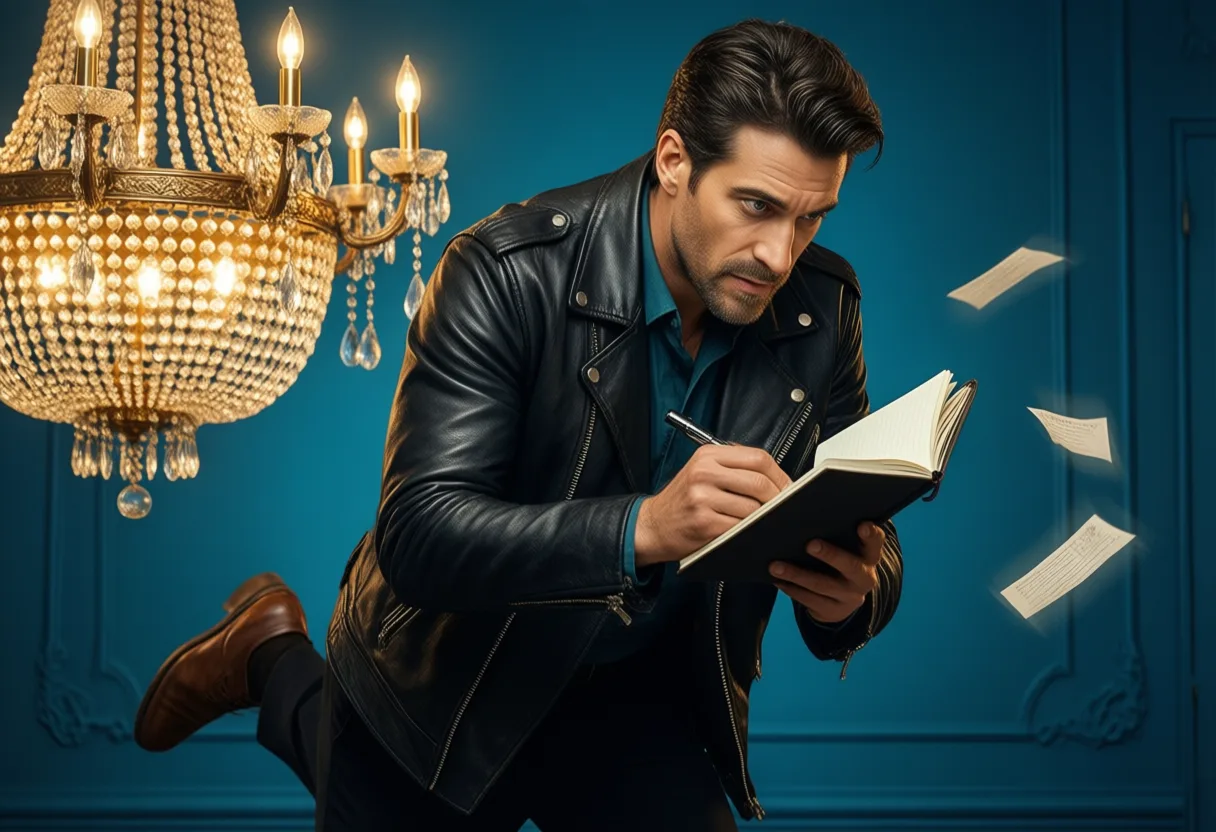
There’s a certain alchemy in television when character meets crime, when charm dances with danger, and dialogue sparkles like the glint of a revolver under city lights. Castle-the crime drama that simmered with wit, warmth, and the slow-burn chemistry of an odd couple forged in fire-didn’t just solve murders; it dissected the human heart with surgical precision, one quip at a time. More than a procedural, it was a love letter to storytelling itself, where every victim’s life became a novel waiting to be finished.

The Unlikely Alchemy of Character and Crime
At its core, Castle Revolves around the partnership between Richard Castle, a best-selling mystery novelist with a flair for the Dramatic, and Detective Kate Beckett, a no-nonsense investigator with a haunted past. What is the show Castle About, if not the collision of imagination and instinct? Castle, granted permission to shadow Beckett for research, becomes an unofficial consultant-his wild theories and pop-culture references clashing with her disciplined, by-the-book approach. Yet from this friction, a rhythm emerges: one built on mutual respect, intellectual sparring, and the quiet understanding that both are searching for answers beyond the case files.
The series thrives on The duality of its leads-Castle, the man who writes fiction to Avoid truth, and Beckett, who chases truth to outrun grief. Their dynamic isn’t merely professional; it’s psychological, almost theatrical. Each episode becomes a stage where performance and reality blur. Castle’s presence in the precinct isn’t just a narrative device-it’s a disruption, a creative force that forces the team to see beyond patterns and consider the story behind the crime. He doesn’t just solve murders; he Narrates Them, framing suspects and victims as characters in a larger tale.
And yet, for all its cleverness, Castle Never loses touch with emotional gravity. The show understands that Every Crime Is personal, not just to the victim, but to those left behind. Beckett’s mother’s unsolved murder becomes the spine of the series, a cold case that pulses beneath every investigation like a second heartbeat. Castle’s journey-from detached observer to invested ally-mirrors the audience’s own descent into the emotional core of the show. This isn’t just about whodunit; it’s about Why it matters.

The Signature Blend of Wit and Warmth
What sets Castle Apart from other crime procedurals is its refusal to take itself too seriously-without ever trivializing its stakes. The dialogue crackles with a Theatrical intelligence, where banter isn’t filler but function. Castle’s one-liners aren’t escapes from reality; they’re shields, deflections, and sometimes, the only way he knows how to connect. Beckett’s dry retorts aren’t just put-downs-they’re boundaries, slowly eroding over time. Their exchanges feel like a sonnet in motion: structured, rhythmic, and building toward revelation.
The show’s humor is never at the expense of its victims. Instead, it uses levity to Humanize the investigators, to remind us that even those who stare into darkness need to laugh. The precinct becomes a kind of family-Esposito and Ryan, the Loyal detectives With their own quirks and camaraderie; Captain Montgomery, a moral anchor with secrets of his own. These relationships aren’t window dressing. They’re the emotional infrastructure that makes the losses hurt and the victories resonate.
Even the cases themselves reflect a Storyteller’s sensibility. Episodes often play with genre-homages to noir, spy thrillers, or courtroom dramas-because Castle sees the world through narrative lenses. A murder at a comic-con, a killing inspired by a board game, a crime staged like a Shakespearean tragedy-these aren’t gimmicks. They’re invitations to consider how stories shape our lives, how we all perform roles, and how fiction can sometimes reveal truths that facts alone cannot.

Why Fans Keep Returning to the Scene of the Crime
Long after its final episode, Castle Endures-not just in syndication, but in the way fans quote its lines, rewatch its pivotal moments, and debate the evolution of Castle and Beckett’s relationship. The show’s longevity lies in its Emotional authenticity. It didn’t rush its romance. It let love grow in the quiet spaces between interrogations and stakeouts, in shared silences and unspoken understandings. When they finally admit their feelings, it feels earned, not inevitable-a victory of patience over plot.
The series also understood the power of Narrative continuity In a genre often accused of being episodic. While Each case is self-contained, the character arcs unfold like novels across seasons. Beckett’s healing, Castle’s maturity, the fallout from secrets revealed-these threads weave through the show with the care of a seasoned writer. Fans didn’t just follow the cases; they followed the journey.
And perhaps most importantly, Castle Celebrated The act of creation. It was a show about writing, about the messy, obsessive, redemptive process of turning life into story. Castle doesn’t just solve crimes-he writes them into meaning. In doing so, the series reminds us that storytelling isn’t escapism. It’s how we make sense of chaos, how we honor the dead, and how we find our way back to each other. That’s why, years later, fans still return-to the banter, the brilliance, and the belief that even in the darkest rooms, a good story can be a kind of light.
What Keeps Castle’s Storytelling So Addictive?
A Real-Life Inspiration Behind the Fiction
The idea for Castle Didn’t come out of thin air. The character of Richard Castle was loosely inspired by real crime novelists who’ve teamed up with law enforcement, though the show itself is fictional. The creators imagined what would happen if a best-selling mystery writer were allowed to shadow a real NYPD detective-turning that playful “what if” into the show’s central dynamic. Nathan Fillion, who plays Castle, brought a charm and wit to the role that made the writer’s constant presence in serious investigations not just believable, but entertaining.
The Will-They-Won’t-They That Hooked Fans for Years
Much of the show’s long-running appeal came from the slow-burn romance between Castle and Detective Kate Beckett. Their chemistry sparked from the very first episode, but the writers took their time unfolding the relationship, letting tension build over seasons. Fans became deeply invested, debating theories online and celebrating every meaningful glance or near-confession. This emotional core, wrapped in weekly whodunits, gave viewers a reason to come back-not just to solve a case, but to see how these two complicated people would finally admit their feelings.
A Killer Mix of Genres That Stood Out
Castle Wasn’t just another police procedural. It blended sharp crime-solving with humor, romance, and pop culture references, creating a tone that felt fresh at the time. Castle’s wild theories-often based on movie plots or conspiracy ideas-clashed perfectly with Beckett’s by-the-book approach, leading to both laughs and surprising breakthroughs. This balance made each episode feel lighter than typical crime dramas, without sacrificing the stakes. It proved that a show could be smart, fun, and heartfelt all at once-and still keep audiences guessing till the final minutes. Explore more stories, videos, and creators on Loaded.
Frequently Asked Questions
What is the show Castle about?
Castle follows a best-selling mystery novelist, Richard Castle, who shadows Detective Kate Beckett to research for his books. Their partnership blends crime-solving with witty banter and emotional depth as they solve murders in New York City.
Why do fans love the crime drama Castle?
Fans love Castle for its blend of humor, romance, and character-driven storytelling. The slow-burn relationship between Castle and Beckett, along with clever dialogue and genre-bending episodes, keeps viewers engaged.
What makes Castle different from other crime procedurals?
Castle stands out by combining sharp crime-solving with humor, pop culture references, and romantic tension. The show emphasizes storytelling and character development, making it more than just a series of whodunits.
What is the central relationship in Castle?
The central relationship is between Richard Castle and Detective Kate Beckett. Their dynamic evolves from professional partnership to deep emotional connection, marked by mutual respect and slow-building romance.
This article was produced with AI assistance. How Silver Screen Magazine uses AI.
Vivian Chukwu explores golden-age Hollywood with reverence and rigor, unearthing forgotten performances and cultural contexts. She connects archival footage to modern themes, making classic films feel immediate and vital through thoughtful analysis and vivid storytelling.