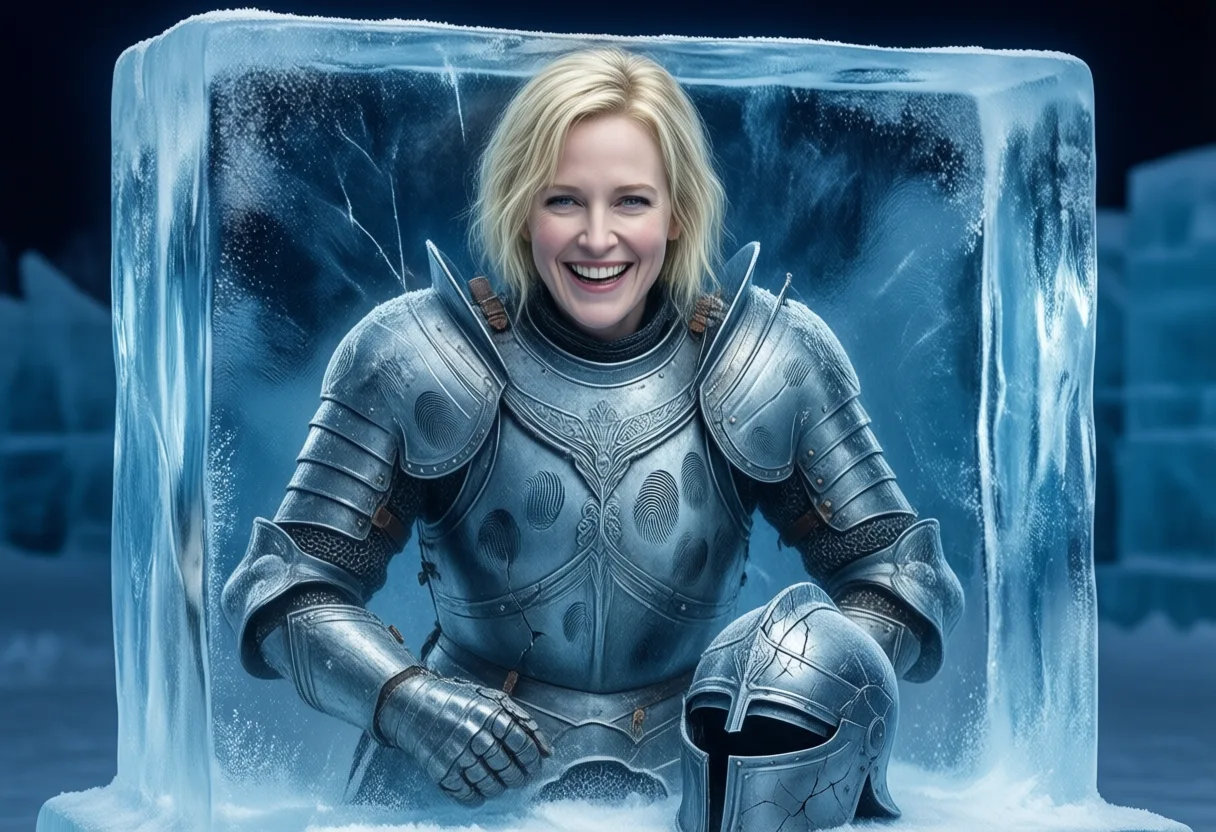
There is a certain mythic presence some Actors carry-less a function of height or voice, though both are undeniable in Gwendoline Christie, and more an aura of inevitability. When she enters a scene, the air changes: stillness follows motion, silence presses against dialogue. It is not spectacle for its own sake, but the gravity of a performer who embodies transformation, who moves through worlds both fantastical and grounded with the same solemn dignity.
Christie has never merely played a role-she’s inhabited it, reshaped it, made it breathe in ways the scripts perhaps hadn’t fully imagined. Her career in Television Has been an excavation, each series role peeling back a new layer of emotional terrain, revealing a performer of remarkable range and inner fire.
Few contemporary actors have traversed such vast narrative landscapes-from armored warriors to broken mothers, from the surreal edges of crime fiction to the quiet devastation of domestic drama. In each case, Christie brings a rare duality: the exterior strength of form and posture, and beneath it, a vulnerability so raw it catches the breath.
1. A Warrior Forged in Fire and Ice
In the realm of epic television, few characters have emerged as fully realized icons as Christie’s Brienne of Tarth. She didn’t just join the story; she altered its moral center. With every clanging step in steel plate, every restrained glance of unrequited love, Christie turned what could have been a caricature into a paragon of integrity.
Brienne was not celebrated for her beauty by the World within The story, yet Christie imbued her with a nobility so profound it transcended convention. Her duels were not only of swords but of ideals-chivalry against cynicism, honor in a court built on lies.
This performance rewrote the rules. A woman in armor, unapologetically tall and strong, became not an anomaly but a standard. She wasn’t a token; she was the conscience. And in that space, Christie revealed her mastery-not through monologues, but through silence, through the tightening of a glove, the refusal to yield.
- She stood where others knelt, not out of arrogance, but principle.
- Her love for Catelyn Stark and later Jaime Lannister unfolded with tragic restraint.
- The moment she knelt before Sansa Stark, finally sworn as a knight, resonated not just as plot, but as poetry.
2. A Mind Unraveling in the Darkness
In a stark departure, Christie stepped into the fractured psyche of a grieving mother in a chilling crime drama set amid coastal cliffs and fog-drenched villages. Here, the armor was not steel but denial, and her performance unspooled like a tapestry pulled thread by thread.
She played a woman whose grief had calcified into obsession, whose maternal instinct had warped into something darker, something dangerous. Christie navigated the descent with chilling precision-never melodramatic, never clichéd.
Every twitch of her jaw, every glance into the past, carried the weight of unspeakable loss. The series leaned into ambiguity, and Christie thrived in it, allowing the audience to question not just her actions, but their own sympathies.
- Her quiet confrontations with authority figures revealed deep wells of suppressed rage.
- Flashbacks were not sentimental; they were wounds reopened.
- The final confrontation, wordless and primal, lingered long after the screen faded.
3. The Unseen Hand in a Surreal Conspiracy
Entering a genre-bending series that blurred reality and hallucination, Christie took on a role that defied categorization-a guide, a manipulator, perhaps even a figment. The show thrived on uncertainty, and her presence amplified the unease.
Dressed in tailored severity, her voice a controlled cadence, she embodied institutional power while hinting at personal unraveling. Was she helping the protagonist or orchestrating their breakdown? Christie never tipped her hand.
She delivered exposition like incantation, each sentence weighted with subtext. There was something almost liturgical in her delivery-a priestess of a system too vast to comprehend.
- Her stillness contrasted with the protagonist’s chaos.
- Costuming emphasized her detachment: sharp lines, muted colors, no ornamentation.
- The final episode’s revelation reframed her entire arc, not as villainy, but tragic complicity.
4. A Queen Without a Crown
In a historical drama reimagining the lives of women erased from the record, Christie portrayed a noblewoman denied the throne but not the will to rule. Stripped of official power, she waged war through influence, through whispers, through the calculated placement of a hand on a shoulder.
This was not a role of battles, but of strategy-of knowing when to weep, when to smile, when to remain perfectly still. Christie’s performance shimmered with quiet fury, the kind that burns slower and hotter than any blaze.
She communicated entire histories in a Single look-years of suppression, of watching men claim glory for deeds she orchestrated. And when she finally spoke her truth, it was not a shout, but a sigh that carried the weight of centuries.
- Her political maneuvering unfolded in candlelit corridors and garden walks.
- The tension between loyalty and ambition was never resolved-nor should it be.
- Costume and posture told their own story: constrained, but never broken.
5. A Mother in the Shadows
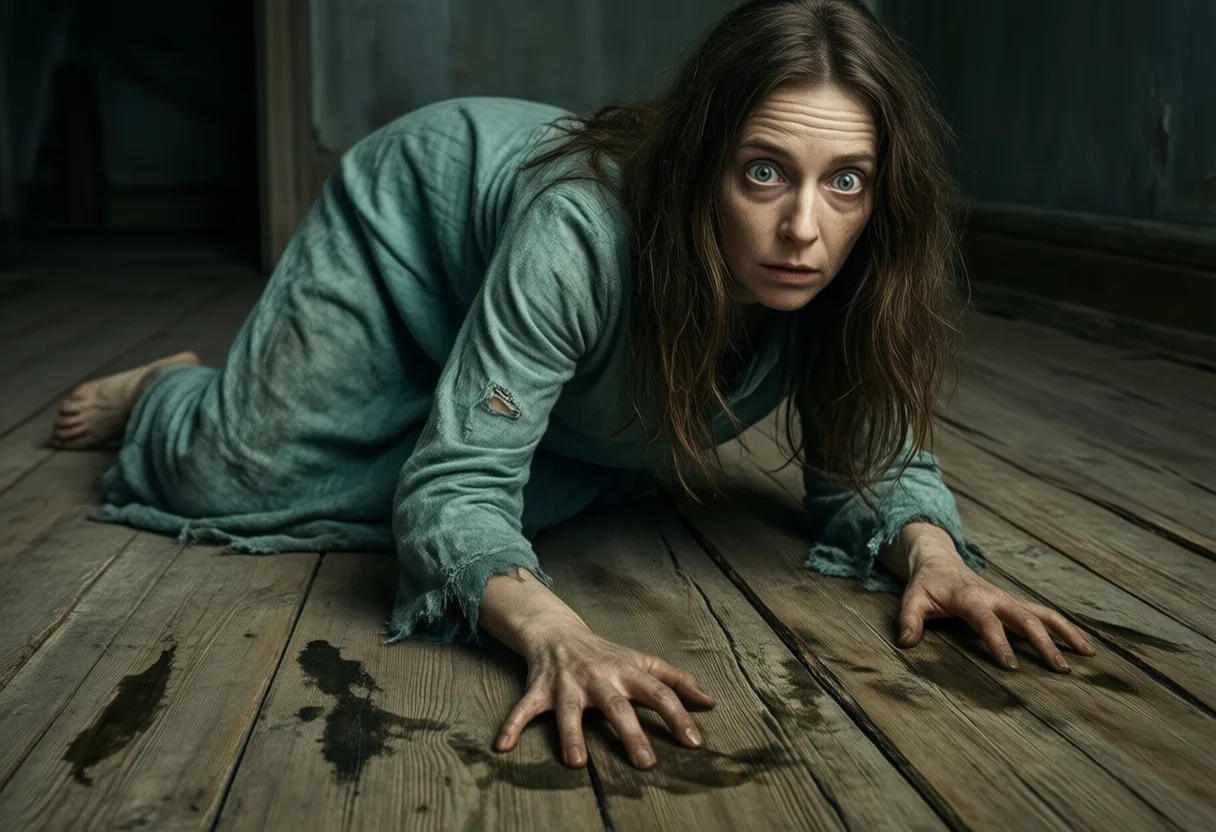
In a minimalist domestic drama, Christie played a woman returning after years of absence, her reappearance disrupting the fragile peace of a household built on forgetting. The series unfolded in muted tones-gray skies, wooden floors, unsaid words.
She was neither villain nor savior, but something far more complex: a woman who had chosen herself over her children, and now wrestled with the consequences. Christie refused easy redemption, allowing guilt to sit uneasily with defiance.
Her scenes with her grown daughter were masterclasses in emotional economy-no shouting matches, just the unbearable tension of two people speaking different languages of love.
- Silence dominated: the space between sentences mattered more than the words.
- Small gestures-a misplaced cup, a hesitant touch-carried enormous weight.
- The final scene, where she turned and walked away again, wasn’t cruel, but honest.
6. The Enforcer in a Dystopian Hierarchy
In a near-future series exploring class division through allegory, Christie portrayed a high-ranking official in a stratified society, her physique transformed into a symbol of control. Uniforms fit like second skins, and her voice was weaponized-calm, unyielding, absolute.
Yet, through cracks in protocol, glimpses of dissent emerged. A flicker of hesitation before issuing an order. A moment of recognition when passing a child in rags. Christie suggested an internal schism without ever stating it outright.
She became the face of oppression, but also its reluctant executioner. The audience was left wondering not if she would fall, but if she would finally open her eyes.
- Her authority was never questioned-until it was.
- The use of framing emphasized her isolation: often shot from below, but alone in wide shots.
- A single act of mercy in the final episode redefined her entire arc.
7. The Guardian of Lost Souls
In a supernatural anthology series, Christie appeared in a standalone episode as a caretaker of a remote hostel where the dead came to settle unfinished business. The role demanded both warmth and austerity-a keeper of boundaries.
She spoke in riddles not to confuse, but to protect. Her character understood grief not as an end, but as a threshold. Christie brought a kind of hushed reverence to the role, as if she’d long since accepted the burden of memory.
The episode culminated in a wordless farewell between her and a spirit, their hands almost touching-but not quite. It was a moment of profound sorrow and grace, and Christie held it without flinching.
- Her performance grounded the fantastical in emotional truth.
- The setting-a windswept shore, an old house-felt like an extension of her being.
- When she finally closed the door behind the last guest, it felt like a benediction.
Beyond the Physical: Debunking the "Typecast Giant" Myth
There persists a reductive narrative-echoed in early casting notes, in fan discourse, in lazy critique-that Gwendoline Christie is defined by her stature. This is not only inaccurate; it is to misunderstand the architecture of her craft. She is not limited by her physicality-she uses it as a canvas.
To see her solely as the tall actress is to miss the precision of her emotional calibration, the way she modulates tone, posture, silence. She has played characters whose power comes from stillness, not force; whose strength is internal, not imposed.
She is often cast as guardians, warriors, authority figures-but these roles are not interchangeable. Each is built on different foundations: Brienne on honor, her detective on trauma, her noblewoman on intellect.
Let us be clear: Physical presence is not a substitute for depth, but in Christie’s hands, it becomes a language. She communicates through space-how she occupies it, how she withdraws from it, how she dominates or recedes.
- In one role, her height conveys intimidation; in another, isolation.
- Costumes frame her not to emphasize size, but status, role, psychological state.
- Directors who understand her range use her silhouette not for spectacle, but symbolism.
Her work dismantles the binary that equates visibility with simplicity. She is seen-undeniably-but what we see is never only the surface. There is a history in her eyes, a quiet reckoning in her stance.
Typecasting assumes repetition without evolution. But Christie evolves within every role, carving nuance where others might settle for type. She resists flattening, resists reduction.
To call her typecast is to ignore how she has transformed the types themselves.
Why These Roles Matter - And Where They Could Lead Next
Television, at its best, is a mirror-not of the world as it is, but of the selves we might become. Gwendoline Christie’s performances hold that mirror with unflinching honesty. She does not offer escapism so much as confrontation-with grief, with power, with identity.
Her trajectory suggests not a plateau, but an expansion. The roles she has chosen are not safe; they are explorations. And in a medium increasingly obsessed with archetypes, she reminds us of the power of anomaly.
What comes next may not be louder, but deeper. A return to stage, perhaps, where her physical command and vocal clarity could reshape classical forms. Or a foray into directing, where her keen sense of character and space could frame new stories.
She has already redefined what female presence can mean on screen-not by conforming, but by refusing to be confined. Not by rejecting strength, but by redefining it as something layered, complex, often quiet.
The future for Christie is not a single path, but a constellation of possibilities. She has earned not just acclaim, but trust-the sense that wherever she goes next, it will be with purpose.
And we, as viewers, will follow-not because we expect spectacle, but because we Expect truth.
| Series | Role | Key Traits | Performance Highlights |
|---|---|---|---|
| Game of Thrones | Brienne of Tarth | Honor, integrity, unrequited love | Knighted by Sansa; moral center of the story |
| The Sandman | Lucifer Morningstar | Commanding, ethereal, icy charm | Reimagined comic icon with grace and authority |
| A chilling crime drama | Grieving mother | Obsession, suppressed rage, denial | Descent portrayed with precision and restraint |
| A genre-bending series | Mysterious guide | Controlled, ambiguous, liturgical delivery | Blurred reality; tragic complicity revealed |
| A historical drama | Noblewoman denied power | Quiet fury, strategic influence | Communicated history through looks and posture |
| A minimalist domestic drama | Absent mother returning | Guilt, defiance, emotional complexity | Tension in silence; no easy redemption |
| A near-future dystopian series | High-ranking enforcer | Authority, internal dissent, isolation | Symbol of control with glimpses of mercy |
| A supernatural anthology | Caretaker of lost souls | Warmth, austerity, reverence | Wordless farewell; grounded emotional truth |
A Star Beyond the Screen
From Knight to Queen of the Small Screen
Gwendoline Christie’s journey through television is anything but ordinary. She first captured global attention as the fearless Brienne of Tarth in Game Of Thrones, a role that redefined knightly honor and shattered stereotypes with every swing of her sword. What many don’t know? Christie actually trained extensively in swordplay and physical combat for the role, turning what could have been a one-dimensional warrior into a deeply human, emotionally resonant character. Her towering presence-both literal and figurative-became a fan favorite, earning her a dedicated following who admired Brienne’s integrity and quiet strength.
Later, she stepped into the chaotic world of The Sandman, portraying the ethereal and commanding Lucifer Morningstar. It was a bold move-taking on a character previously imagined in countless ways by fans of the iconic comic-and Christie made it her own with a blend of icy charm and otherworldly grace. Interestingly, her casting surprised some readers who envisioned Lucifer differently, but her performance quickly silenced doubts, proving once again her ability to inhabit roles across wildly different genres. Whether clad in armor or ruling Hell with a raised eyebrow, Christie brings a rare depth that makes each character unforgettable. Explore more stories, videos, and creators on Loaded.
Frequently Asked Questions
What role made Gwendoline Christie famous?
Gwendoline Christie became globally famous for her role as Brienne of Tarth in Game of Thrones. Her portrayal of the honorable warrior redefined knightly ideals and shattered stereotypes.
Did Gwendoline Christie perform her own stunts in Game of Thrones?
Christie trained extensively in swordplay and physical combat for her role as Brienne of Tarth. Her preparation contributed to the authenticity and emotional depth of the character.
What was unique about Gwendoline Christie’s portrayal of Lucifer in The Sandman?
Christie portrayed Lucifer Morningstar with icy charm and otherworldly grace, making the role her own despite initial fan skepticism. Her performance was commanding and ethereal.
How does Gwendoline Christie challenge typecasting?
Though often cast in strong, authoritative roles, Christie uses her physical presence as a canvas for emotional nuance. She brings depth, stillness, and psychological complexity that defy reductive labels.
This article was produced with AI assistance. How Silver Screen Magazine uses AI.
Vivian Chukwu explores golden-age Hollywood with reverence and rigor, unearthing forgotten performances and cultural contexts. She connects archival footage to modern themes, making classic films feel immediate and vital through thoughtful analysis and vivid storytelling.