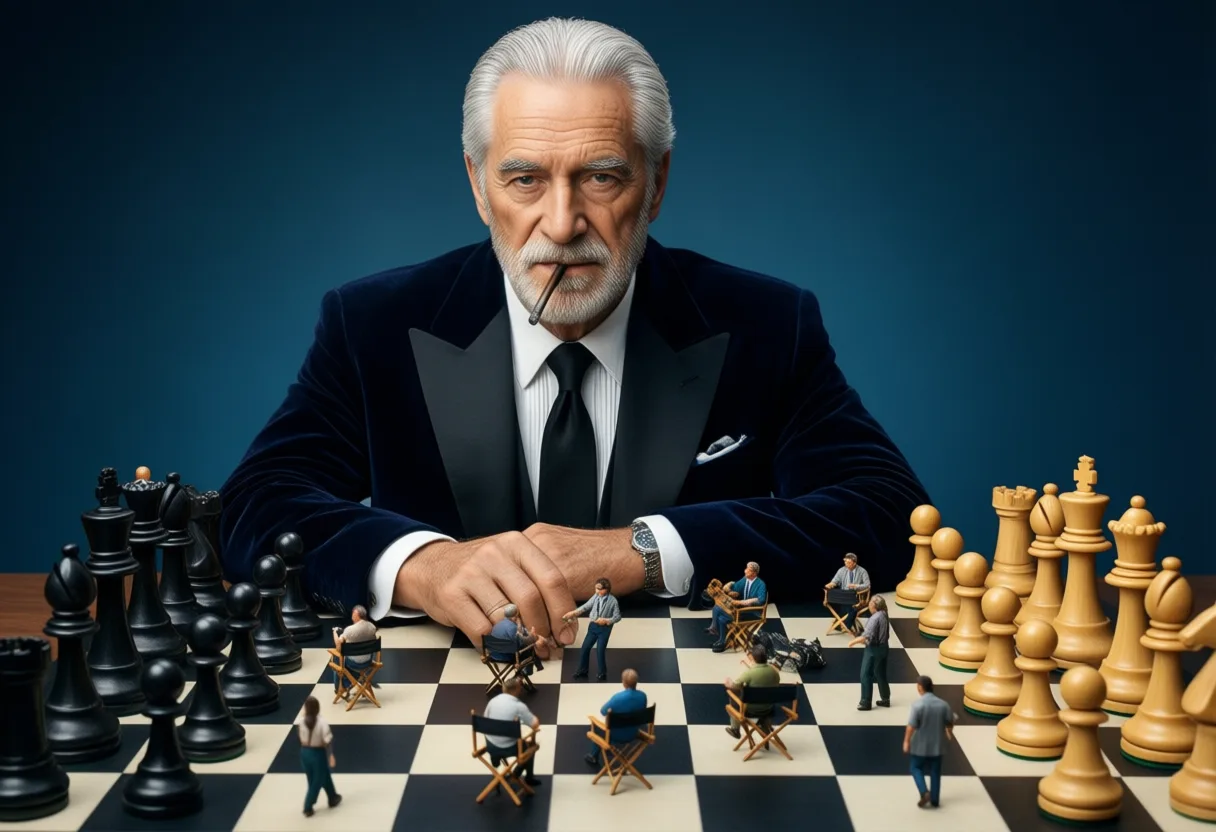

There are faces that vanish into the background, and then there are faces that Define It. M. Emmet Walsh Was not a leading man in the traditional sense-no red carpets rolled out just for him, no marquees bore his name alone-but his presence altered the gravity of every scene he entered. With a career spanning decades and Over 200 films and television series, he became one of those rare performers whose absence would have left cinema quieter, duller, less real.
What Made M. Emmet Walsh Hollywood’s Go-To Character Actor?
The Man Behind the Memorable Glare
You didn’t need to know his name to recognize him. That weathered face, etched with lines like old film grain, carried a lifetime of unspoken stories. His eyes-small, sharp, often narrowed in suspicion or dry amusement-could convey contempt, cunning, or quiet despair without a single word. He wasn’t handsome by studio standards, but he was unforgettable: a man who looked like he’d seen too much and still hadn’t decided whether to laugh or walk away.
Walsh never played heroes bathed in golden light. Instead, he inhabited the margins-the sheriff with questionable motives, the mechanic with secrets, the uncle whose advice came with strings. Yet even in these shadows, he radiated authority. There was a Quiet command In his delivery, a rhythm in his speech that felt improvised yet perfectly timed, as if he were not reciting lines but revealing truths long buried.
He understood something fundamental about acting: presence isn’t measured in Screen time, but in impact. A raised eyebrow, a half-smile, a pause before answering-these were his tools. Directors knew this. They cast him not to fill space, but to anchor it, to give weight to worlds that might otherwise float off into artifice.
How Did a Face Become a Cinematic Fixture?
In an industry obsessed with youth and symmetry, Walsh’s ascent was a quiet rebellion. Born in Ogdensburg, New York, far from the glitter of Hollywood, he carried the bearing of someone shaped by cold winters and hard work. His journey wasn’t meteoric; it was steady, built on persistence and an uncanny ability to disappear into roles while remaining unmistakably himself.
By the late 1970s, he had become a fixture-not because he sought fame, but because filmmakers kept calling. He moved through genres like a ghost: noir, comedy, drama, thriller, each time slipping on a new skin without losing his essence. It wasn’t typecasting that defined him, but A deep well of authenticity That made any role feel lived-in, real.
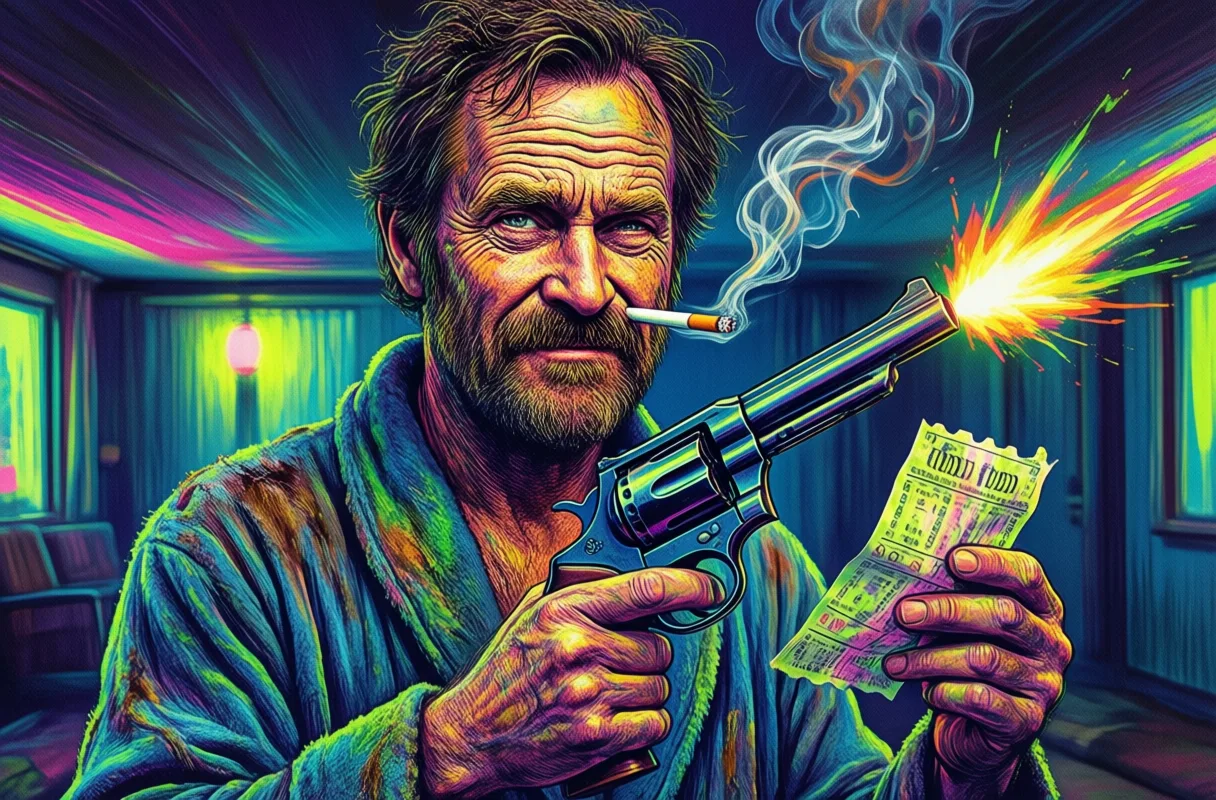
His face told a story all its own-one of weariness, skepticism, resilience. But more than that, he possessed a rare gift: the ability to suggest entire lives behind minimal dialogue. You could imagine His characters’ Childhoods, their regrets, their secret hopes, all from the way he lit a cigarette or leaned against a doorframe.
Why Was He the Actor Directors Trusted Most?
From Small Town Roots to Big Screen Stalwart
Ogdensburg offered no glitz, no shortcuts. It gave him something better: grounding. Walsh brought that rural sensibility to his craft-a no-nonsense approach, a refusal to posture. When he stepped onto a set, he wasn’t performing “Actor”; he was doing a job, and doing it well. This earned him trust. Not just from casting directors, but from auteurs who valued truth over polish.
He worked across generations and movements, appearing in films by the Coen brothers, Robert Altman, Lawrence Kasdan, and Hal Ashby. These weren’t directors who tolerated filler. Every frame mattered. Every performance had to serve the vision. And yet, again and again, they turned to Walsh.
- In Blade Runner (1982), he played the reptilian Dr. Eldon Tyrell, a man of science and control whose calm unraveled in the face of his creation.
- In Blood Simple (1984), his turn as Loren Visser, a private detective steeped in moral rot, became legendary-chilling, darkly funny, utterly devoid of redemption.
- Even in smaller parts-like the bartender in Cool Hand Luke Or the sheriff in One False Move-he left fingerprints on the film’s soul.
His reliability wasn’t just professional; it was artistic. He arrived prepared, listened intently, adapted swiftly. No ego, no demands. Just work. And in that work, a kind of mastery emerged-one built not on grand gestures, but on precision, timing, and emotional honesty.
The Unseen Engine of 200 Films and Counting
Over 200 films and television series, Walsh became the unseen engine of American cinema. While audiences focused on stars, he was shaping tone, mood, subtext. A film’s atmosphere often shifted the moment he appeared on screen-not because he dominated it, but because he Changed It.
Think of the way silence deepens when someone dangerous enters a room. That was Walsh’s effect. He didn’t need explosions or monologues. His mere presence suggested consequence. A corruptible man? A hidden agenda? A past that wouldn’t stay buried? All possible. All plausible.
He thrived in ambiguity. Few actors could play morally compromised with such nuance. He wasn’t evil for evil’s sake; he was human, flawed, sometimes weak, occasionally cruel-but always believable. There was no performative villainy, no mustache-twirling. Just choices, small and devastating, made by a man who knew the cost but paid it anyway.
And perhaps that’s why directors trusted him: he never oversold. He underplayed, and in doing so, revealed more. Like a jazz musician who knows when Not To play, Walsh mastered the power of restraint. His performances weren’t loud, but they echoed.
Could a Supporting Role Ever Steal the Show?
That Time He Outshone the Leads Without Saying Much
Watch Blood Simple Again. Pay attention not to the lovers, not even to the husband consumed by jealousy-but to the private eye they hire. From the moment Walsh appears, grinning like a fox at a henhouse, the film tilts on its axis. His character, Visser, is amoral, pragmatic, and terrifyingly competent. But what makes him unforgettable is how casually he descends into chaos.
He doesn’t shout. He doesn’t rage. He cleans up a murder scene while humming. He lies with ease. He improvises violence like a craftsman adjusting his tools. And when things go wrong-as they inevitably do-he adapts, survives, keeps moving. By the end, he’s not just a supporting player; he’s the dark heart of the film.
This was Walsh’s genius: he could take a few pages of script and build an entire mythology around them. Other actors filled roles. He Inhabited Them. And in inhabiting them, he often eclipsed those meant to be center stage.
It wasn’t about stealing scenes-it was about Redefining them. He didn’t compete with leads; he complicated them. His characters existed in the same world but operated by different rules. Where others sought love, justice, or redemption, Walsh’s men often wanted only to get by, get paid, or get even. And in that difference, a deeper truth emerged.
The Misconception About Being “Just a Character”
More Than a Typecast: The Range Behind the Grizzled Exterior
To call him “just a character actor” is to misunderstand the term. Character actors aren’t bit players or background noise-they are the texture of cinema. And within that category, Walsh was no cliché. He played cops, doctors, farmers, preachers, con men, and drunks, each rendered with distinct psychology and physicality.
Yes, he often portrayed men with rough edges. But within that roughness, he found variation: the weary kindness of the priest in Frances, the bureaucratic menace of the CIA man in Shoot the Moon, the tragic buffoonery of the father in Knightriders. He could be funny without being comic, cruel without being monstrous, loyal without being noble.
His range wasn’t in accents or disguises-it was in Emotional specificity. He knew how a man holds his hat when he’s lying. How he lights a cigarette when he’s buying time. How his voice drops when he’s about to cross a line. These details weren’t studied; they felt innate, drawn from observation, memory, life.
And let’s not forget his comedy. In The Jerk, he played a dim-witted gas station owner with deadpan brilliance. In Fletch, he was the harried police chief, exasperated and oddly endearing. He never winked at the audience. He played it straight-and that’s what made it funnier.

What Defined His Signature Screen Presence?
The Voice, the Stare, the Subtle Command of a Scene
Listen to him speak. That voice-raspy, deliberate, slightly nasal-was like gravel wrapped in velvet. It didn’t boom; it insinuated. It could slide into your ear and settle there, carrying irony, threat, or resignation depending on the tilt of a syllable. He didn’t raise it often, but when he did, it cracked like dry wood under pressure.
Then there was the stare. Not a glare, exactly-more a slow focusing, like a camera lens adjusting. He looked Through People, not past them. You felt assessed, measured, maybe found wanting. It wasn’t hostility; it was awareness. As if he saw the cracks in your facade and decided whether to mention them.
And his stillness. So many actors fidget, gesture, emote visibly. Walsh often did nothing. He stood, sat, leaned. Let the silence build. Then, with a shift in posture or a change in breath, he’d signal a decision made, a trap sprung, a lie accepted. Minimal movement, maximum implication.
These weren’t tricks. They were the result of Decades Of listening, watching, refining. He understood that power in cinema often lies in withholding. In letting the audience lean in. In making them wonder what’s coming next-and knowing, deep down, that whatever it is, he’s already three steps ahead.
How Did He Shape the Art of the Background Turn?
Master of the Minimal, the Sinister, and the Strangely Human
Background acting is often invisible by design. But Walsh made invisibility visible. He proved that a performer could occupy the edges and still shape the center. A nod, a cough, a glance toward the door-these could carry narrative weight. He turned cameos into statements, walk-ons into warnings.
He excelled at playing men who knew too much. The kind who lingered just outside the conversation, sipping coffee, saying little, absorbing everything. You sensed they could unravel the plot with a single sentence-if they cared to. But they usually didn’t. They had their own games to play.
His legacy lives on in every actor who now understands that Less can mean more. That credibility isn’t shouted; it’s earned in quiet moments. That a character doesn’t need a backstory to feel like they have one-you just have to act like they do.
Today’s character actors-Paul Guilfoyle, J.K. Simmons, Stephen Root-walk paths he helped pave. They bring depth to small roles, not by demanding attention, but by commanding it through sheer believability. That’s Walsh’s inheritance: a master class in how to matter without asking permission.
Practical Lessons from a Life Off-Center Stage
Work Ethic, Humility, and the Power of Showing Up
He never chased awards. Never gave grand interviews. Never demanded top billing. He showed up. Learned his lines. Listened to the director. Did the work. And then did it again, and again, for over five decades.
That consistency wasn’t accidental. It was built on Humility and professionalism-qualities undervalued in an age of self-promotion. He treated acting as a craft, not a cult. He respected the process, the crew, the ensemble. No tantrums, no trailers filled with demands. Just preparation and presence.
Young actors could learn volumes from his example:
- Be ready.
- Be reliable.
- Be willing to listen.
- Be content to serve the story, even if your name isn’t on the poster.
Fame found him sideways, not head-on. And perhaps that’s why it stuck. He wasn’t loved because he sought love-he was respected because he earned it, one role at a time.
The Lasting Imprint of a Man Who Never Sought the Spotlight
Still Casting Shadows, Long After the Credits Roll
Michael Emmet Walsh died at the age of 88, leaving behind a body of work so vast it defies casual summary. Over 200 films and television series, each a thread in the fabric of modern cinema. He wasn’t the flashiest thread, nor the loudest. But pull one loose, and the whole tapestry risks unraveling.
He proved that greatness doesn’t require centrality. That a man can stand slightly off-center and still define the composition. That integrity, commitment, and quiet mastery can leave a mark deeper than any spotlight.
Now, when we watch those old films, we see him anew-not as a face from the past, but as a permanent resident of the present. In every morally ambiguous cop, every scheming subordinate, every man with a cigarette and a secret, we feel his influence.
He never sought immortality. But in the end, he earned it-not through fanfare, but through The enduring power of a truthful performance.
A Storied Presence in Film and Television
Few character actors left as distinct a mark on American cinema as M. Emmet Walsh. With a career that spanned decades, he appeared in over 200 films and television series, becoming a familiar face known for bringing depth and authenticity to even the smallest roles. Whether playing crooked sheriffs, grizzled mechanics, or weary detectives, Walsh had a rare ability to elevate every scene he was in-often making his supporting turns feel pivotal to the story’s momentum.
From Ogdensburg to Hollywood’s Hall of Character Actors
Born in Ogdensburg, New York, Walsh built a reputation not through flash, but through sheer consistency and range. His performance as the corrupt Chief Ed Tom Bell in Blood Simple (1984), the Coen brothers’ debut film, remains one of the most memorable early roles in their filmography. That portrayal set the tone for a career filled with morally ambiguous figures brought to life with subtle precision. Over the years, audiences would come to recognize his raspy voice and weathered features as signs of a performance worth watching, no matter the size of the part.
A Working Actor’s Work Ethic
Walsh wasn’t just prolific-he was dependable. Directors and casting agents knew they could count on him to deliver something real, often with minimal screen time. This reliability made him a go-to presence across genres, from gritty crime dramas to offbeat comedies. Even as trends changed and new stars emerged, Walsh remained a constant, showing up year after year with the same quiet professionalism. His legacy isn’t defined by awards or marquee billing, but by the respect he earned from peers and fans alike for simply doing the work-and doing it well.
Frequently Asked Questions
How many films and television series did M. Emmet Walsh appear in?
M. Emmet Walsh appeared in over 200 films and television series throughout his career.
What was M. Emmet Walsh’s most memorable role?
His portrayal of private detective Loren Visser in Blood Simple (1984) is considered one of his most legendary performances.
Which directors frequently worked with M. Emmet Walsh?
He worked with filmmakers such as the Coen brothers, Robert Altman, Lawrence Kasdan, and Hal Ashby.
What made M. Emmet Walsh a trusted actor among directors?
Directors valued his authenticity, reliability, emotional honesty, and ability to deliver impactful performances with minimal screen time.
This article was produced with AI assistance. How Silver Screen Magazine uses AI.
Vivian Chukwu explores golden-age Hollywood with reverence and rigor, unearthing forgotten performances and cultural contexts. She connects archival footage to modern themes, making classic films feel immediate and vital through thoughtful analysis and vivid storytelling.